ED issues summons to eleven illegal immigrants deported from United States

Chandigarh: The Enforcement Directorate (ED) has issued summons to 11 illegal immigrants recently deported from the United States (U.S.), as part of an investigation targeting travel agents involved in facilitating illegal immigration.
According to sources, the ED sent the summons on Tuesday, asking the deportees to appear at its Jalandhar office on different dates, as reported by The New Indian Express.
Among those summoned, at least one is from Haryana, with the others hailing from Punjab. The ED has initiated an investigation under the Prevention of Money Laundering Act (PMLA) to trace the proceeds of crime.
The Punjab Police has registered 15 cases against travel agents, based on complaints filed by the deported individuals after their debriefing. However, sources have noted that the ED has yet to formally request information from the police.
Sources pointed out that the preliminary data obtained by state government officials, who questioned the deportees at Amritsar International Airport, suggests that over Rs 44 crore was paid to travel agents, added TNIE.
On average, each individual spent between Rs 40 lakh to Rs 50 lakh to illegally reach the U.S. via the infamous Dunki Route.
Since the start of mass deportations under the Trump administration in January, a total of 345 illegal immigrants have been deported from the U.S. so far, with 131 of them coming from Punjab.
Let the Truth be known. If you read VB and like VB, please be a VB Supporter and Help us deliver the Truth to one and all.
Sujit Nair raises concerns over speculation of DMK-AIADMK understanding to block TVK
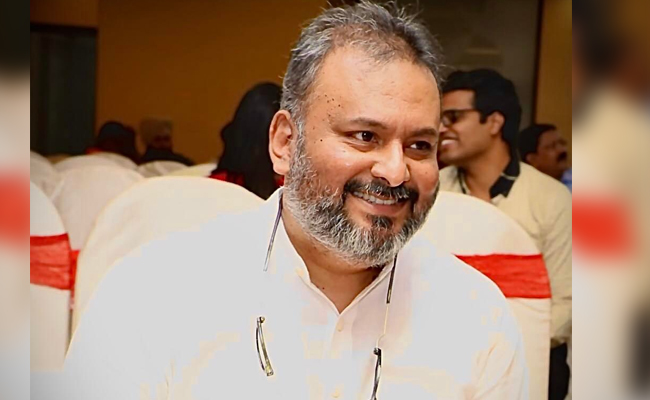
Chennai: Journalist and political commentator Sujit Nair has expressed concern over speculation that the Dravida Munnetra Kazhagam and the All India Anna Dravida Munnetra Kazhagam could explore a post-poll understanding to prevent Vijay-led Tamilaga Vettri Kazhagam from forming the government in Tamil Nadu.
In a social media post, Sujit Nair said the election verdict in Tamil Nadu reflected a clear public demand for political change and argued that the mandate should be respected irrespective of political preferences.
Referring to reports and political discussions surrounding a possible understanding between the DMK and AIADMK, he said he hoped such developments remained only speculative conversations and did not turn into reality.
Nair stated that if such an alliance were to take shape, it would raise serious questions about ideological politics in the country. He said TVK had emerged through a democratic electoral process and that the legitimacy to govern in a parliamentary democracy comes from the people’s verdict.
According to him, attempts to prevent an electoral winner from forming the government through unexpected political arrangements may be constitutionally valid, but many people could view them as politically opportunistic.
He further said that such a move could particularly affect the political image of the DMK, which has historically projected itself around ideology, social justice and opposition politics. Nair said that in ideological terms, the DMK appeared closer to TVK than to the AIADMK, and joining hands with its long-time political rival only to remain in power could weaken its broader political narrative.
He added that the same questions would apply to the AIADMK as well, as the party had spent decades positioning itself against the DMK and such an arrangement could create discomfort among its cadre and supporters.
Drawing a comparison with Maharashtra politics in 2019, Nair said he had expressed similar views when the Shiv Sena formed an alliance with the Indian National Congress and the Nationalist Congress Party after the Assembly elections.
He said post-poll alliances between long-standing political rivals often create a public perception that ideology and electoral mandates become secondary when political power equations come into play.
Nair also said such developments increase public cynicism towards politics and reinforce the belief among voters that ideology is often sidelined after elections.
He maintained that the Tamil Nadu verdict was emphatic and said respecting both the spirit and substance of the mandate was important for the credibility of democratic politics.