ED probing role of Canadian colleges, Indian entities in human trafficking
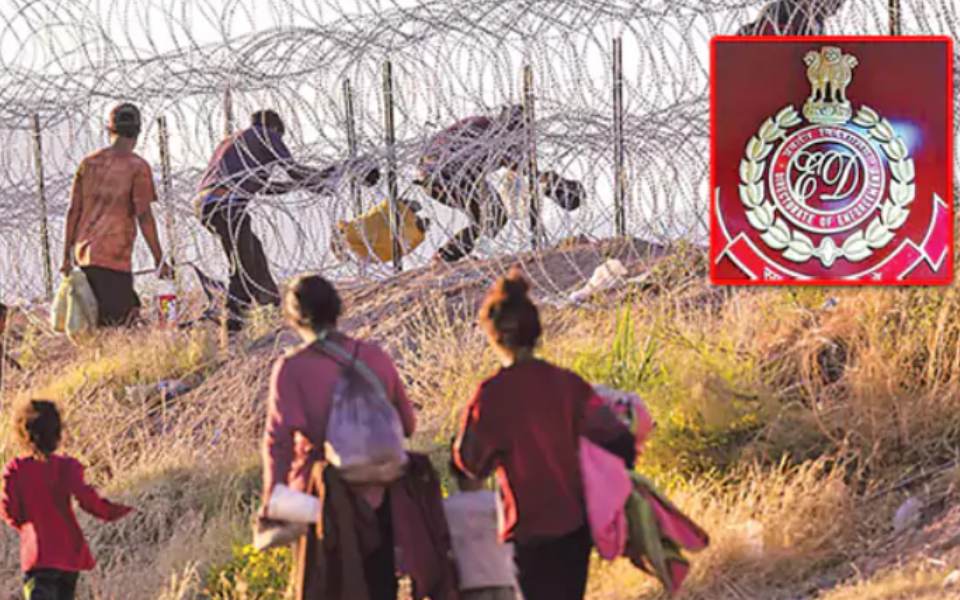
New Delhi, Dec 25: The Enforcement Directorate is investigating the alleged involvement of some Canadian colleges and a few Indian entities in a money laundering case linked to the trafficking of Indians into the US from the Canada border.
The investigation is linked to the death of a four-member Indian family, hailing from Dingucha village in Gujarat. The four died of extreme cold while trying to cross the Canada-US border illegally on January 19, 2022.
The ED said it took cognisance of an Ahmedabad Police FIR against Bhavesh Ashokbhai Patel, who emerged as the main accused in the matter, and a few others, to file a complaint under the criminal sections of the Prevention of Money Laundering Act (PMLA).
Patel and others are alleged to have "hatched a well-planned conspiracy to send people (Indians) to the USA through Canada via illegal channels thereby committing the offence of human trafficking," it said.
The agency had earlier found that as part of the racket, the accused "arranged" admission for people, desirous to go to the US illegally, in colleges and universities based in Canada.
A Canadian student visa was applied for such people and once they reached that country, instead of joining the college, they "illegally" crossed the US-Canada border, the agency said in a statement on Tuesday.
"In view of this, the fee received by colleges based in Canada was remitted back to the individuals' account," the ED alleged.
Indians were "lured" into the racket and charged between Rs 55 and Rs 60 lakh per person, according to the ED.
The agency said it undertook fresh searches in this case on December 10 and December 19 at eight locations in Mumbai, Nagpur, Gandhinagar and Vadodara.
It was found, the ED said, two "entities", one based in Mumbai and the other in Nagpur, entered into an "agreement" for admission of Indians in universities based in foreign countries on a commission basis.
The agency said the latest searches found that about 25,000 students are being referred by one entity and more than 10,000 students by the other to various colleges based outside India every year.
"Further, it is gathered that there are around 1,700 agents/partners based in Gujarat and around 3,500 agents/partners of other entities all over India out of which around 800 are active.
"It is further revealed that around 112 colleges based in Canada have entered into an agreement with one entity and more than 150 with another entity. Their involvement in the instant case is under investigation," the ED said.
The agency suspects that out of the total 262 such colleges in Canada, a few, which are geographically located near the Canada-US border, are involved in the trafficking of Indian nationals.
The ED said it froze Rs 19 lakh in bank deposits, some "incriminating" documents and digital devices, and seized two vehicles in connection with its probe.
Let the Truth be known. If you read VB and like VB, please be a VB Supporter and Help us deliver the Truth to one and all.
Dakshina Kannada: Two girls drown while bathing near Kolyadakatta dam in Kadaba
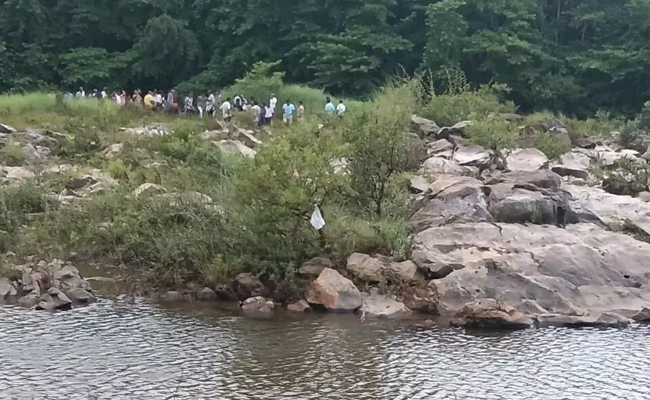
Mangaluru: Two girl students drowned while bathing near the Kolyadakatta dam area of the Gundya river on Friday evening here in the Kadaba Taluk of the district.
The deceased have been identified as Arpita (15) and Sunita (21), both residents of Vimalagiri in Kutrupadi village.
According to reports, five girl students had visited the river along with their friends as it was a holiday. While bathing in the river, the two students reportedly entered a deeper portion of the water without realising the depth and began drowning.
Those accompanying them tried to rescue the duo, but were unsuccessful, leading to the tragedy.
After receiving information about the incident, Kadaba Police Station personnel visited the spot and conducted an inspection. The bodies were later recovered with the help of local residents.