ED searches in Rs 500 cr Chhattisgarh medical supply 'scam' case
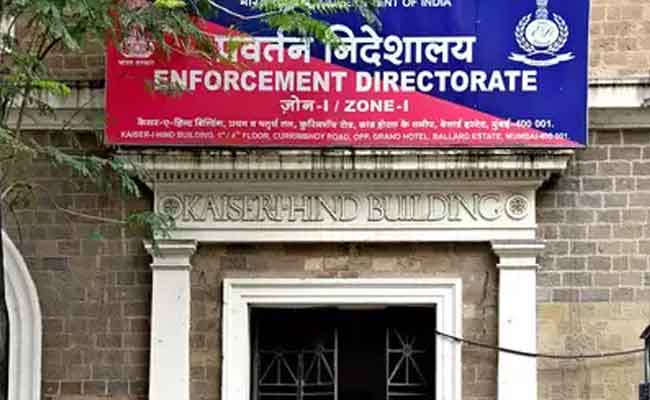
Raipur (PTI) The Enforcement Directorate on Wednesday launched searches at multiple locations in Chhattisgarh as part of a money laundering investigation into an over Rs 500 crore worth medical supply "scam", official sources said.
Premises linked to some government officials, medical suppliers and agents apart from some "middlemen" are being raided in Raipur, Durg and adjoining places, they said.
The ED probe under the Prevention of Money Laundering Act (PMLA) stems from an Anti-Corruption Bureau/Economic Offences Wing (ACB/EOW) chargesheet filed in April against six persons for alleged irregularities in purchase of medical equipment and reagent chemicals in 2023 that caused a loss of Rs 550 crore to the state exchequer.
The ACB/EOW, on January 22, lodged a case against officials of the state-run Chhattisgarh Medical Services Corporation Ltd (CGMSCL) in Raipur and Directorate of Health Services department as well as four firms namely Mokshit Corporation (Durg), CB Corporation (Durg), Records and Medicare System HSIIDC (Panchkula, Haryana) and Shri Sharda Industries (Raipur), as well as others.
It was alleged that the scam involves purchase of reagents and equipment without checking requirement/availability of these items in health centres. The CGMSCL has made purchases worth billions of rupees between January 2022 to October 31, 2023 in collusion with Mokshit Corporation and its shell company, the ACB/EOW had said.
Let the Truth be known. If you read VB and like VB, please be a VB Supporter and Help us deliver the Truth to one and all.
AIITA welcomes Karnataka’s ban on obscene songs in school events
Bhatkal: The Karnataka unit of the All India Ideal Teachers Association (AIITA) has welcomed the Karnataka government’s decision to strictly ban school children from dancing to obscene songs during educational and cultural programmes in government, aided, and private schools across the state.
AIITA Karnataka State President M. R. Manvi congratulated the government for taking what he termed an important step to preserve the sanctity of education.
“Such decisions to safeguard the dignity of school children and uphold the values of education are the need of the hour. This rule should not be limited to government schools alone but must be strictly implemented in all private educational institutions as well,” he said.
He further urged the government to address other concerns within school programmes.
“The government should not only prohibit obscene dances in the name of school anniversaries, but also ensure that plays and dialogues that incite religious hatred are avoided. Schools should be centres of harmony, not platforms for spreading hatred,” he added.
According to a recent circular issued by the Department of School Education and Literacy, obscene dances are adversely affecting the mental health and moral values of students.
In this regard, schools have been advised to use songs that promote nationalism, positive thinking, the greatness of Kannada culture, and value-based traditions instead of inappropriate content during programmes.
The circular also emphasises that students should be dressed in decent attire.
AIITA also backed the department’s warning that disciplinary action would be taken against head teachers if such guidelines are violated. The association has further demanded that district Deputy Directors of Public Instruction strictly monitor the implementation of these rules.