Education minister evades direct reply on Delhi coaching tragedy, says guidelines issued in Jan
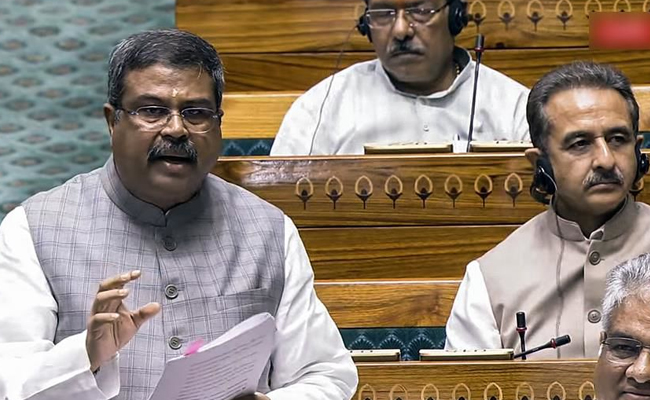
New Delhi (PTI): The government issued guidelines on the regulation of coaching centers in January this year, Education Minister Dharmendra Pradhan informed Lok Sabha on Monday, even as he evaded a direct reply to a question on the death of three IAS aspirants in Delhi due to flooding.
During the Question Hour, Congress MP KC Venugopal mentioned the death of the three students and said the institute had no approved building.
"Without an approved building, without any facility, some of the coaching centers become mafia... is the government going to take any action?" he said.
Venugopal also raised concerns about students' suicides.
Quoting information provided by the ministry in an earlier written reply, he said that between 2018-2022, around 80 students committed suicide in top-ranking institutions like IITs and IIMs, adding that caste discrimination is a major reason behind it.
In his response, Pradhan said, "The member has raised a question which is not related to the question put today."
"But I like to assure the House through you, this government is committed to total socio-psychological and mental protection of all students, whether they are studying in a coaching center, in an institution, school education or higher education," he said.
He said exhaustive and detailed guidelines on coaching centers were issued to all states in January, 2024.
"Some states also have regulations, like Rajasthan, Bihar, Goa. They have their own regulations to look into the matter," he said.
"Regarding the protection, this is a socio-psychological issue. We all have to take care. This is not an issue to be dealt with through only allegations and answers," he said.
Three civil services aspirants died on Saturday after the basement of a building housing a coaching centre in central Delhi's Old Rajinder Nagar area was flooded following heavy rains.
In his reply to another question, Pradhan dismissed that India was witnessing "brain-drain" with students going abroad for higher education. The students who go outside have made the country proud, he said.
TMC MP Saugata Roy asked if the number of students going abroad is increasing. He said good quality higher education not being available in India was the reason behind the "brain-drain".
The education minister asserted the intelligence of Indian students should not be criticised for political reasons, and also said there is no dearth of high quality education institutions in the country.
He named Microsoft CEO Satya Nadella, Google CEO Sundar Pichai, Adobe Systems CEO Shantanu Narayen, and IBM CEO Arvind Krishna among those who came out of the Indian education system. India is proud of them, he said.
"Go to any economic hotspot, Indians are thriving there... We grow due to this connectivity. The globe is shrinking into a village. Depriving our next generation of the good standards of the world is wrong," he said.
Congress MP Shashi Tharoor, however, said that the top institutions named by the minister are like just a "few islands of excellence in a vast ocean of mediocrity", and improvement is required.
Pradhan in reply said he is open to suggestions, and added that the government is stressing on quality education, and there are ranking systems to evaluate it.
Let the Truth be known. If you read VB and like VB, please be a VB Supporter and Help us deliver the Truth to one and all.
Centre launches national childhood diabetes screening, treatment framework
New Delhi (PTI): The Union Health Ministry on Sunday released a guidance document providing a framework for screening, diagnosis, treatment and long-term management of childhood diabetes.
According to the ministry, the document, for the first time, establishes a structured and standardised national framework, positioning India among a select group of countries that have integrated childhood diabetes care into the public health system.
The "Guidance Document on Diabetes Mellitus in Children" was released at the National Summit on Best Practices in Public Healthcare Service Delivery, concluded on May 1-2.
According to a statement by the ministry, the framework aims to ensure universal screening of all children from birth to 18 years through community and school-based platforms for early identification of diabetes.
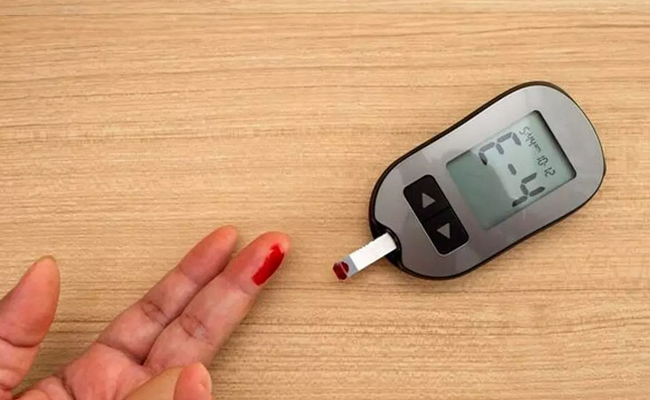
Suspected cases will undergo immediate blood glucose testing and be referred to district-level health facilities for confirmatory diagnosis and treatment, it said.
A key feature of the initiative is the provision of a comprehensive free-of-cost care package at public health facilities, including screening, diagnostic services, lifelong insulin therapy, glucometers, test strips and regular follow-up care.
The initiative seeks to reduce the financial burden on families and ensure uninterrupted treatment for children diagnosed with diabetes.
The document also lays down an integrated continuum of care linking community-level screening with district hospital-based management and advanced care at medical colleges to ensure seamless follow-up and treatment.
To strengthen early detection, the guidance promotes the "4Ts" awareness framework -- Toilet, Thirsty, Tired and Thinner -- to help parents, teachers and caregivers recognise early warning signs of type 1 Diabetes.
Besides clinical protocols, the document focuses on family and caregiver empowerment through structured training on insulin administration, blood glucose monitoring, emergency response and daily disease management.
The statement stated the initiative is expected to reduce mortality through early detection, prevent complications and improve the quality of life of affected children while strengthening the public health system's capacity to manage non-communicable diseases among children.