Education Ministry suggests no homework up to class 2, regularly weigh school bags
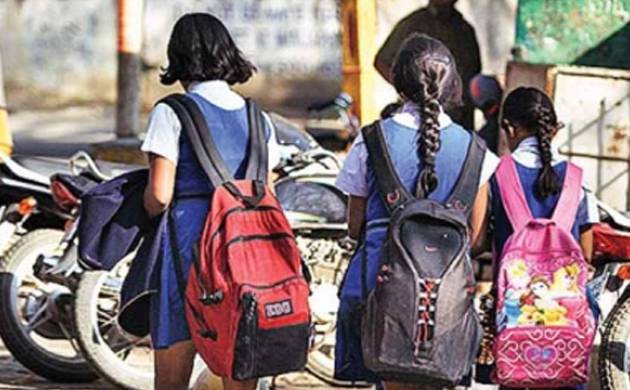
New Delhi, Dec 9: No homework for students up to class two, providing lockers and digital weighing machines in schools, making available potable water on the premises and disallowing wheeled carrier bags are among the recommendations made by the Education Ministry in its new policy on school bags.
As per the suggestions, which are in line with the new National Educational Policy (NEP), the weight of school bag for students between classes 1-10 should not be more than 10 per cent of their body weight.
"Based on research studies conducted in this area, recommendations of international agencies about the standard weight of school bags is recommended to follow the universally accepted ratio of weight for school bag as 10 per cent of the body weight of the student across classes 1 to 10," it says.
Schools have been asked to keep a digital weighing machine on school premises and monitor the weight of school bags on a regular basis.
"Schoolbag needs to be light-weight with proper compartments, and (should) contain two padded and adjustable straps that can be squarely fit on both the shoulders. Wheeled carriers should not be allowed as it may hurt children while climbing stairs," the policy document says.
It adds, "Schools need to ensure that the facilities which are mandated for schools to provide, such as mid-day meals etc. are adequate and of good quality so that children are not carrying items, such as a lunchbox.
"It shall be the duty and responsibility of school management to provide good quality potable water in sufficient quantity accessible to all the students in the school to avoid carrying water bottle in schoolbag or reduce its size," it said.
The school or class time table needs to be made flexible, providing adequate space for sports and physical education, reading of books available in school other than textbook etc., it said.
"For selecting a textbook for children, the criterion of weight should be taken into consideration. The weight of each textbook may be printed on the textbook by the publishers, along with the Grams per Square Meter (GSM)," it said.
The policy also talks in detail about homework for students at various levels, starting with no homework for children up to Class 2, and maximum two hours of homework every day for children in Classes 9 to 12.
"As children in classes 1 and 2 are too small to sit for long hours doing homework, they need not be given any kind of homework. Rather they need to be encouraged in the class to speak about how they spent their evening at home, the games they played, the food they ate, etc," the document suggests.
Children in classes 3, 4 and 5 should be given a maximum of two hours of homework per week, it says, adding that the teacher should ask the "evening routine for every child, dinner they took the previous night -- food items, ingredients, their likes and dislikes about different kinds of foods, who does what at their homes" for homework.
For Classes 6 to 8, the homework should be maximum of one hour a day.
"At this stage, children develop the habit of sitting little longer with concentration, so they can be given homeworks such as writing a story, an essay or an article on contemporary issues; writing an article about the problems in the locality; measures for saving electricity and petrol, among other things," the policy suggests.
Let the Truth be known. If you read VB and like VB, please be a VB Supporter and Help us deliver the Truth to one and all.
NCW chief condemns rape-murder of 4-year-old girl in Pune, calls for swift action
New Delhi (PTI): National Commission for Women (NCW) Chairperson Vijaya Rahatkar has condemned the alleged rape and murder of a four-year-old girl in Maharashtra's Pune, calling it "deeply distressing" and a "blot on humanity".
The girl was allegedly raped and killed by a 65-year-old labourer, who has a criminal record, in Bhor tehsil of Pune on Friday. The accused allegedly lured the child to a cattle enclosure on the pretext of giving her food. After raping her, he killed her by hitting her with a stone, according to police.
The accused has been arrested.
In a post on X on Saturday, Rahatkar said the incident in the Nasrapur area in Pune was heartbreaking and has shaken society.
"The brutal torture and murder of a four-year-old innocent girl in Nasrapur (Bhor, Pune) is deeply painful, heartbreaking, and shocking. It is a blot on humanity," she said.
She said Pune Rural police has arrested the accused and noted that Maharashtra Chief Minister Devendra Fadnavis and Deputy Chief Minister Sunetra Pawar have assured strict action in the case.
Rahatkar said the NCW has taken cognisance of the matter and written to the National Commission for Protection of Child Rights (NCPCR), requesting the body to ensure necessary and prompt action.
It has also been recommended that the case be pursued under stringent provisions of the Protection of Children from Sexual Offences (POCSO) Act and be closely monitored from the filing of the chargesheet to proceedings in a fast-track special court to ensure time-bound justice, she added.
Ensuring justice for the victim and stringent punishment for the accused is a collective responsibility, the NCW chairperson underlined.
In a post on X, the NCW said it has taken suo motu cognisance of the extremely "heinous" incident.
"This heinous crime causes profound pain and outrage, and it highlights serious concerns regarding the safety of young girls," it said.
Strongly condemning this grave "inhuman act", the NCW said such crimes constitute a serious violation of children's rights and raise questions about society's security system.