Effect of new slaughter laws: Cattle numbers fall in BJP-ruled states
This report was first published in indianexpress.com and has been posted here without any alterations or editing. To read the original report, CLICK HERE
Karnataka has become the latest BJP-ruled state to put a stringent anti-cattle slaughter Bill in motion. On Friday, the state government said that it would bring in an ordinance to implement the provisions of the Bill, which was passed by the Assembly on Wednesday but could not be approved by the Legislative Council before the session got over. The striking feature of this Bill is its definition of ‘cattle’. It includes not just cows, bulls, bullocks and calves, but also male and female buffaloes. That makes it a comprehensive anti-bovine slaughter Bill.
This is unlike the laws in other states, whose scope is restricted only to the Bos indicus and taurus species. The latter include cows, bulls, bullocks and calves, but not buffaloes, that belong to a separate Bubalus bubalis species. ‘Cattle’ in animal taxonomy covers just the desi Bos indicus and western Bos taurus species. Cattle and buffaloes are together termed ‘bovines’.
Prior to Karnataka, it was Maharashtra, under the previous BJP-led government of Devendra Fadnavis, which had enacted the most rigorous anti-slaughter legislation. The Maharashtra Animal Preservation (Amendment) Act of 2015 made slaughter of bulls and bullocks a crime, punishable with a jail term of up to five years. Previously, the ban on killing was limited to cows and only attracted six months’ imprisonment.
The B S Yediyurappa administration’s Karnataka Prevention of Slaughter and Preservation of Cattle Bill goes beyond Maharashtra’s. For the first time, any person who slaughters or offers for slaughter even buffaloes can be accused of committing a cognizable offence and jailed for not less than three and extending to seven years. No other state — including Yogi Adityanath’s Uttar Pradesh and Shivraj Singh Chouhan’s Madhya Pradesh — has so far made buffalo slaughter illegal.
*Includes other states (Source: Livestock Census)
The only concession that the Karnataka Bill makes is to define cattle as bovines “below the age of thirteen years”. In other words, both cattle and buffaloes that are aged beyond 13 years can be culled. But from a dairy farmer’s standpoint, that isn’t particularly helpful.
A typical crossbred cow takes 17-18 months to come to puberty and be ready for insemination. Adding 9-10 months of pregnancy, it will deliver its first calf and start producing milk at 27-28 months. Subsequent calvings, after factoring in three-four months post-partum rest, happen every 13-14 months. Farmers usually don’t keep a cow beyond five-six calvings, when milk yields fall and the returns don’t justify the costs of feeding and maintenance. By then, the animal is seven-eight years old.
*Includes other states (Source: Livestock Census)
The same goes for buffaloes, which take even longer (3.5-4 years) to calve first and have 15-16 months inter-calving period. Their productive age, too, isn’t beyond 9-10 years. No farmer can afford to wait for 13 years, by which time the animal ceases to even have any salvage value. The small amount that the farmer may receive is more than offset by the cost of feeding during the animal’s unproductive years.
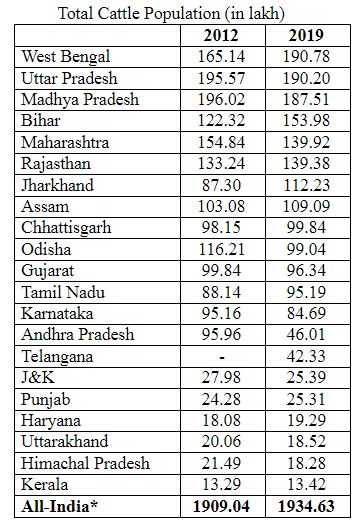
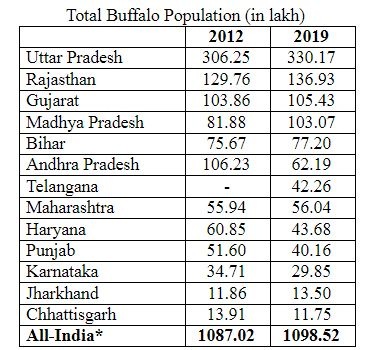
The impact of anti-slaughter laws — and more so, their aggressive enforcement — can be seen in the official Livestock Census data. Between 2012 and 2019, UP, MP, Gujarat and Maharashtra (which, till a year ago, was a BJP-ruled state) saw their cattle populations dwindle. These same states, however, registered increases in their buffalo numbers. UP, Gujarat and Haryana — and also Punjab and Andhra Pradesh— today have more buffaloes than cattle.
The 2019 Census, in fact, saw West Bengal overtake UP as India’s No. 1 cattle state. The irony is that the state permits slaughter of all animals. It merely has an animal slaughter “control” law. Under it, any animal — be it cattle or buffalo — can be slaughtered. All that is required is a certificate from a veterinary officer stating that the animal is “fit for slaughter”.
If the stated objective behind enacting an anti-slaughter legislation is “preservation of cattle”, that message is clearly not being heeded by farmers. They seem more inclined towards rearing animals that can be easily disposed of once their useful life is over.
Courtesy: indianexpress.com
Let the Truth be known. If you read VB and like VB, please be a VB Supporter and Help us deliver the Truth to one and all.
Austrian police detain suspect in case of rat poison found in baby food jars on supermarket shelves
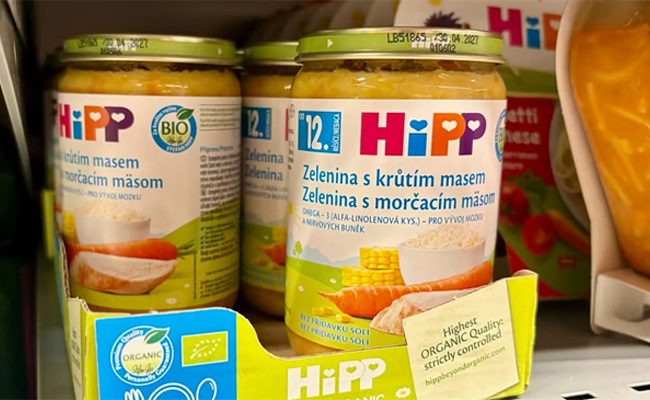
Vienna (AP): Police in eastern Austria say a 39-year-old suspect has been arrested after rat poison turned up in some HiPP baby food jars on supermarket shelves in central Europe.
HiPP, which recalled some of its baby food jars in Austria, Slovakia and the Czech Republic after the case came to light last month, said in a statement Saturday it was “greatly relieved” by the arrest, and would provide further updates as verified details come in.
The Burgenland State Criminal Police Office, under the direction of prosecutors, said a probe was launched after poison turned up in a baby food jar purchased at a supermarket in the city of Eisenstadt on April 18.
It said the suspect was being questioned, and that no further details would be immediately provided. The Burgenland public prosecutor's office has announced an investigation into suspected “intentional endangerment of the public.”
The Austrian Press Agency reported that an expert report on the toxicity of the poison was pending. A total of five tampered baby food jars were seized before they could be consumed, APA reported.
Authorities said previously they believe the tampering occurred in 190-gram (6.7-ounce) jars of baby food made with carrots and potatoes for 5-month-olds that were sold from SPAR supermarkets in Austria.
HiPP responded by recalling all of its baby food jars sold at SPAR supermarkets — which include SPAR, EUROSPAR, INTERSPAR and Maximarkt stores — in Austria as a precaution. Vendors in Slovakia and the Czech Republic also removed all of the brand's baby jars from sale.
The company said the recall was not due to any product or quality defect on its part, and said the jars left its facility in “perfect condition.”
Police said a customer at the time of the discovery had reported that a jar appeared to have been tampered with, but no one had consumed the baby food.