Eggs safe for consumption, cancer risk claims unfounded: FSSAI

New Delhi (PTI): The Food Safety and Standards Authority of India (FSSAI) has categorically dismissed recent claims linking eggs to cancer risk, terming them "misleading, scientifically unsupported and capable of creating unnecessary public alarm".
In a statement issued on Saturday, the food safety regulator clarified that eggs available in the country are safe for human consumption and that reports alleging the presence of carcinogenic substances in eggs lack a scientific basis.
The clarification comes in response to media reports and social media posts claiming detection of nitrofuran metabolites (AOZ) -- substances purportedly linked to cancer -- in eggs sold in India.
FSSAI officials emphasised that the use of nitrofurans is strictly prohibited at all stages of poultry and egg production under the Food Safety and Standards (Contaminants, Toxins and Residues) Regulations, 2011.
The regulator explained that an Extraneous Maximum Residue Limit (EMRL) of 1.0 µg/kg has been prescribed for nitrofuran metabolites -- but solely for regulatory enforcement purposes. This limit represents the minimum level that can be reliably detected by advanced laboratory methods and does not indicate that the substance is permitted for use.
"Detection of trace residues below the EMRL does not constitute a food safety violation nor does it imply any health risk," an FSSAI official said.
FSSAI said India's regulatory framework is aligned with international practices. The European Union and the United States also prohibit the use of nitrofurans in food-producing animals and employ reference points for action or guideline values only as enforcement tools.
Differences in numerical benchmarks across countries reflect variations in analytical and regulatory approaches, not differences in consumer safety standards, the authority noted.
On public health concerns, FSSAI cited scientific evidence indicating that there is no established causal link between trace-level dietary exposure to nitrofuran metabolites and cancer or other adverse health outcomes in humans.
"No national or international health authority has associated normal egg consumption with increased cancer risk," the regulator reiterated.
Addressing reports related to the testing of a specific egg brand, officials explained that such detections are isolated and batch-specific, often arising from inadvertent contamination or feed-related factors, and are not representative of the overall egg supply chain in the country.
"Generalising isolated laboratory findings to label eggs as unsafe is scientifically incorrect," the statement said.
FSSAI urged consumers to rely on verified scientific evidence and official advisories, reiterating that eggs remain a safe, nutritious, and valuable component of a balanced diet when produced and consumed in compliance with food safety regulations.
Let the Truth be known. If you read VB and like VB, please be a VB Supporter and Help us deliver the Truth to one and all.
Maharashtra sets up state vaccination task force to strengthen immunisation programme
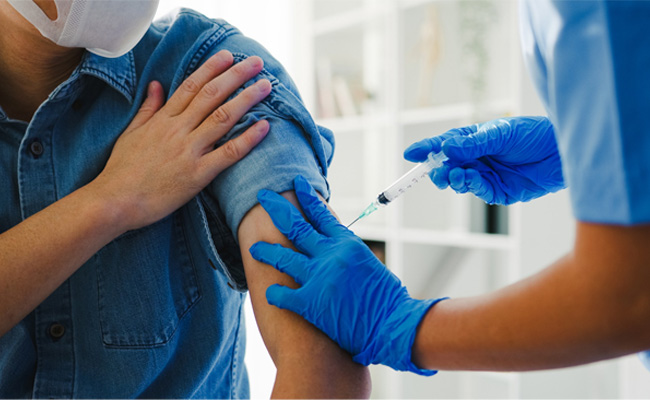
Mumbai (PTI): The Maharashtra government has set up a State Vaccination Task Force to strengthen the regular immunisation programme and review the progress of related campaigns, a health department official said on Monday.
The State Vaccination Task Force will comprise at least 29 members and will be headed by the administrative head of the health department, he informed.
The government has also constituted separate district-level and municipal vaccination task forces to improve implementation and address challenges at the grassroots level, he said.
Municipal task forces, chaired by respective civic commissioners, have been constituted in view of the vast urban population in Maharashtra and the role of civic bodies in implementing different health programmes.
The district-level task forces will function under the chairmanship of collectors.
"Complete immunisation of children at the appropriate age is an extremely simple, cost-effective and highly effective measure to reduce child mortality and the prevalence of diseases among kids. Immunisation is a powerful tool for reducing illness in children," maintained the official.
To ensure full vaccination of all children, the state government implements various campaigns from time to time as per the central government guidelines, he pointed out.
"Active participation and cooperation of other relevant government departments are essential (in making these campaigns successful)," according to the official.
The state-level body will review the regular immunisation programme, associated campaigns and vaccine-preventable diseases in detail. It will also conduct focused assessments of high-risk districts and municipal corporations, including vacancies at district, municipal and sub-district levels, availability of cold chain equipment, resource gaps and training requirements, he noted.
The state task force will review allocation and utilisation of funds for immunisation and ensure timely action by officers concerned based on reports from district and municipal task forces and state-level monitoring mechanisms, the official said.
It will also ensure active coordination and participation of other government departments in immunisation drives, while district and municipal task forces will carry out similar functions at their respective levels, the official added.