Eight years, 15 paroles: Impossible to ignore pattern of paroles for Gurmeet Singh
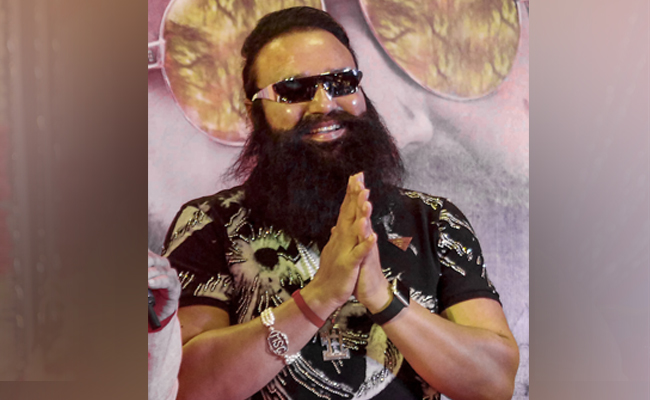
Jailed Dera Sacha Sauda chief Gurmeet Singh, convicted of raping two of his disciples and serving a life sentence for the murder of a journalist, has once again been granted parole, this time for 40 days. Approved on January 3, this marks the 15th temporary release he has received since his first conviction in 2017.
The pattern is by now impossible to ignore. Parole after parole, furlough after furlough, the man sentenced to 20 years for rape and life imprisonment for murder has spent a significant portion of his sentence outside prison walls. His latest release will see him stay at the headquarters of his Sirsa-based organisation, a familiar arrangement from previous paroles, including earlier stints at Dera ashrams in Uttar Pradesh.
This is not an isolated administrative decision but part of a long and troubling sequence. In August last year, he was granted another 40-day parole. Before that came a 21-day furlough in April, a 30-day parole in January ahead of the Delhi assembly elections, and a 20-day parole in October just before Haryana went to the polls. Go further back and the pattern repeats itself with striking regularity, relief timed uncomfortably close to elections, public campaigns, or politically sensitive moments.
Each release has been defended as being “within the rules.” But when rules begin to function only for the powerful, legality stops being a shield and becomes an indictment. Ram Rahim is not an undertrial or a first-time offender. He is a convicted rapist and murderer whose crimes led to violence, deaths, and long-lasting trauma. The question is no longer whether parole is technically permissible, but whether the spirit of justice is being systematically hollowed out.
Dera Sacha Sauda’s large and politically relevant following across Haryana, Punjab, Rajasthan, and neighbouring states is an open secret. Districts like Sirsa, Fatehabad, Hisar, and Kurukshetra have repeatedly seen the group’s influence reflected in electoral calculations. Against this backdrop, repeated paroles begin to look less like humanitarian considerations and more like transactional governance.
For survivors, journalists, students activists and ordinary citizens, the message is chilling. Sentences handed down by courts appear negotiable. Justice seems elastic, strict for some, endlessly flexible for others. Every parole chips away at public faith in the criminal justice system and reinforces the belief that power, not principle, determines outcomes.
At some point, the question must be asked plainly: if a man convicted of rape and murder can step out of jail again and again with clockwork regularity, what does a life sentence actually mean in this country?
Let the Truth be known. If you read VB and like VB, please be a VB Supporter and Help us deliver the Truth to one and all.
Counting for Bagalkot, Davanagere South bypolls on May 4 amid tight security
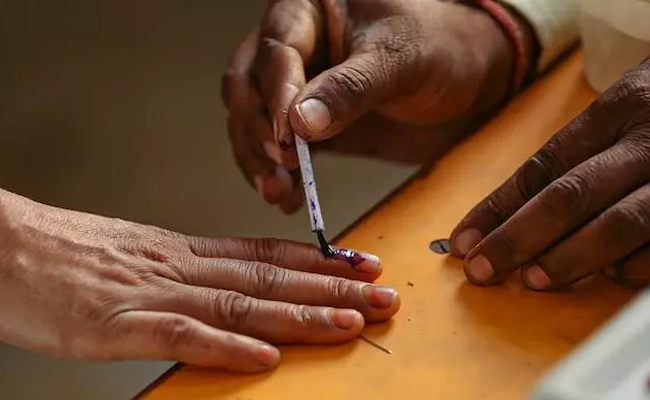
Bengaluru (PTI): Counting of votes for bypolls to two assembly constituencies in Karnataka -- Bagalkot and Davanagere South -- will be held on May 4, amid tight security, election officials said Sunday.
The by-elections were held on April 9.
The bypolls were necessitated by the deaths of senior Congress MLAs H Y Meti (Bagalkot) and Shamanur Shivashankarappa (Davanagere South).
Although the outcome of these by-elections is unlikely to have an immediate impact on state politics, the contest is seen as a matter of prestige for both the ruling Congress and the opposition BJP.
While the Congress faces the challenge of retaining both seats, the BJP aims to wrest them and deliver a setback to the ruling party, which is currently witnessing an "internal power struggle" over leadership.
There has been speculation that a decision on leadership change and the much-awaited cabinet reshuffle is likely after the May 4 results.
According to the Election Commission, the voter turnout in Bagalkot was 68.74 per cent, and it was 68.43 per cent in Davanagere South.
Poll officials said the counting of votes would begin at 8 am, and the clear picture may emerge by mid day.
Adequate security arrangements have been made for the smooth conduct of the counting and to ensure that no untoward incidents happen during or after the declaration of results, according to top police officials.
Preparations have been completed at the University of Horticultural Sciences in Bagalkot and DRR School at Davanagere for counting of votes.
According to election officials, 14 tables each have been set for vote counting on EVMs at counting centres both in Bagalkot and Davanagere South assembly segments, where nine and 25 candidates were in the fray respectively.
The BJP fielded former MLA and 2023 defeated candidate Veerabhadrayya Charantimath from Bagalkot, and a fresh face, Srinivas T Dasakariyappa, from Davanagere South.
The Congress gave tickets to family members of the late legislators in both constituencies. Bagalkot candidate Umesh Meti is the son of H Y Meti, while Samarth Mallikarjun from Davanagere South is the grandson of Shamanur Shivashankarappa.
Samarth's father, S S Mallikarjun, is a minister in the Siddaramaiah-led Cabinet and in charge of Davanagere district, while his mother, Prabha Mallikarjun, is a Member of Parliament from the region.
The BJP is looking to make gains in the bypolls and energise its cadre ahead of the 2028 Assembly elections. For the Congress, retaining both seats is crucial, as a loss could be seen as a negative verdict on the performance of the Siddaramaiah-led government.
Muslim disgruntlement appears to be a concern for the Congress in Davanagere South. With 14 of the 25 candidates in the fray belonging to the community, there are apprehensions within the party about a split in votes, which could benefit the BJP.
Given its significant presence in the constituency, the Muslim community strongly demanded the Congress ticket for Davanagere South. However, the party fielded late MLA Shivashankarappa's grandson Samarth. This is said to have caused disgruntlement among the community and Muslim leaders within Congress.
Although the Congress persuaded a rebel candidate Sadiq Pailwan to withdraw, he remained in the fray as the move came after the deadline for withdrawal of nominations.
The Congress, after the polls, even took action against some Muslim leaders of the party following allegations of "internal conspiracy" to defeat the candidate in Davanagere South. The action included MLC K Abdul Jabbar being suspended from primary membership and Chief Minister Siddaramaiah relieving another MLC, Naseer Ahmed, from the post of CM's political secretary.
Speculation are rife that Housing Minister B Z Zameer Ahmed Khan may also face disciplinary measures during the next cabinet reshuffle. So, the Davanagere South results are crucial for Khan as well.
Following these actions, some Muslim clerics and leaders had openly warned the grand old party.
In Bagalkot too, the Congress faced initial dissidence, with other members of Meti's family seeking the ticket. However, Siddaramaiah's intervention helped resolve differences to an extent, and they campaigned together.
The BJP, in contrast, saw little dissidence over candidate selection, with its leaders campaigning in unity.
Leaders of Congress and the BJP have expressed confidence about their parties winning both the seats.
In the 2023 Assembly elections, H Y Meti defeated BJP's Charantimath by a margin of 5,878 votes in Bagalkot, while Shivashankarappa defeated BJP's B G Ajay Kumar by 27,888 votes in Davanagere South.