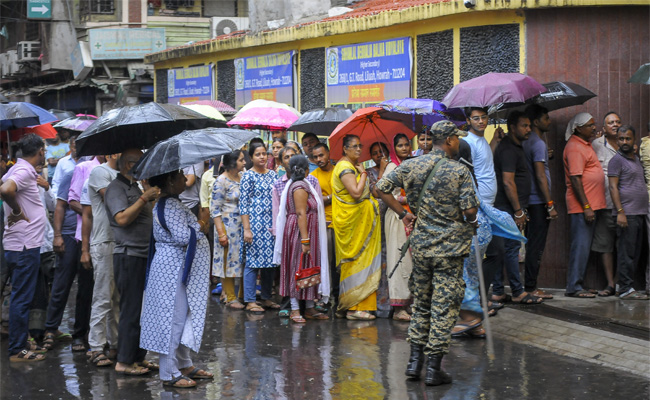
Election Commission may announce Lok Sabha poll schedule in March first week: Sources
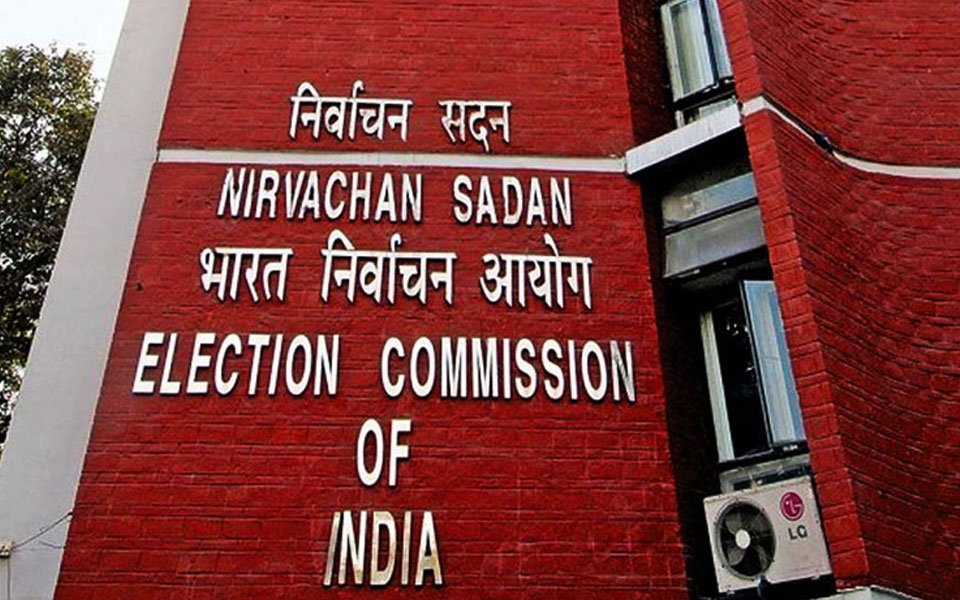
New Delhi, Jan 18 : The dates for the Lok Sabha elections are likely to be announced in the first week of March, sources indicated on Friday.
The term of the present Lok Sabha ends on June 3. The Election Commission is in the process of deciding the number of phases and the months in which polling would be held, they said.
The charting of the phases would also depend on the availability of security forces and other requirements, the sources said, adding the announcement of the mega exercise is likely to be made in first week of March.
There is a possibility that the EC may go by the precedent and hold assembly elections in Andhra Pradesh, Odisha, Sikkim and Arunachal Pradesh along with the Lok Sabha polls.
Since the Jammu and Kashmir assembly has been dissolved, the EC is bound to hold fresh polls there within six months.
It was dissolved in November, 2018 and the upper limit ends in May. The poll panel may hold elections in Jammu and Kashmir along with the Lok Sabha polls as well. But it can be held before that also as much depends on the complex security situation there, they said.
In normal circumstances, the J&K assembly's six-year term was to end on March 16, 2021. The other state assemblies and the Lok Sabha have a five-year term.
While the term of the Sikkim Assembly ends on May 27, 2019, the terms of Andhra Pradesh, Odisha and Arunachal Pradesh assemblies end on June 18, June 11 and June 1 respectively.
In 2004, the Election Commission had announced four-phase Lok Sabha polls on February 29. While the first date of poll was April 20, the last date was May 10.
In 2009, the EC had announced Lok Sabha poll scheduled on March 2. The five-phase polls began on April 16 and ended on May 13.
In 2014, the EC had announced the election schedule on March 5 and the nine-phase electoral exercise was spread across April and May.
While the first phase polling was on April 7, the last phase was on May 12.
Let the Truth be known. If you read VB and like VB, please be a VB Supporter and Help us deliver the Truth to one and all.
Rickelton's ton in vain as SRH beat MI by 6 wickets
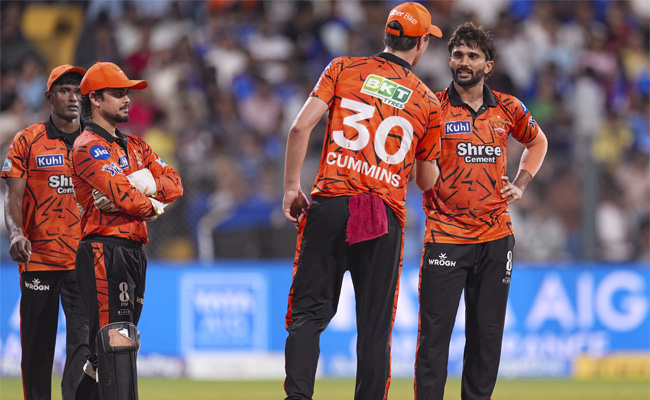
Mumbai (PTI): Ryan Rickelton's whirlwind unbeaten ton was overshadowed by Heinrich Klaasen's unbeaten 65 as Sunrisers Hyderabad defeated Mumbai Indians by six wickets in an IPL match here on Wednesday.
Chasing an imposing 244-run target, Travis Head (76 off 30) and Abhishek Sharma (45 off 24) shared 129 runs for the opening wicket to set the platform for SRH.
Klaasen (65 not out off 30 balls) then displayed his all-round hitting abilities to guide SRH home with the help of Nitish Kumar Reddy (21) and Salil Arora (30 not out off 10) in 18.4 overs.
Earlier, Rickelton's knock powered MI to 243 for five.
MI rode on a 93-run stand between Rickelton (123 not out off 55 balls) and Will Jacks (46 off 22) in 7.1 overs for the opening stand to power the side.
MI skipper Hardik Pandya scored a valuable 31 off 15 balls before being dismissed.
Praful Hinge (2/54), Eshan Malinga (1/29), Sakib Hasan (1/39) and Nitish Kumar Reddy (1/31) were the wicket-takers for SRH.
Brief Scores:
Mumbai Indian: 243 for 5 in 20 overs (Ryan Rickelton 123 not out; Praful Hinge 2/54).
Sunrisers Hyderabad: 249 for 4 in 18.4 overs (Travis Head 76, Heinrich Klaasen 65 not out; AM Ghazanfar 2/51).