Election Commission replaces Kolkata police commissioner, 3 other Bengal top cops
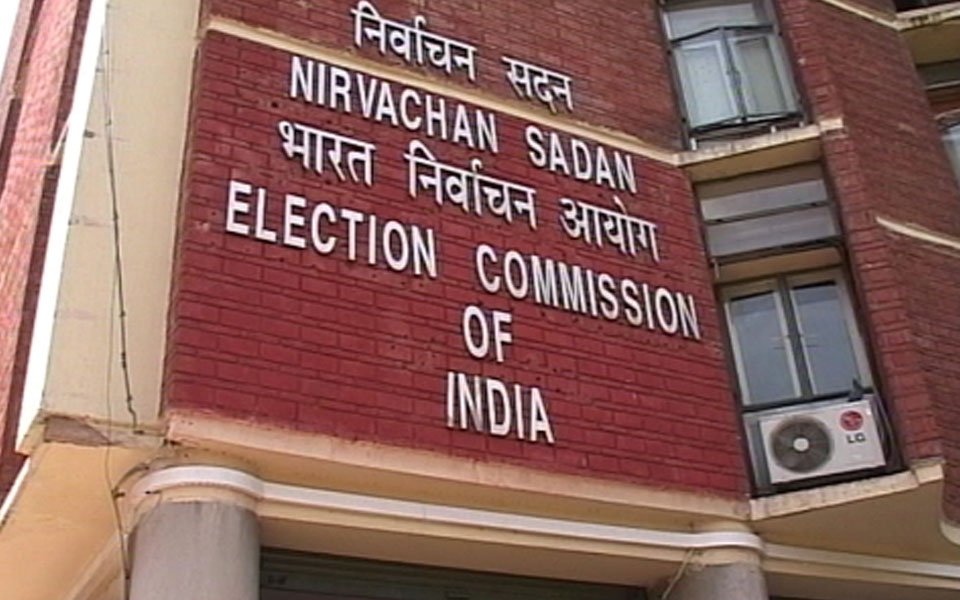
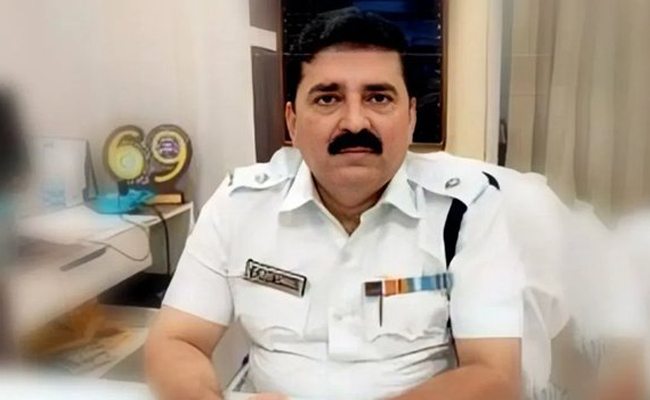
Kolkata: The Election Commission of India (EC) on Friday night removed Kolkata Police Commissioner Anuj Sharma and Bidhannagar Police Commissioner Gyanwant Singh ahead of the Lok Sabha elections in a major shake-up in the police establishment of the state.
The announcement comes days after BJP leaders had alleged that free and fair elections would not be possible in the state under these officers.
Dr Rajesh Kumar, Additional Director General of Police (ADG), Pollution Control Board, was made the new Kolkata top cop, while Natarajan Ramesh Babu, ADG and IGP, Operations, was named the Bidhannagar police commissioner, an ECI notification about the decisions said.
The poll body also named Avannu Ravindranath, DC (Airport Division) of Bidhannagar, as the new superintendent of police (SP) of Birbhum and appointed Srihari Pandey, DC KAP, 3rd Battalion, as the SP of Diamond Harbour.
The EC wrote to West Bengal Chief Secretary Malay Dey, directing an immediate implementation of the directives and seeking a compliance report in respect to the joining of the transferred officers within 24 hours.
The commission also directed that the present incumbent officers being shifted should not be involved by the state government in any election-related duty.
Both Sharma and Singh were present with West Bengal Chief Minister Mamata Banerjee when she started her dharna to protest a CBI action against the then Kolkata police commissioner in connection with its probe in the Saradha scam.
Sharma had replaced Kumar in mid-February.
Incidentally, after Trinamool Congress MP Abhishek Banerjee's wife Rujira was allegedly found carrying gold at the Kolkata airport, the BJP had lodged a complaint with the EC against Bidhannagar Police Commissioner Gyanwant Singh.
The party had demanded that Singh be held "responsible" for the alleged police interference, if "prima facie any such incident happened".
Let the Truth be known. If you read VB and like VB, please be a VB Supporter and Help us deliver the Truth to one and all.
Power bank catches fire inside stationary IndiGo plane at Chandigarh airport; all evacuated

New Delhi (PTI): The power bank of a passenger onboard a stationary IndiGo aircraft caught fire at the Chandigarh airport on Tuesday, and all passengers and the crew were evacuated, according to a source.
In a statement, the airline said that when IndiGo flight 6E 108 from Hyderabad to Chandigarh was stationary after landing, an incident involving a customer's personal electronic equipment catching fire was reported.
"In the interest of safety, an immediate evacuation was carried out, and all the relevant authorities were immediately informed. All customers have been safely moved to the terminal and are being attended to by the team to ensure their well-being," the statement said.
The source said that soon after the aircraft landed, there was smoke coming from one of the overhead bins and all onboard were evacuated.
The smoke was due to the power bank catching fire, the source said, adding that no one sustained major injuries.
Details about the number of passengers could not be ascertained.