Election data scientist alleges vote manipulation in Maharashtra Assembly elections

Mumbai: Pyarelal Garg, a prominent election data scientist, has raised serious concerns over the integrity of the recently concluded Maharashtra Assembly elections. In an exclusive interview with The Federal's YouTube program Capital Beat, Garg alleged that discrepancies in the vote counts were observed in at least 92 constituencies, with an average manipulation of 26,500 votes per seat. He claimed these discrepancies disproportionately favoured the ruling National Democratic Alliance (NDA).
Dr. Garg, a seasoned election analyst, presented detailed statistical evidence suggesting that the Election Commission of India (ECI) failed to maintain transparency during the voting and counting processes. Key points of his allegations include:
Garg highlighted discrepancies in the voter turnout data, which showed significant changes between 5:00 PM and 11:30 PM on polling day. He suggested this shift indicated potential tampering with the data.
Garg also pointed out that the data released by the ECI was not raw data (primary figures), but processed and aggregated, making it difficult to verify and analyse accurately.
He further alleged that voting percentages in Maharashtra rose by 7.83% after 5:00 PM, a stark contrast to the 0.86% increase observed in Jharkhand during the same election cycle. This, Garg argued, contributed to an additional 76 lakh votes, skewing the results in favour of the NDA.
Dr. Garg presented evidence suggesting that manipulation was systematic across the state. He noted that, in some constituencies, the margin of victory for NDA candidates was smaller than the number of manipulated votes. For example, in a constituency in Aurangabad, the margin of victory was around 18,000 votes, while Garg claimed that nearly 23,000 votes were added during the counting process.
“These discrepancies are not random but systematic,” Dr. Garg said. “It appears that the data has been tailored to benefit the ruling party.”
Dr. Garg also expressed doubts about the integrity of Electronic Voting Machines (EVMs), though he conceded that the machines themselves were secure. His concerns centred on the processes surrounding them, citing instances where the final vote tally did not match the figures from the EVMs during the counting process.
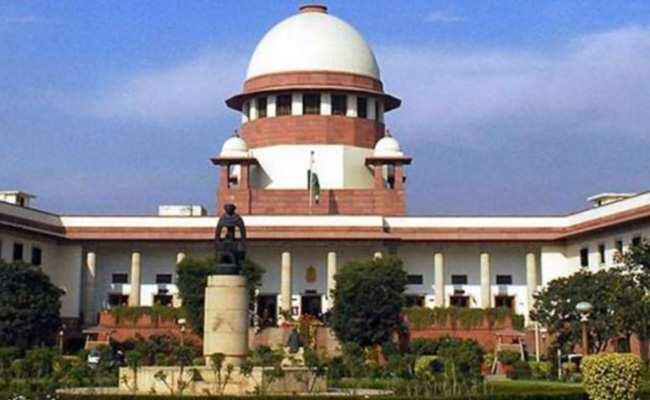
Dr. Garg criticised the judiciary for failing to address the Election Commission's non-compliance with Supreme Court directives, including the requirement for video documentation of polling booths after voting hours. He urged citizens to take action, demanding accountability from the ECI and ensuring the integrity of future elections.
Let the Truth be known. If you read VB and like VB, please be a VB Supporter and Help us deliver the Truth to one and all.
Bihar: Over 150 children fall ill after consuming 'mid-day meal' in Saharsa

Saharsa (PTI): More than 150 children were taken ill after allegedly consuming food that was part of the mid-day meal in a school in Bihar’s Saharsa district, a senior official said on Thursday.
The incident occurred at a middle school in Baluaha village of the district.
The official said that 115 children were undergoing treatment at the Sadar Hospital, while around 50 students were admitted to Mahishi Public Health Centre.
“We received information that several children fell ill after consuming the mid-day meal in Baluaha. The children were initially treated at the primary health centre, but later, many were referred to the Sadar Hospital,” Saharsa District Magistrate Deepesh Kumar told reporters.
“According to doctors, the health condition of the children has improved, but they will be kept under observation for some time. There is no need to panic. Some kids are having mild fever. They are being treated accordingly,” Kumar said.
Meanwhile, family members of some children claimed that a snake was found in the container in which cooked pulses was stored at the school.
Of the 545 students present in the school, 200 had already eaten their meals by the time the snake was spotted, and later complained of stomach ache and vomiting, they said.
Regarding the claims, the DM said food samples have been collected from the school.
“We will be able to comment on this only after the results of the tested samples arrive,” he said.