Electoral bonds: Plea seeks review of SC order rejecting petitions for seizure of money
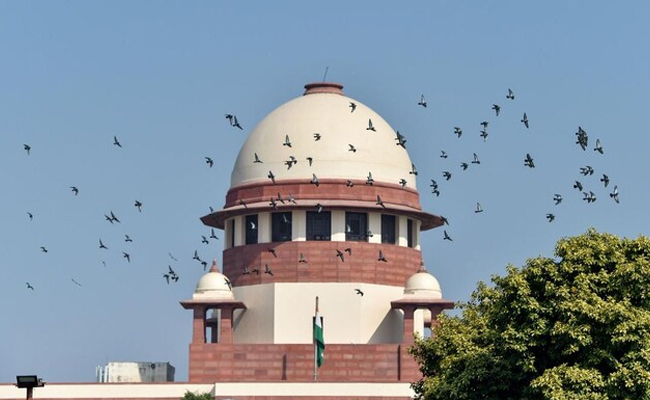
New Delhi (PTI): A petition filed in the Supreme Court on Wednesday sought a review of its August 2, 2024 order dismissing pleas for confiscation of Rs 16,518 crore received by political parties under the 2018 electoral bond scheme.
The review plea sought a recall of the August 2 2024 order which dismissed a previous petition seeking confiscation of money received under the scheme. It therefore sought the plea's restoration and a fresh hearing.
The top court, on August 2 last year, rejected a batch of pleas including the one filed by Khem Singh Bhati, who filed the review, seeking a court-monitored probe into the electoral bonds scheme (EBS) and observed it couldn't order a roving inquiry.
The review plea, filed through advocate Jayesh K Unnikrishnan and settled by senior advocate Vijay Hansaria, said on February 15, 2024 the apex court held in another case -- Association for Democratic Reforms (ADR) v. Union of India -- EBS as unconstitutional for violating Article 19(1)(a) of the Constitution.
"The effect of declaring the Electoral Bond Scheme and the various statutory provisions as unconstitutional is that the said scheme never existed and is void ab-initio and it is a settled position of law that the court only finds law and it does not make law,” it argued.
The verdict in the ADR case, said the plea, rendered the EBS void since inception and therefore the subsequent pleas seeking confiscation of the amount collected by political parties could not have been dismissed.
"In the absence of any declaration by this court in the ADR case that the judgement would apply prospectively, the existence of the Electoral Bond Scheme on the date of purchase could not have been the basis for dismissal of the present writ petition. The Electoral Bond Scheme stood wiped out for all purposes from the date of inception and the necessary consequences must follow,” it said.
The plea said the previous bench's reliance on the existence of parliamentary legislation permitting electoral bonds to dismiss the writ petition constituted an "apparent error on the face of the record".
The ADR judgment did not declare its findings to be prospective, which means the statutory framework supporting electoral bonds should have been treated as invalid from the outset, it said.
It argued the judgment had a retrospective effect, rendering the EBS null and void since its inception.
The plea said the three-judge bench's dismissal of the petitions, seeking confiscation of the amount received by political parties under the EBS, indirectly modified the ADR judgment which was delivered by a five-judge constitution bench.
The plea said evidence disclosed under court directions underlined the quid pro quo between donations made through EBS and the benefits received by corporate donors, contradicting the bench's conclusion that such claims were speculative.
"Disclosure of information regarding electoral bonds in terms of the direction of this court clearly establish that there was quid pro quo between the donations made to the political parties and benefits received by the corporate houses and the observation...that the writ petition is based on assumption about quid pro quo between the donor and donee and the petitioner is seeking a roving inquiry, suffers from apparent error,” it said.
A five-judge Constitution bench headed by former CJI D Y Chandrachud on February 15 last year scrapped the electoral bonds scheme of anonymous political funding introduced by the BJP government.
Following the top court's judgement, the State Bank of India, the authorised financial institution under the scheme, shared the data with the election commission which made it public.
The electoral bonds scheme, which was notified by the government on January 2, 2018, was pitched as an alternative to cash donations made to political parties as part of its efforts to bring in transparency in political funding.
Let the Truth be known. If you read VB and like VB, please be a VB Supporter and Help us deliver the Truth to one and all.
Karnataka: GBA city corporation polls likely between June 14 and 24
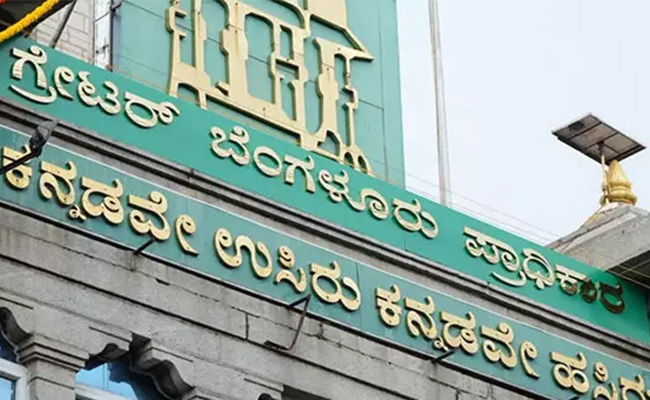
Bengaluru (PTI): Karnataka State Election Commissioner G S Sangreshi on Friday said elections to the five city corporations under the GBA will be held anytime between June 14 and June 24.
He said the exact date for the polls will be announced after a week, asserting that the power to postpone the elections, as requested by GBA authorities, lies with the Supreme Court.
The Supreme Court had directed the Karnataka government and the State Election Commission to conduct Bengaluru local body elections by June 30.
On Friday, the SEC held a consultation meeting with the GBA Chief Commissioner and commissioners of the five city corporations regarding the election schedule, as per the provisions of the GBA Act.
“During the meeting, I informed GBA officials that only the election date has to be fixed, as all other measures and formalities for conducting the polls have already been completed,” Sangreshi said.
“They requested the Commission to consider factors such as rains, exams, census work, SIR, and manpower shortages while fixing the date and sought additional time,” he added.
Speaking to reporters after the meeting, he said, “I told them this meeting was not for seeking time. Elections to the five corporations under the GBA must be held before June 30, as directed by the Supreme Court, and a compliance report must be submitted to the court. I do not have the power to postpone the elections as requested.”
The Supreme Court has already given a “final opportunity,” and both the SEC and the government must comply with its directions, the State Election Commissioner said.
He asked GBA officials to suggest suitable dates between June 14 and June 24.
“While stating that they are ready for elections, the officials highlighted operational challenges, including manpower shortages. However, I have informed them that the elections will have to be held between June 14 and June 24. After a week, I will announce the final date,” he said.
Reiterating that he does not have the power to postpone the elections, Sangreshi said the authority rests with the Supreme Court, and elections must be conducted as scheduled.
“We have consulted the GBA as per the rules. It is up to them to suggest a date within the given window. If they need more time, they must approach the court. Our responsibility is to fix the date and complete the polls before June 30,” he said.
The matter regarding manpower and other concerns raised by GBA officials is already before the Supreme Court, and the State Election Commission has also filed a petition in this regard. The case is yet to be heard.
“Since the matter has not come up for hearing, the earlier order remains binding. Therefore, preparations are underway,” he added.
The tenure of the previous elected body under the erstwhile Bruhat Bengaluru Mahanagara Palike (BBMP) ended on September 10, 2020, and since then, a government-appointed administrator has been managing its day-to-day affairs.
Bengaluru was divided into five municipal corporations—Central, East, West, North, and South—under the Greater Bengaluru Authority in September 2025, replacing the BBMP.
Sangreshi had earlier said that elections to the five corporations would be conducted using ballot papers instead of Electronic Voting Machines.
This follows the Congress government’s decision last September to recommend the use of ballot papers in all future panchayat and urban local body elections, citing concerns over declining public confidence in EVMs.
The state government subsequently enacted the Karnataka Gram Swaraj and Panchayat Raj (Amendment) Act, 2026, paving the way for the use of ballot papers in local body elections.