Elon Musk thanks Jyotiraditya Scindia for not agreeing with Ambani, Mittal on satcom spectrum
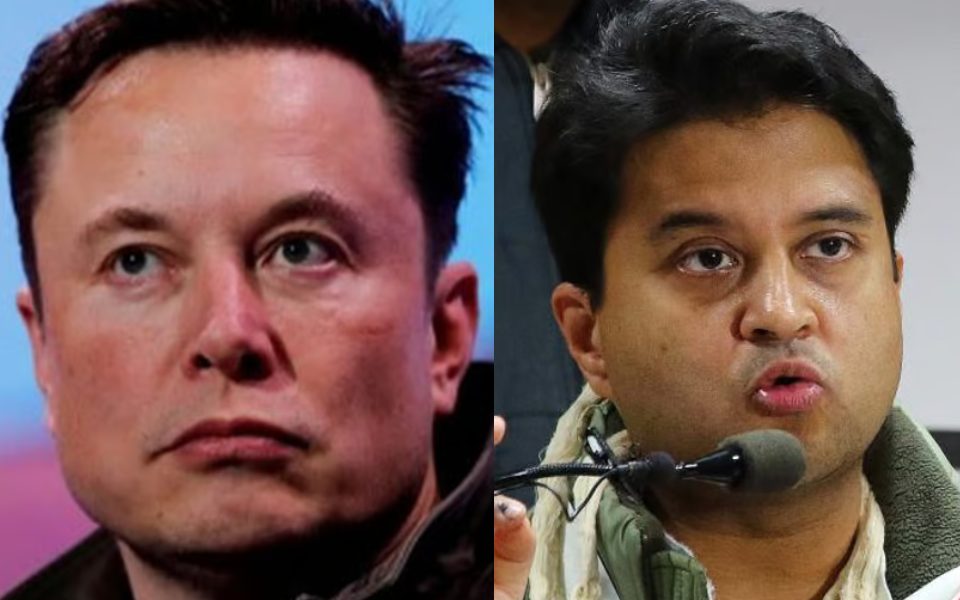
New Delhi, Oct 16: Tech billionaire Elon Musk thanked Telecom Minister Jyotiraditya Scindia for not agreeing with Indian tycoons Mukesh Ambani and Sunil Bharti Mittal on auctioning spectrum for satellite services, saying he is looking forward to serving Indians.
Reacting to Scindia's statement that satellite spectrum will not be auctioned, Musk, in a post on X, said, "much appreciated! We will do our best to serve the people of India with Starlink".
Elon Musk and Indian tycoons Ambani and Mittal are locked in a standoff over satellite spectrum and nuances of its allocation.
Jio recently sought a revision of a consultation paper on recommending norms for "terms and conditions for the assignment of spectrum for certain satellite-based commercial Communications services".
"We have received a reference from the Telecom Department and we have initiated a consultation process in response to the reference that has been received from DoT, and it covers issues that have been referred to Trai by the DoT...the consultation process is on, we will consider all inputs and views that are received during the consultation process and we will come out with our considered recommendations," Trai Chairman Anil Kumar Lahoti told reporters on the sidelines of IMC on Tuesday.
Asked about the demand by Reliance Jio that the Trai consultation paper be revised to ensure a level playing field between terrestrial and satellite players, the Trai chairman said, "Different stakeholders raise different demands on the consultation process, and we consider all these viewpoints and inputs and take a considered view".
The world's richest man Musk has taken on Indian billionaires Ambani and Mittal over the allocation of spectrum used in wireless communication using satellites, calling their demand for the auction of such airwaves "unprecedented".
While Ambani's Reliance Jio has been vocal about the need to allocate such spectrum through an auction to give a level playing field to legacy operators who buy airwaves and set up infrastructure like telecom towers, Mittal on Tuesday articulated the need for satellite companies harbouring any headwinds urban ambitions to buy spectrum as telecom companies do.
Musk-led Starlink is demanding administrative allotment of licences in line with the global trend as it looks to tap into the world's fastest-growing mobile telephony and internet market. This has found some backing in Telecom Minister Jyotiraditya Scindia, who said on Tuesday that such airwaves will be given out through administrative allocation and not auctioned.
Scindia said the Telecom Act of 2023 passed in December has put the matter in 'Schedule 1', which means that for satcomm spectrum will be allocated administratively.
"That does not mean that spectrum does not come without a cost. What that cost is and what the formula of that cost is going to be, will not be decided by you or me ...it will be decided by Trai...and there is a paper that has already been circulated by Trai, and we have a regulatory authority for telecom, and that regulatory authority of telecom has been empowered by the constitution to decide what that administrative pricing is going to be," he had said.
The minister had said he is very confident that Trai will come up with the best pricing that should be adopted, provided that it is being given in an administrative manner.
"Satellite spectrum across the world is allocated administratively. So, India is not doing anything different from the rest of the world. Conversely, if you do decide to auction it then you would be doing something which is different from the rest of the world," the minister said.
Pointing out that satellite spectrum is shared airwaves, Scindia said, "If the spectrum is shared, then how can you price it individually".
Musk first termed the demand made by Jio last week for shunning sector regulator Trai's consultation paper on satellite broadband being allocated and not auctioned as "unprecedented", and then asked if it was "too much trouble" to allow Starlink to provide internet services in India.
Much appreciated! We will do our best to serve the people of India with Starlink.
— Elon Musk (@elonmusk) October 15, 2024
Let the Truth be known. If you read VB and like VB, please be a VB Supporter and Help us deliver the Truth to one and all.
Gold, silver soar as US-Iran deal hopes lift bullion demand

New Delhi (PTI): Gold prices rebounded by Rs 2,900 to Rs 1.55 lakh per 10 grams in the national capital on Wednesday, while silver climbed to Rs 2.54 lakh per kilogram as easing geopolitical tensions triggered a pullback in oil rates, boosting demand for precious metals.
According to the All India Sarafa Association, the yellow metal of 99.9 per cent purity jumped by Rs 2,900, or nearly 2 per cent, to Rs 1,55,400 per 10 grams (inclusive of all taxes) from Tuesday's closing level of Rs 1,52,500 per 10 grams.
Traders attributed the surge in bullion prices to reports that Washington and Tehran are close to finalising a framework agreement to end months of conflict, raising the prospects of smoother flows through the Strait of Hormuz and easing inflation concerns tied to energy markets.
"Gold rallied strongly on Wednesday as easing geopolitical tensions triggered a sharp reversal in key macro drivers that had recently pressured precious metals," Saumil Gandhi, Senior Analyst - Commodities at HDFC Securities, said.
Silver prices also advanced for the third straight session by rising Rs 3,500, or 1.4 per cent, to Rs 2,54,500 per kg (inclusive of all taxes). The metal had settled at Rs 2,51,000 per kg in the previous session, as per the Association.
"The prospect of a diplomatic breakthrough triggered a steep decline in oil prices and the US dollar, easing concerns about inflation while boosting demand for precious metals," Gandhi said.
Globally, spot gold increased by USD 106.15, or 2.33 per cent, to USD 4,663.70 per ounce while silver gained USD 3.40, or 4.68 per cent, to USD 76.24 per ounce.
"Gold witnessed a sharp rally as markets reacted positively to reports that the US and Iran are moving closer to a one-page agreement framework aimed at ending the conflict," Jateen Trivedi, VP Research Analyst - Commodity and Currency, LKP Securities, said.
Despite strong international gains, rupee strength limited the upside in domestic gold prices. The market is now highly focused on final confirmation and execution of the proposed deal, he added.
Any negative surprise or breakdown in negotiations could trigger a sharp sell-off in gold, while a successful agreement and sustained ceasefire could push the bullion prices higher in the near-term, Trivedi said.