Elon Musk's X sues union government over alleged censorship and IT Act violations
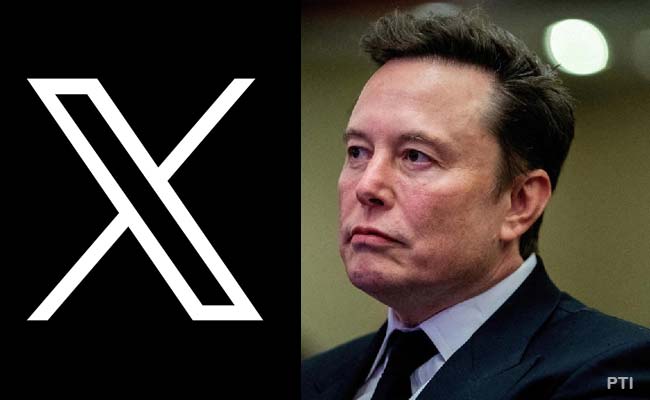
Bengaluru(PTI): Social media giant 'X' (formerly Twitter), owned by US billionaire Elon Musk, has filed a lawsuit in the Karnataka High Court against Government of India, challenging what it called unlawful content regulation and arbitrary censorship.
It raised concerns over the Centre's interpretation of the Information Technology (IT) Act, particularly its use of Section 79(3)(b), which 'X' argues violates Supreme Court rulings and undermines free expression online.
The lawsuit alleged the government is using the said section to create a parallel content-blocking mechanism, bypassing the structured legal process outlined in Section 69A.
'X' claimed this approach contradicts the Supreme Court's 2015 ruling in the Shreya Singhal case, which established that content can only be blocked through a proper judicial process or the legally defined route under Section 69A.
According to the Ministry of Information and Broadcasting (I&B), Section 79(3)(b) mandates online platforms to remove illegal content when directed by either a court order or a government notification.
If a platform fails to comply within 36 hours, it risks losing its safe harbor protection under Section 79(1) and could be held accountable under various laws, including the Indian Penal Code (IPC).
However, X has contested this interpretation, arguing that the provision does not grant the government independent authority to block content.
Instead, it accused authorities of misusing the law to impose arbitrary censorship without following due process.
Under Section 69A of the IT Act, the government has the power to block public access to digital content if it is deemed a threat to national security, sovereignty, or public order. However, this process is regulated by the 2009 Information Technology (Procedure and Safeguards for Blocking for Access of Information by Public) Rules, which require a structured review process before blocking decisions are made.
'X' has argued that instead of following these procedures, the government is using Section 79(3)(b) as a shortcut, allowing content to be removed without the necessary scrutiny. The platform sees this as a direct violation of legal safeguards meant to prevent arbitrary censorship.
Another major point in the social media platform's legal challenge is its opposition to the government's Sahyog portal.
Created by the Indian Cyber Crime Coordination Centre (I4C) under the Ministry of Home Affairs, this platform was designed to streamline takedown requests under Section 79(3)(b) and facilitate direct communication between social media platforms and law enforcement agencies.
However, 'X' has refused to onboard an employee onto the Sahyog portal, claiming it acts as a "censorship tool" that pressures platforms to remove content without proper legal review.
The lawsuit argues that this is yet another attempt by the government to control online discourse without judicial oversight.
Let the Truth be known. If you read VB and like VB, please be a VB Supporter and Help us deliver the Truth to one and all.
KSCA expresses disappointment over missing IPL playoffs, says it was ready to host matches in B’luru
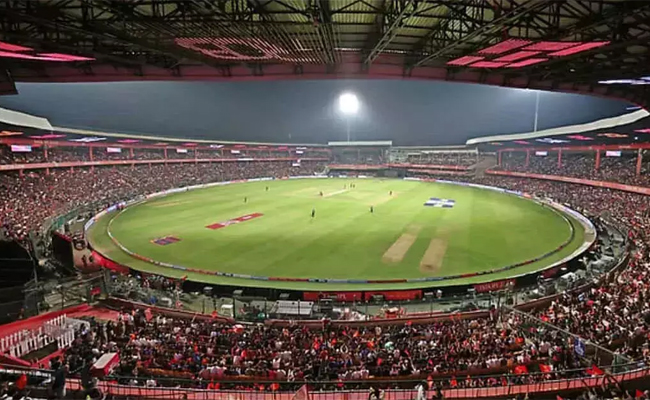
Bengaluru: The Karnataka State Cricket Association (KSCA) has issued a clarification stating that it was fully prepared to host the IPL playoffs and final matches in Bengaluru but the fixtures were allotted to other venues.
In a media note, KSCA said it was disappointed with the decision. The association stated that its president, former India cricketer Venkatesh Prasad, had been in touch with the Board of Control for Cricket in India (BCCI) and had formally conveyed the association’s readiness and interest in hosting the matches at the M. Chinnaswamy Stadium.
KSCA said the IPL matches held in Bengaluru this season were appreciated for smooth conduct, crowd management and overall experience for spectators. It said this reflected its ability to handle high-profile matches.
The association also stated that it had sent a detailed communication to the BCCI explaining its preparedness and the operational arrangements followed during the current IPL season. According to KSCA, these systems have been in place since the start of the Indian Premier League in 2008 and were followed consistently, including during previous playoff matches hosted in Bengaluru.
The clarification added that the communication sent to the BCCI was only meant to provide factual and operational details and to bring clarity on logistical and stakeholder-related requirements involved in hosting such matches.
KSCA said that although it had shown willingness and preparedness, the BCCI has decided to allocate the playoff matches to other venues. It added that the reasons for this decision have not been formally shared with the association, but it respects the authority of the board in taking such decisions.
The association further said it remains ready to host matches of national and international importance and will continue to cooperate with the BCCI, franchises, government authorities and other stakeholders for conducting cricket events.
The statement was issued by KSCA official spokesperson Vinay Mruthyunjaya, who also thanked the media and cricket fans for their continued support.