Eminent writer Vinod Kumar Shukla's last rites performed with full state honours in Raipur
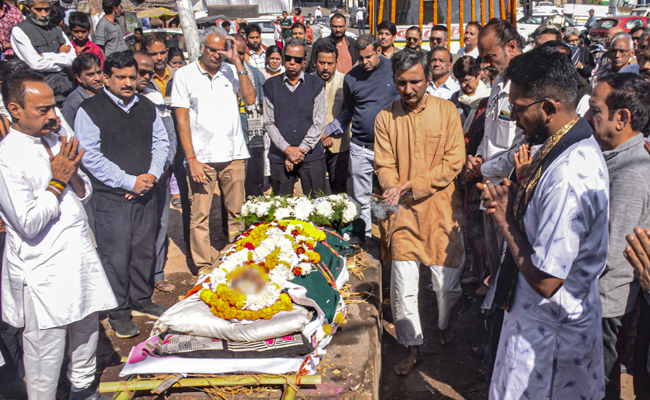
Raipur (PTI): The last rites of renowned Chhattisgarh-based Hindi writer and Jnanpith Award recipient Vinod Kumar Shukla were performed with full state honours in state capital Raipur on Wednesday.
The last rites of the 88-year-old writer were held at Marwadi Shamshan Ghat in Budha Talab area here this afternoon where senior officials, litterateur, journalists and people from other walks of life bid an emotional farewell to him. His son Shashwat Shukla lit the funeral pyre.
Prior to that, Chief Minister Vishnu Deo Sai visited the residence of the late litterateur at Shailendra Nagar here and expressed his condolences to the bereaved family.
Talking to reporters, Sai said the demise of Vinod Kumar Shukla has caused an irreparable loss to Hindi literature.
"Born in the soil of Chhattisgarh, Shukla's writings are a unique blend of sensitivity, human values and simple yet profound expression. His literary contribution took Hindi literature to new heights," the CM said.
"His works not only deeply touch readers but will continue to inspire and guide future generations. His contribution to the literary world will always be remembered," Sai added.
The CM offered a wreath on Shukla's mortal remains and prayed for peace to the departed soul. He also lent his shoulder to Shukla's mortal remains and joined the funeral procession, bidding an emotional farewell to the renowned writer.
Talking to reporters after visiting Shukla's residence, noted poet Dr Kumar Vishwas said his death marks the end of an era in Indian poetry.
Recalling his association with the writer, Vishwas said that for those born in the 1970s and whose literary consciousness developed in the 1980s, reading and listening to Vinod Kumar Shukla was an experience in itself.
Indian and Hindi poetry have suffered a major loss with his passing, he said.
He remained away from publicity and lived like a quiet seeker, and departed in the same serene manner. Indian poetry will always remember him for his immense contribution. I have come to pay my final respects, Dr Vishwas said.
Shukla died on Tuesday evening due to age-related ailments at All India Institute of Medical Sciences, Raipur.
Born on January 1, 1937, in Rajnandgaon (now in Chhattisgarh), Vinod Kumar Shukla is widely regarded as one of the most distinctive voices in Hindi literature. He authored acclaimed novels such as "Naukar Ki Kameez", "Khilega To Dekhenge", "Deewar Mein Ek Khirkee Rahati Thi" and "Ek Chuppi Jagah".
His work captures the emotions of ordinary people, portraying everyday life, and exploring the intricate realities of society. He was widely regarded as one of the most distinctive voices in Hindi literature, known for his unique, simple, and deeply evocative writing style.
Shukla received both of India's most prestigious literary honours: The Sahitya Akademi Award for "Deewar Mein Ek Khirkee Rahati Thi" in 1999, and the 59th Jnanpith Award in November this year, becoming only the 12th Hindi author to earn this distinguished recognition.
The Jnanpith award was presented to him on November 21 at a small ceremony held at his residence. He was the first author from Chhattisgarh to receive the prestigious award.
Prime Minister Narendra Modi, during his visit to Chhattisgarh on November 1, spoke to the family members of the acclaimed writer and enquired about his health and well-being.
Shukla's novel "Naukar Ki Kameez" was adapted into a film of the same name by filmmaker Mani Kaul.
Let the Truth be known. If you read VB and like VB, please be a VB Supporter and Help us deliver the Truth to one and all.
Hormuz Strait disruptions have caused huge economic impact, energy instability in region: Navy chief
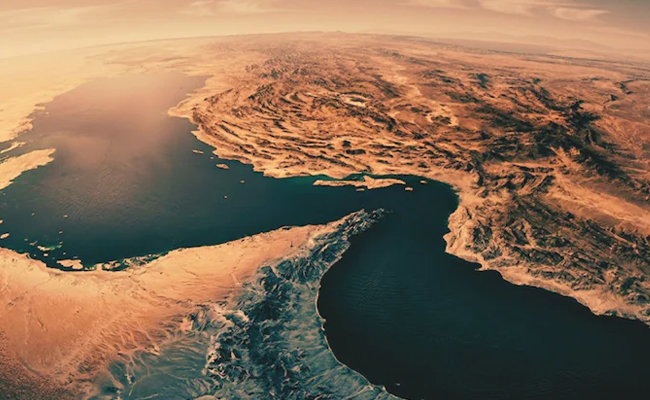
Mumbai (PTI): The Strait of Hormuz disruptions have caused severe economic impact and energy instability in the region, Indian Navy chief Admiral D K Tripathi said on Thursday amid the war in West Asia.
Speaking at an event where INS Sunayna, an offshore patrol vessel, set sail from Mumbai as Indian Ocean Ship (IOS) Sagar, the admiral said competition at sea has no longer remained confined to oil and energy.
It is now expanding towards resources that will shape future growth - such as rare earth elements, critical minerals, new fishing grounds and even data, he said.
The West Asia crisis began on February 28 after a joint attack by the US and Israel on Iran.
Iran's strikes on its neighbours along with its chokehold on the Strait of Hormuz have disrupted the world's energy supplies with effects far beyond West Asia.
"With the conflict in West Asia well into its fifth week, the disruptions in the Strait of Hormuz have caused severe economic impact and energy instability in the region," Tripathi said.
There is significant increase in the marine survey, deep-sea research activity, and Illegal Unreported and Unregulated Fishing (IUU), often encroaching upon the sovereign rights of littoral nations and exploiting gaps in monitoring and enforcement, he said.
Alongside these, threats such as piracy, armed robbery and narco-trafficking backed by unimpeded access of advanced technology to non-state actors, have also become more complex and challenging to counter, the Navy chief pointed out.
Last year alone, the Indian Ocean Region witnessed a staggering 3,700 maritime incidents of varying nature, the admiral said.
Additionally, narcotics seizures in the region exceeded USD 1 billion USD in 2025, highlighting the persistence and spread of such challenges in the region, he said.