Enact special law to protect dignity, rights of dead: NHRC to Centre, states
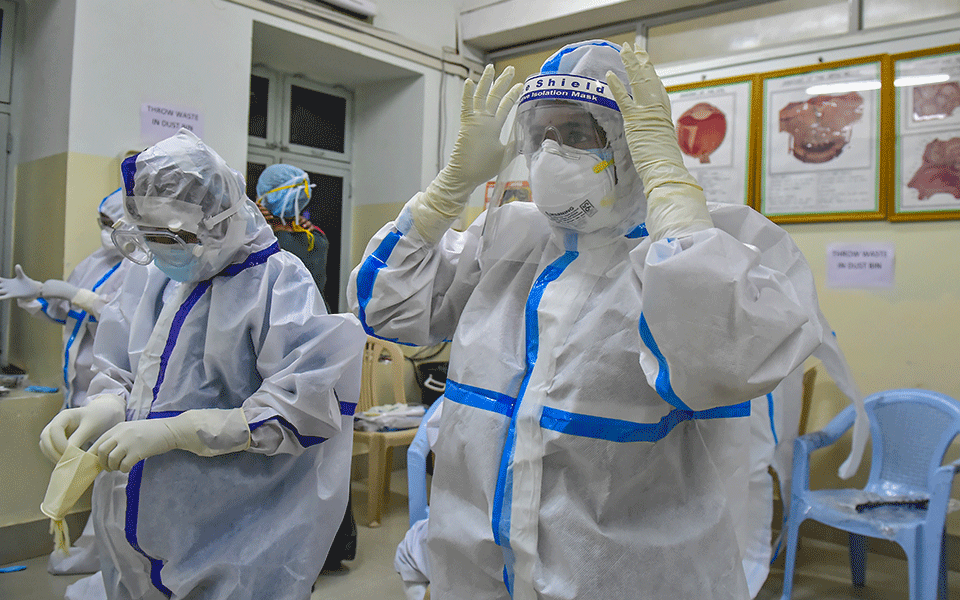
New Delhi: The NHRC on Friday issued an advisory to the Centre and all states and union territories in which it laid out a range of recommendations for protecting the dignity and the rights of the dead people in the wake of reports of alleged mishandling of bodies of COVID-19 victims.
In a statement, the National Human Rights Commission said the recommendations include enacting of a specific legislation to protect the rights of the dead, adding that "mass burial or cremation should not be allowed to take place as it is in violation of the right to dignity of the dead".
"The hospital administration should be explicitly prohibited from deliberately retaining any dead body on the count of pending bill payment; the unclaimed bodies must be stored under safe conditions," the recommendations read.
The advisory gathers significance in the context of the NHRC on Thursday, issuing notices to the Centre, Bihar and Uttar Pradesh governments on a complaint about bodies found floating in the river Ganga, it said.
"The NHRC, keeping in view the large number of deaths and reports in the media about the mismanagement/mishandling of COVID-19 affected dead bodies today issued an advisory to the Centre and states for protecting the dignity and the rights of the dead," the statement said.
The right panel asserted that it should be the duty of every citizen to inform, after noticing any incident of death, immediately to the nearest police station and/or to emergency ambulance services or the administrative or legal authorities, whichever feasible.
The Commission, in a letter through its Secretary General Bimbadhar Pradhan to the Union home secretary, Union Health and Family Welfare Secretary and the chief secretaries, administrators of states and union territories, has asked for the implementation of its recommendations in the advisory and sought the action taken report within four weeks, it said.
Among other recommendations, the NHRC has enumerated that each state must maintain a district wise digital data set of death cases; death of a person must be simultaneously updated in all documents such as bank account, Aadhaar card, insurance.
The police administration should ensure that there is no undue delay in post mortem; local authorities should ensure that the transportation facilities are available to transport the body of the deceased at the request of family members and the arbitrary hike of ambulance charges is curbed, it added.
The CSOs/NGOs should come forward to take up the responsibility of performing last rites of the unclaimed and unattended bodies in a dignified manner; temporary crematoriums be set up; religious rituals that do not require touching of the dbody may be allowed such as reading from religious scripts, sprinkling holy water, the recommendations read.
In cases where the repatriation of the body to the family may not be possible, the state or local administration may perform the last rites of the body, taking into account the religious or cultural factors, it said.
Piling up of dead bodies during the transportation or at any other place must not be allowed to happen. Encourage use of electric crematoriums; staff handling dead bodies, including those at crematoriums/burial grounds, should be provided protective gear along with the vaccination on priority and they should be fairly paid, the statement said.
The Commission has said that it is a well-accepted legal position that the right to life, fair treatment and dignity, derived from the Article 21 of the Constitution, extends not only to the living persons but also to their dead bodies.
"It has noted that despite high court and the Supreme Court judgements, international covenants, guidelines by the WHO, NDMA, government of India, regarding the maintenance of COVID protocol upholding the dignity of the dead, reports are coming in the media about lowering the dignity of the dead during the COVID-19 pandemic," the statement said.
The Commission has observed that though there is no law to protect the rights of the dead in the country, however, drawing references from the interpretation of the Constitutional mechanism, various court judgements, international covenants and government's guidelines, it has said that it is the duty of state to protect the rights of the deceased and prevent crime over the dead body, and prepare an SOP in consultation with all stakeholders so that the dignity of the dead is maintained.
Let the Truth be known. If you read VB and like VB, please be a VB Supporter and Help us deliver the Truth to one and all.
KSCA expresses disappointment over missing IPL playoffs, says it was ready to host matches in B’luru
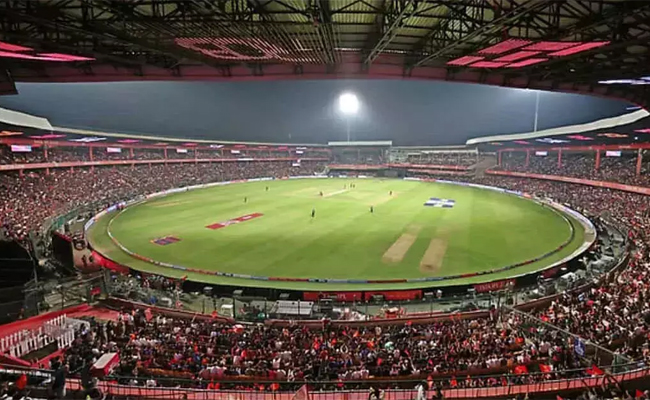
Bengaluru: The Karnataka State Cricket Association (KSCA) has issued a clarification stating that it was fully prepared to host the IPL playoffs and final matches in Bengaluru but the fixtures were allotted to other venues.
In a media note, KSCA said it was disappointed with the decision. The association stated that its president, former India cricketer Venkatesh Prasad, had been in touch with the Board of Control for Cricket in India (BCCI) and had formally conveyed the association’s readiness and interest in hosting the matches at the M. Chinnaswamy Stadium.
KSCA said the IPL matches held in Bengaluru this season were appreciated for smooth conduct, crowd management and overall experience for spectators. It said this reflected its ability to handle high-profile matches.
The association also stated that it had sent a detailed communication to the BCCI explaining its preparedness and the operational arrangements followed during the current IPL season. According to KSCA, these systems have been in place since the start of the Indian Premier League in 2008 and were followed consistently, including during previous playoff matches hosted in Bengaluru.
The clarification added that the communication sent to the BCCI was only meant to provide factual and operational details and to bring clarity on logistical and stakeholder-related requirements involved in hosting such matches.
KSCA said that although it had shown willingness and preparedness, the BCCI has decided to allocate the playoff matches to other venues. It added that the reasons for this decision have not been formally shared with the association, but it respects the authority of the board in taking such decisions.
The association further said it remains ready to host matches of national and international importance and will continue to cooperate with the BCCI, franchises, government authorities and other stakeholders for conducting cricket events.
The statement was issued by KSCA official spokesperson Vinay Mruthyunjaya, who also thanked the media and cricket fans for their continued support.