'Encounter specialist' Daya Nayak retires after 30 years in Maharashtra police force

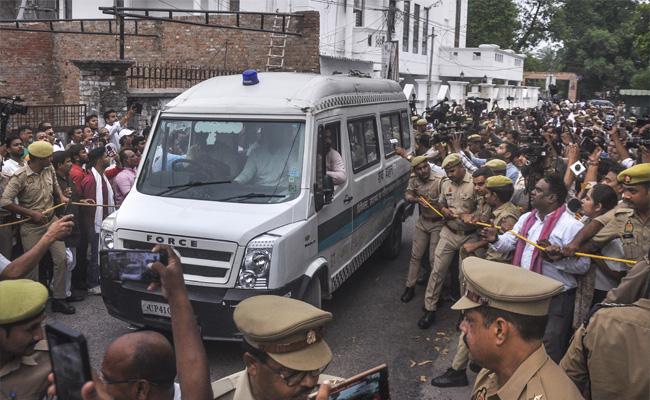
Mumbai, Jul 31 (PTI): Assistant Commissioner of Police Daya Nayak, popular as an 'encounter specialist' credited with gunning down more than 80 gangsters, retired from the force on Thursday after 30 years of service.
Nayak, a 1995 batch sub inspector, was promoted to the rank of ACP just two days ago after serving as senior inspector of the Bandra unit of Mumbai Crime Branch.
He was part of the Maharashtra Anti-Terrorism Squad (ATS) team that solved the case of an explosives-laden vehicle parked near Antilia, the Malabar Hill house of industrialist Mukesh Ambani, and subsequent murder of the vehicle's owner Mansukh Hiren in 2021.
In 2021, he was transferred to Gondia district but continued in the ATS after the order was stayed by Maharashtra Administrative Tribunal (MAT). Earlier. in 2019, his transfer out of Mumbai was held back by the government.
Let the Truth be known. If you read VB and like VB, please be a VB Supporter and Help us deliver the Truth to one and all.
Congress using hijab issue to pacify minority anger, alleges Karnataka LoP R Ashoka
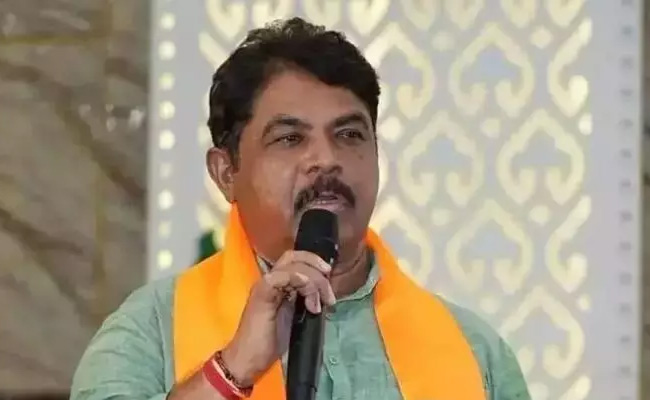
Bengaluru: Leader of Opposition in the Assembly R. Ashoka has accused the Congress government of using the hijab issue to placate what he described as discontent among minority voters after the Davanagere by-election.
In a post on X on Wednesday, Ashoka alleged that the state government, instead of addressing issues such as price rise, corruption, farmers’ distress and law and order, was attempting to retain its minority vote base by reviving the hijab issue.
Referring to the 2022 dress code introduced by the BJP government, which prohibited hijab in schools and colleges, Ashoka said the Karnataka High Court had upheld the policy and emphasised the importance of discipline in educational institutions.
He questioned the Congress government’s move to revisit the issue and asked whether setting aside the court-backed policy to benefit one community could be described as secularism.
Ashoka further alleged that while the government was willing to permit hijab, it continued to prohibit saffron shawls.
He accused the government of dividing students on religious lines rather than treating schools and colleges as spaces of equality.
Drawing a comparison with Mamata Banerjee’s government in West Bengal, Ashoka claimed that excessive appeasement politics had harmed the state and warned that the Congress in Karnataka could face a similar political response.
He said voters in Karnataka would teach the Congress a lesson for what he termed “vote-bank politics” and for compromising constitutional and judicial principles.