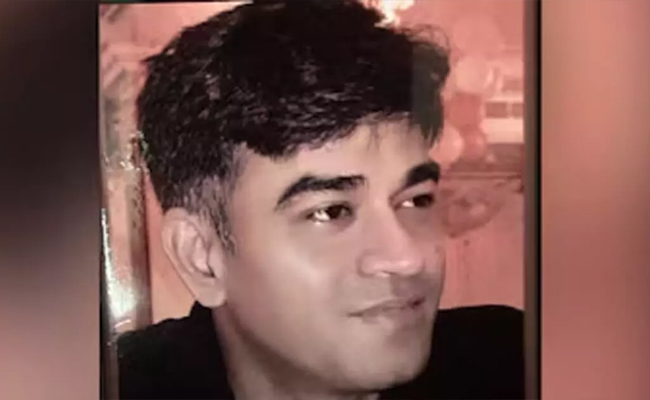
Bihar: Estranged Nitish Kumar aide RCP Singh floats own party
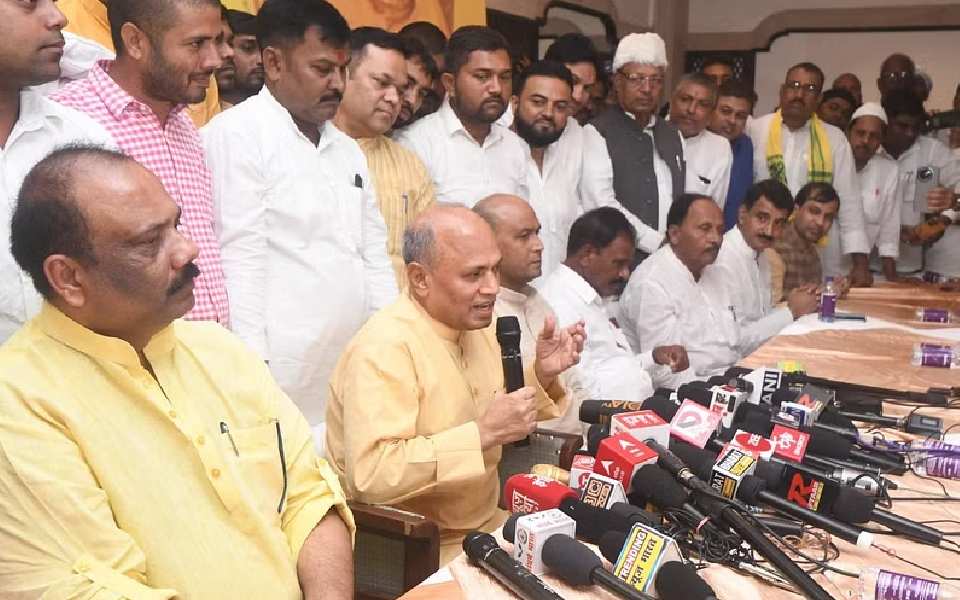
Patna, Oct 31: Former Union minister RCP Singh, who had to quit his cabinet berth after falling out of favour with JD(U) supremo Nitish Kumar, on Thursday floated a new party "Aap Saabki Aawaz".
Talking to reporters here on the occasion, Singh said he chose the day for the launch as besides Dipawali, it was also the birth anniversary of Sardar Vallabh Bhai Patel.
Incidentally, Patel is seen as a cultural icon by the powerful OBC community Kurmi, to which both Kumar and Singh belong, and the latter profusely thanked Prime Minister Narendra Modi for celebrating the birth anniversary on a grand scale.
Singh, the bureaucrat-turned-politician, who did not take any question, did not speak on his relations with the JD(U), which he had once headed but left in disgrace, and the BJP, which he joined a year ago, only to remain sidelined.
He, however, made it clear that his party was looking forward to contesting the Bihar assembly polls due next year and already had prospective candidates for "140 out of 243 seats".
Singh indirectly targeted Kumar by attacking the much-touted prohibition law in the state and highlighting the deterioration in government education institutions, "a far cry from our student days when we could crack the civil services, without reservation facility and with no coaching".
Hailing from the same Nalanda district as the Bihar chief minister, Singh was an Uttar Pradesh cadre IAS officer, and on central deputation, he first came in contact with Kumar, then the railway minister.
After assuming power in Bihar in 2005, Kumar, who was visibly impressed with the administrative acumen of Singh, persuaded the latter to come to Bihar as his principal secretary.
In 2010, Singh took voluntary retirement and joined JD(U) which helped him enjoy two consecutive terms in the Rajya Sabha.
However, in 2021, his induction into the Narendra Modi cabinet did not go down well with Kumar, who had by then grown suspicious that his protégé was planning a sabotage.
Singh was made to step down as national president of JD(U) within months of becoming the party president, and denial of another Rajya Sabha term a year later caused him to give up the ministerial berth.
By that time JD(U) rank and file was agog with rumours that Singh was plotting a split at the BJP's instance and served with a show cause notice over allegations of financial misappropriations that caused him to quit the party.
A year later, he joined the BJP which had by that time been dumped by Kumar who chose to realign a year later.
Later, Kumar's JD(U) emerged as a crucial ally of the BJP which is now short of a majority in Lok Sabha.
Let the Truth be known. If you read VB and like VB, please be a VB Supporter and Help us deliver the Truth to one and all.
Sujit Nair raises concerns over speculation of DMK-AIADMK understanding to block TVK
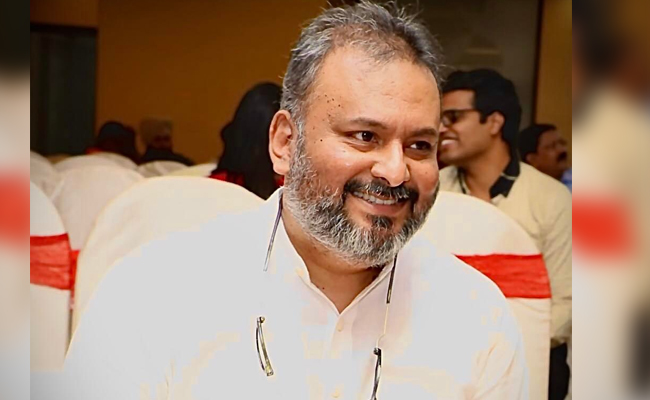
Chennai: Journalist and political commentator Sujit Nair has expressed concern over speculation that the Dravida Munnetra Kazhagam and the All India Anna Dravida Munnetra Kazhagam could explore a post-poll understanding to prevent Vijay-led Tamilaga Vettri Kazhagam from forming the government in Tamil Nadu.
In a social media post, Sujit Nair said the election verdict in Tamil Nadu reflected a clear public demand for political change and argued that the mandate should be respected irrespective of political preferences.
Referring to reports and political discussions surrounding a possible understanding between the DMK and AIADMK, he said he hoped such developments remained only speculative conversations and did not turn into reality.
Nair stated that if such an alliance were to take shape, it would raise serious questions about ideological politics in the country. He said TVK had emerged through a democratic electoral process and that the legitimacy to govern in a parliamentary democracy comes from the people’s verdict.
According to him, attempts to prevent an electoral winner from forming the government through unexpected political arrangements may be constitutionally valid, but many people could view them as politically opportunistic.
He further said that such a move could particularly affect the political image of the DMK, which has historically projected itself around ideology, social justice and opposition politics. Nair said that in ideological terms, the DMK appeared closer to TVK than to the AIADMK, and joining hands with its long-time political rival only to remain in power could weaken its broader political narrative.
He added that the same questions would apply to the AIADMK as well, as the party had spent decades positioning itself against the DMK and such an arrangement could create discomfort among its cadre and supporters.
Drawing a comparison with Maharashtra politics in 2019, Nair said he had expressed similar views when the Shiv Sena formed an alliance with the Indian National Congress and the Nationalist Congress Party after the Assembly elections.
He said post-poll alliances between long-standing political rivals often create a public perception that ideology and electoral mandates become secondary when political power equations come into play.
Nair also said such developments increase public cynicism towards politics and reinforce the belief among voters that ideology is often sidelined after elections.
He maintained that the Tamil Nadu verdict was emphatic and said respecting both the spirit and substance of the mandate was important for the credibility of democratic politics.