Even If Offline, People In Flood-Hit Kerala Can Share Location: Google

New Delhi, Aug 18 : Even when they are offline, Kerala flood victims can use their Android smartphones or tablets to generate and share the plus code of their exact location, which can pinpoint their whereabouts and make it easier for rescue workers to reach them, Google said on Saturday.
Users can share their plus codes over a voice call or an SMS.
Plus codes work just like street addresses. When an address is not available, one can use a plus code to find or share a place on Google Maps.
A plus code includes 6 or 7 letters and numbers, and a town or city.
To find the plus code for a place on an Android phone or tablet, users need to open the Google Maps app and touch and hold a place to drop a pin on Google Maps.
They then need to tap the address or description at the bottom, and scroll down to find the plus code.
To search for a place using a plus code, all the rescuers or family members of the flood victims need to do is type the plus code at the search box of the Google Maps app.
Overflowing rivers and a series of landslides in the state have caused the death of 180 people as of Saturday morning, with over three lakh people forced to move to some 2,000 relief camps.
Nearly, 7,000 persons have been rescued since August 9 and some 900 given medical assistance.
Twitter earlier this month said that in flood situations when communication services are limited and Internet connectivity is poor, using the data-friendly "Twitter Lite" can help people connect easily with government agencies, relief organisations, media and volunteers.
One can use hashtags such as #KeralaFloods, #KeralaFloods2018 on Twitter to find information regarding relief operations, such as locations of relief centres.
Facebook is updating information about the flood situation in Kerala in its Crisis Response Page. The social networking giant last week activated the "Safety Check" tool that allows users to indicate whether they are safe or not.
Let the Truth be known. If you read VB and like VB, please be a VB Supporter and Help us deliver the Truth to one and all.
Cong performed better in Kerala, anti-incumbency trends influenced WB, TN: CM Siddaramaiah
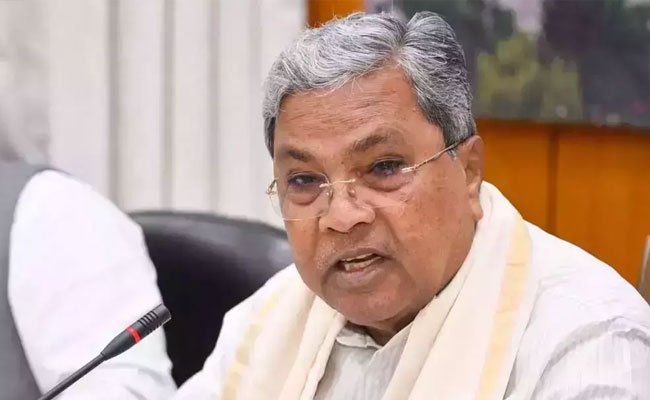
Bengaluru (PTI): Karnataka Chief Minister Siddaramaiah on Monday said the Congress had largely met or exceeded expectations in several States, even as results in some regions reflected shifting voter sentiments.
Speaking to reporters in Bengaluru, he said the party accepted the mandate in Assam while performing better than anticipated in Kerala.
He also pointed to possible anti-incumbency trends influencing outcomes in West Bengal and Tamil Nadu.
“In Assam, we got the expected result, and we accept the people’s mandate. In Kerala, we have won more seats than expected. We anticipated around 76 to 80, but we have gone up to around 95,” Siddaramaiah said.
In West Bengal and Tamil Nadu, there may have been an anti-incumbency trend, and that could have influenced the results, he added.
Siddaramaiah also extended his congratulations to a new political entrant in Tamil Nadu, noting the emergence of a different electoral dynamic in the State.
“I congratulate the new entrant who has achieved success there,” he added.
Deputy Chief Minister D K Shivakumar said electoral outcomes in some States had diverged from the party’s internal assessments, reflecting evolving voter expectations.
“We expected a certain trend, but the results have been different. Political reading was wrong in some places,” he said.
“People were looking for change in some States, and that has been reflected in the results,” Shivakumar, who is also the Congress Karnataka unit president, said.
Referring to Kerala, he said the Congress-led alliance had benefited from public sentiment.
“There was already an expectation based on local body elections, and people had shown confidence in us. That has translated into a strong result,” the Deputy Chief Minister said.
On Tamil Nadu, he acknowledged that the scale of political shift had come as a surprise.
“We expected to secure around 30 to 40 per cent of the vote share, but such a major shift was not anticipated. It shows that voter expectations were different,” he said.
Shivakumar added that electoral outcomes underscored the need for better political assessment in future.
“We have to understand these changes carefully. Political reading cannot go wrong like this,” he said.