Every stone placed on roadside cannot become an idol, says Madras High Court

Chennai: The Madras High Court expressed disapproval of prevailing "superstitious beliefs" in the country regarding the elevation of stones to the status of idols. Justice N. Anand Venkatesh issued a directive to the Assistant Commissioner of Police, Pallavaram Range in Chengalpattu district, to remove a stone placed at the entrance of a private property.
The court highlighted the inconvenience caused to property owners by the practice of placing stones on roadsides, draping them with cloths, and performing rituals to declare them as idols.
Justice Venkatesh humorously remarked on the absurdity of individuals having to go to civil court to determine whether a stone is merely a stone or has attained the status of an idol.
In disposing of a writ petition filed by E. Shakthi Murugan, who sought protection for the removal of a stone obstructing access to his property, the judge criticized the continuation of such superstitious beliefs in society.
The petitioner's complaint had been closed by the police, claiming it was a civil matter. However, after examining photographs, the judge noted the attempt to declare the stone as an idol by covering it with a green cloth.
“It is seen that the stone has been planted right in front of the property belonging to the petitioner. By covering that stone with a green cloth, an attempt is made by someone to call it as an idol,” the Judge said.
The court emphasized that it would be a waste of judicial time to entertain a frivolous dispute over whether the object was a stone or an idol. The Assistant Commissioner of Police was directed to act on the petitioner's complaint and ensure the removal of the stone within a week, allowing the petitioner to enjoy his property.
Let the Truth be known. If you read VB and like VB, please be a VB Supporter and Help us deliver the Truth to one and all.
Iran foreign minister Araghchi meets Pakistan Army chief Munir
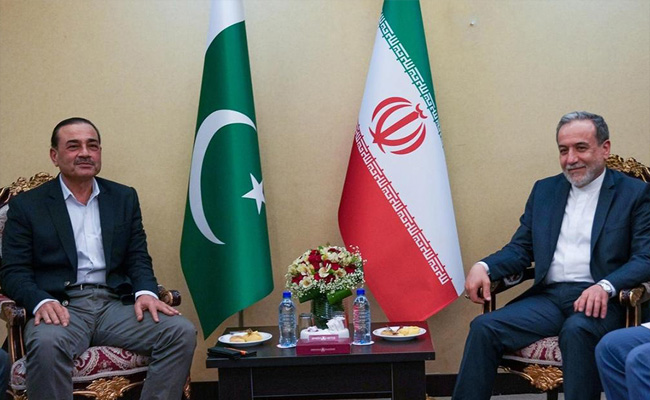
Islamabad (PTI): Iranian Foreign Minister Abbas Araghchi on Saturday met Pakistan Army chief Field Marshal Asim Munir here, as Islamabad continued its efforts to facilitate engagement between the US and Iran.
The meeting, according to a short video posted by the Iranian embassy on social media, was also attended by Iranian foreign ministry spokesperson Esmaeil Baghaei, and Iran's ambassador Reza Amiri Moghadam.
Araghchi calls on Munir, the embassy said in the video caption.
It did not provide further details about the discussions.
Araghchi arrived here late Friday for engagements with the Pakistani leadership. He was received by senior officials, including Munir, foreign minister Ishaq Dar and interior minister Mohsin Naqvi.
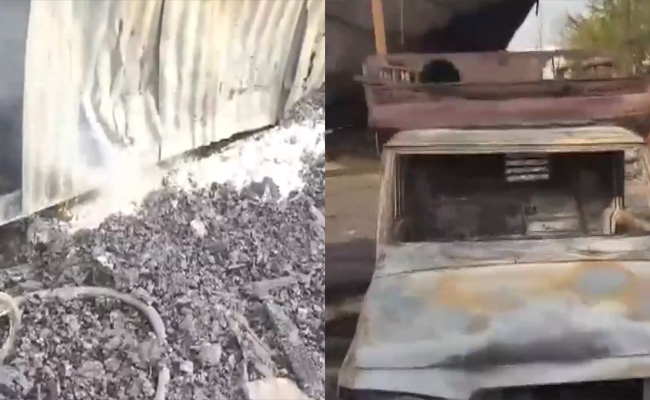
ALSO READ: Fire engulfs over 100 jhuggies in Delhi's Shakur Basti; no casualties
However, there is no clarity on whether direct talks between Washington and Tehran will take place during the visit.
"No meeting is planned to take place between Iran and the US. Iran's observations would be conveyed to Pakistan," Baqaei said in a social media post on Saturday.
Araghchi, before leaving for Islamabad, said that he was embarking on a timely tour of Islamabad, Muscat, and Moscow, and the purpose of his visits is to "closely coordinate with our partners on bilateral matters and consult on regional developments".
"Our neighbours are our priority," he said.
As the Iranian team landed in Islamabad, White House Press Secretary Karoline Leavitt said that US Special Envoy on the Middle East Steve Witkoff and President Donald Trump's adviser Jared Kushner would be leaving for Pakistan on Saturday "to engage in direct talks" with representatives of the Iranian delegation.
However, the US team has not yet arrived.
Meanwhile, Pakistan's Deputy Prime Minister and Foreign Minister Dar, in a social media post, expressed hope for "meaningful engagements" between the two warring parties to promote regional peace and stability.
The first round of US-Iran talks held on April 11 and 12 failed to produce a breakthrough, prompting a flurry of diplomatic efforts by host Pakistan to cool tensions and revive hopes for another round of dialogue.
On Tuesday, Trump extended the two-week ceasefire with Iran indefinitely to give Tehran more time to prepare a unified proposal to end the war, just hours before the truce was set to expire.
The Iran war began on February 28 with US-Israeli strikes.
_vb_19.jpeg)