EVMs tamper-proof, problem lies with VVPATs, says former EC chief
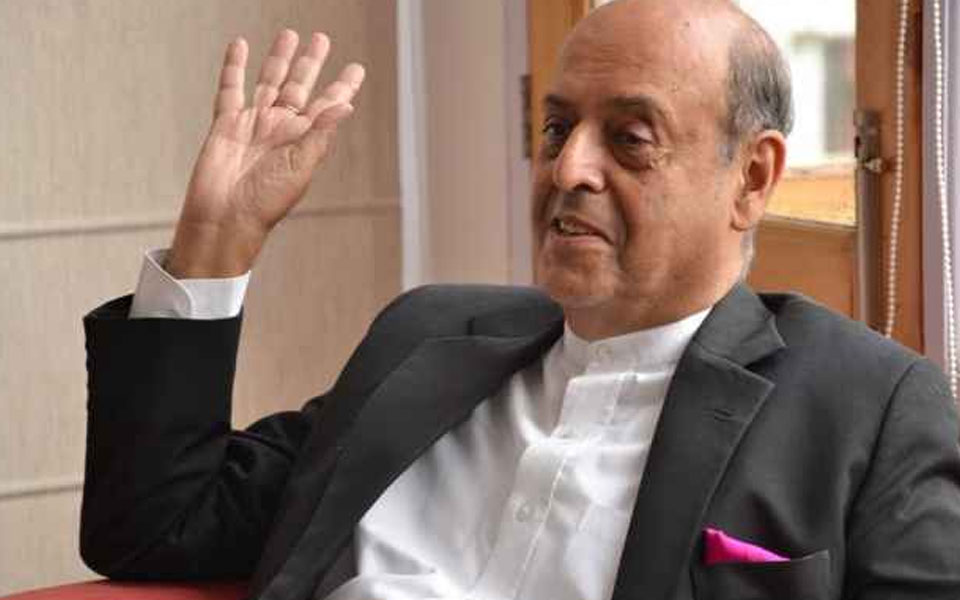
New Delhi : It is not the electronic voting machines (EVMs), but the technical glitches reported in the use of Voter Verifiable Paper Audit Trails (VVPATs) that have set off concerns about the technology, former chief election commissioner (CEC) Navin Chawla said on Saturday.
EVMs equipped with VVPATs were used in last year’s elections in Himachal Pradesh and Gujarat, allowing voters to verify that their vote had indeed gone to the candidate of their choice. VVPATs were aimed at ensuring transparency in the voting process.
On Thursday, as many as 17 opposition parties revived their demand for reverting to paper ballots in the 2019 Lok Sabha elections. Leaders of these parties familiar with the development said EVMs, even if they come equipped with the VVPATs, would not be acceptable and they will meet the Election Commission over the next week to push their demand.
Chawla claimed that the efficiency of the EVMs is not in doubt.
“I believe I speak for all of the former chief election commissioners when I say that the electronic voting machine by itself is tamper-proof. The EVMs were used over the years in several elections before they were comprehensively used during the 2004 general elections. They have been used subsequently in 2009 and 2014 general elections as well,” he said.
Referring to the glitches that were reported when the VVPATs were pressed into service during the recent bypolls in Uttar Pradesh’s Kairana and Maharashtra’s Bhandra-Gondiya, Chawla said: “The problem I believe lies with the VVPATs. The use of VVPATs has only recently started; after being selectively used in some elections on a trial basis. The error rate of VVPATs reported is about 5% and may be higher.”
He went on to add: “I can’t say whether the error is on account of the staff not being trained adequately or because of intrinsic problems; but it is these errors that are creating doubts in political parties.”
The Election Commission, on its part, has attributed the glitches to direct light falling on the sensors, and technical issues set off by humidity that in turn affected the thermal paper used in the VVPAT machines.
The former CEC also suggested that tallying of votes recorded in the VVPTAs and EVMs should be done on a larger scale. “Also, at the moment the results are tallied only in one polling station in each constituency. This should be increased to about 5-10% of the total constituencies as this will assuage the doubts of political parties,” he said.
The election commission has reiterated that it will continue to use EVMs along with the VVPATs in all forthcoming elections. The commission has also urged political parties to refrain from casting aspersions on the efficacy and security of these machines, pointing out that these are not only programmed to prevent manipulation or tampering, but are also made to go through stringent checks before polling.
courtesy : hindustantimes.com
Let the Truth be known. If you read VB and like VB, please be a VB Supporter and Help us deliver the Truth to one and all.
NEET-UG: 2 more held, role of several NTA officers under scanner; CBI focussing on source of leak
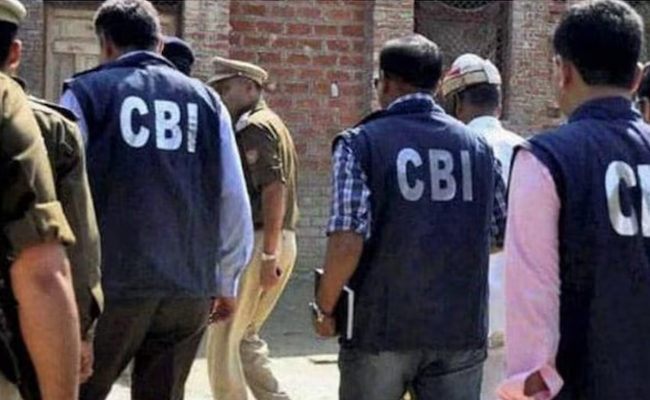
New Delhi (PTI): The CBI has arrested two more persons in connection with the NEET (UG) paper-leak case, with the role of several officers of the National Testing Agency (NTA) and other organisations, who had access to the printing press where the papers were printed, coming under the scanner, officials said on Thursday.
The agency has arrested Dhananjay Lokhanda from Ahilyanagar and Manisha Waghmare from Pune and conducted searches at 14 locations across the country in the last 24 hours, they said.
The CBI is focussing on identifying the source of the leak that has caused massive disappointment to lakhs of aspirants eyeing a seat in undergraduate medical courses, which are allotted after the highly-competitive examination, the officials said.
According to the CBI probe so far, the involvement of public servants in the leak cannot be ruled out.
The Central Bureau of Investigation (CBI) has arrested three individuals from Jaipur -- Mangilal Biwal, Vikas Biwal and Dinesh Biwal -- along with Yash Yadav from Gurugram and Shubham Khairnar from Nashik.
Khairnar was in touch with Yadav and informed him in April that Mangilal Biwal was ready to pay Rs 10-12 lakh for arranging leaked NEET (UG) 2026 questions for his younger son.
Khairnar allegedly provided 500 to 600 questions from the leaked paper to Yadav, the officials said, adding that the questions could have helped score enough marks to get a seat in a reputed medical college.
Mangilal Biwal allegedly procured the paper from Yadav, who was known to his elder son Vikas Biwal from an NEET coaching in Rajasthan's Sikar. The deal between Mangilal Biwal and Yadav was for Rs 10 lakh, if 150 questions from the question bank matched with those in the National Eligibility-cum-Entrance Test (NEET) paper, the officials said.
Mangilal Biwal shared the paper with his son and further distributed it among relatives.
Yadav also told Vikas Biwal to find additional candidates for the questions to recover some of the money that he had spent on getting those, the officials said.
An analysis of digital devices has given the agency incriminating chats, leaked question papers and other digital evidence. The CBI will subject the devices to a forensic examination to get the deleted data, the officials said.
The federal agency has registered an FIR and formed teams to probe the alleged NEET (UG) paper leak that resulted in the cancellation of the exam held on May 3.
The NEET (UG) 2026 was conducted across 551 Indian cities and at 14 overseas centres. Nearly 23 lakh candidates had registered for the test, which was administered by the NTA at centres across the country.
According to the NTA, information regarding alleged malpractice was received on the evening of May 7, four days after the examination was held. The NTA said the inputs were escalated to central agencies the following morning for "independent verification and necessary action".
The Rajasthan Police's Special Operations Group (SOG) has claimed that a "guess paper" for chemistry, allegedly circulated among students ahead of the examination, had approximately 410 questions, including roughly 120 that appeared in the test.