Ex-CBI Chief Nageswara Rao hits back at Tejasvi Surya for defending Modi on English fluency
Says Modi-BJP-RSS ‘greatest Hindu Drohis in world history’
New Delhi: A sharp social media exchange unfolded over a viral video showing Prime Minister Narendra Modi speaking with British Prime Minister Keir Starmer, which triggered online mockery about Modi’s English-speaking skills. While BJP MP Tejasvi Surya jumped to Modi’s defence in a long post praising his rise from poverty and his use of Hindi on global platforms as a symbol of “civilisational confidence,” the response from former CBI Director M. Nageswara Rao stood out for its biting tone and pointed criticism.
The row began when a user on X shared the video with the comment:
“Starmer seems to be having a charged discussion with Modi but does Modi understand any of it? I guess he was intelligent enough this time to prevent himself from laughing out loud, done when he has no clue. Do Indians deserve to watch this clown show?”
Starmer seems to be having a charged discussion with Modi but does Modi understand any of it?
— Devi (@DefiantDevii) June 18, 2025
I guess he was intelligent enough this time to prevent himself from laughing out loud, done when he has no clue.
Do Indians deserve to watch this clown show?
pic.twitter.com/K7PBdWcRUl
In response, Tejasvi Surya posted a long statement defending the Prime Minister. He accused a certain “class of Indians — fluent in English, insecure in identity” of mocking Modi not for his policies, but for not speaking “polished” English. Surya highlighted Modi’s humble background, lack of elite education, and self-made journey, claiming that Modi represents millions of Indians who were sidelined because they didn’t speak in an elite accent. He further added that Modi has cracked billion-dollar deals globally without faking an accent, and his use of Hindi on international stages is a sign of “India standing tall on its own terms.”
Over the past few days, a certain class of Indians — fluent in English, insecure in identity — has been mocking Prime Minister Narendra Modi for not speaking ‘polished’ English in global forums. Their ridicule reveals not his weakness, but their own deeply entrenched colonial… https://t.co/Kj5bPphYbS
— Tejasvi Surya (@Tejasvi_Surya) June 19, 2025
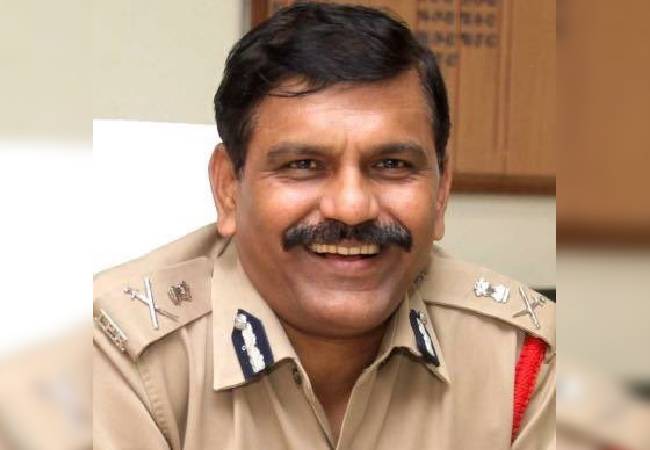
But it was Nageswara Rao, a former CBI chief and one-time Modi supporter, who issued a strong rebuttal to Tejasvi Surya’s post, accusing him of misdirection and whitewashing real concerns.
“Tejasvi Surya Ji, your post is a masterclass in misdirection, sidestepping the real criticisms levelled against Modi, which is typical of the Goebbelsian propaganda of the Sangh Parivar,” Rao wrote in his reply on X.
Rao clarified that the issue was not Modi speaking Hindi at international forums, but his “uncouth conduct, exaggerated gestures, boisterous laughter, and attempts to fake fluency in English.” He compared this with former PM Atal Bihari Vajpayee, who also spoke in Hindi on international platforms but was praised for his dignity and calm.
Modi has faced similar ridicule in the past for trying to speak English in a manner that appears forced or staged. Several clips have gone viral over the years, showing him using broken sentences, mispronunciations, and exaggerated mannerisms. Critics have often pointed out how he tries to appear fluent in English while making minimal sense, leading to online trolling. His “May the Force be with you,” said with awkward delivery during an event, and his sudden “Everything is fine in India” remark in English during the ‘Howdy Modi’ event in the US had also drawn public amusement and commentary.
Rao further attacked the narrative of Modi’s rise from “absolute poverty,” calling it a “big lie.” He pointed to Modi’s childhood photos in a suit and NCC uniform, foreign tours as a young adult, and other indicators which, according to him, contradict the image of extreme poverty. He also accused Modi of leading a lavish lifestyle today — from high-end outfits and luxury gadgets to customised jets — questioning the claim of a humble life.
Rao went on to call Modi’s international diplomacy “personal branding at government expense,” adding that there was a lack of global support for India during critical incidents like the Pahalgam massacre. He claimed that even close allies like Russia were growing distant, and economic deals under Modi lacked transparency and tangible benefits for common citizens.
He pointed to Modi’s ties with foreign-linked institutions like the CIA-linked ACYPL, questioning his alignment with national interests. Rao alleged that the government’s corruption had increased exponentially, citing the now-scrapped Electoral Bonds scheme and the lack of transparency in the PM CARES fund.
Rao also challenged the claim that Modi's leadership has restored civilisational pride, accusing the government of continuing minority appeasement, increasing caste-based division, and failing to deliver on long-promised reforms such as freeing temples from state control or amending Articles 25–30 for equal religious rights.
Concluding his post, Rao described the BJP-RSS-Modi trio as the “greatest Hindu drohis in world history,” a remark that went viral soon after.
Nageswara Rao's post drew widespread attention not only for its content but also because of the source. A retired IPS officer and former CBI chief, Rao was once seen as a supporter of Modi and the BJP. His strong criticism, therefore, signals a notable shift in tone and has intensified the debate around the PM’s public image and the limits of blind loyalty among BJP supporters.
Tejasvi Surya Ji,
— M. Nageswara Rao IPS (Retired) (@MNageswarRaoIPS) June 20, 2025
Your post is a masterclass in misdirection, sidestepping the real criticisms levelled against Modi, which is typical of the Goebbelsian propaganda of the Sangh Parivar.
The issue is not Modi’s lack of fluency in English. It is his uncouth conduct, exaggerated… https://t.co/bXbLFNo57U pic.twitter.com/2hJpZDh8l7
While Surya’s post was hailed by BJP loyalists, Rao’s reply has found traction among those disillusioned with Modi’s rhetoric and branding-heavy approach to leadership.
Let the Truth be known. If you read VB and like VB, please be a VB Supporter and Help us deliver the Truth to one and all.
Commercial LPG hike: Delhi restaurant owners warn of higher menu rates, job losses
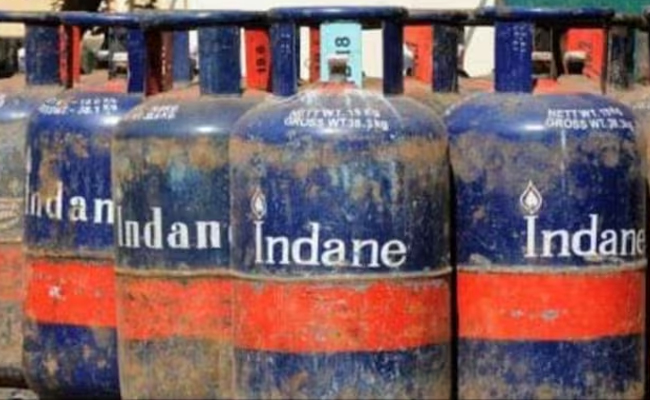
New Delhi (PTI) A day after a 50 per cent rise in commercial LPG cylinder prices, Delhi's food business, with restaurant owners and street vendors have warned of higher menu rates, financial strain and potential job losses if the trend persists.
The price of commercial LPG was hiked by a steep Rs 993 per 19 kg cylinder, marking the third consecutive monthly hike amid rising global energy prices linked to the West Asia conflict.
For many in the restaurant industry, the spike has been both sudden and steep.
Manpreet Singh, honorary treasurer of the National Restaurant Association of India, said that eateries are already grappling with supply challenges alongside rising costs.
"There is a huge difficulty in getting these cylinders, and black marketing is also increasing in many unregulated sectors," he said, noting that prices that were once around Rs 1,600, often dropping to nearly Rs 1,300 with discounts, have now surged to between Rs 3,000 and Rs 4,000 per cylinder.
He further added that a medium-sized restaurant typically uses between two and five cylinders daily, making the increase particularly burdensome as costs mount.
Singh further said that as costs mount, smaller establishments could struggle to stay afloat. Instead, the association has advised restaurants to shift towards piped natural gas connections through Indraprastha Gas Limited as a more sustainable alternative.
"If this problem continues, PNG is the only long-term solution," he said, adding that temporary measures like coal offer limited relief due to slower cooking times and that it can largely be used only for tandoors.
Echoing similar concerns, Kabir Suri, owner of Mamagoto in Khan Market, said the impact is already visible across the industry. "There has been almost a threefold increase in cylinder prices for restaurants," he said, adding that rising fuel and logistics costs are compounding the pressure.
"If this continues, it will become a significant financial burden, and food prices will inevitably go up. Adding to this burden, higher fuel costs are also affecting logistics and transportation, making a price rise unavoidable. The extent of the impact will vary between small eateries and large chains depending on their scale," he said.
Global oil prices have surged nearly 50 per cent following disruptions in energy supply chains due to the West Asia conflict, pushing up commercial fuel costs and transport expenses.
A West Delhi-based restaurateur said they are trying to manage rising costs while keeping their staff secure. "We are trying to ensure that our staff, from kitchen workers to waiters, are paid on time and do not face immediate hardship," the owner said.
"We are a small restaurant with seating for about 20 to 25 people at a time. But if this continues for long, we will have to take difficult calls. There is only so much we can absorb, and menu prices will have to go up. We hope this does not continue for a longer period," he said.
Another restaurant owner in North Delhi, who did not wish to be named, said operational adjustments alone may not be enough. "We are checking our costs very carefully and trying to cut wherever possible, but if fuel prices remain high, it will eventually affect how we run the business," the owner said.
"Coal helps in tandoor cooking, but it takes more time," the owner further added.
The strain is even more acute among street vendors, many of whom operate on thin margins. A vendor in Saket said he had recently expanded his business, moving from a mobile cart to a rented outlet.
"I have a family to feed and more responsibilities now. Earlier, I managed with a moving cart, but after renting the place, expenses increased," he said. "Whenever cylinders were unavailable, I had to buy them at higher rates in the black market. Now even regular supply is too expensive, and if this continues, we may have to shut down," he added.
In Laxmi Nagar, another vendor said they are struggling to keep the business running. "Sometimes we even used domestic cylinders from home when supply ran out because we had to keep the stall running," he said, adding that rising costs leave little choice but to increase prices or bear losses.
On April 1, the rates of commercial LPG cylinders were hiked by Rs 195.50 per cylinder, followed by a Rs 114.5 hike on March 1, taking the total increase over the past three months to Rs 1,303. With the latest revision, a 19 kg commercial LPG cylinder now costs Rs 3,371.5 in Delhi, up from Rs 2,078.5 earlier.
The prices of domestic LPG cylinders used for household cooking have remained unchanged. They were last increased by Rs 60 per 14.2 kg cylinder on March 7 and currently cost Rs 913 in Delhi.