Ex-CJI Lalit tells parliamentary panel ONOE good idea, advises against holding it in one go: Sources
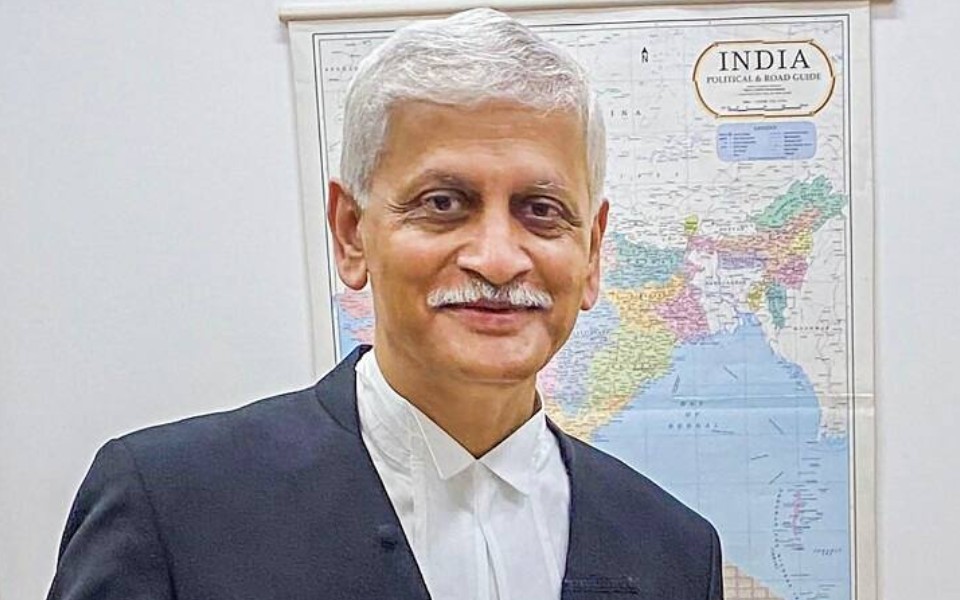
New Delhi, Feb 25 (PTI): Former Chief Justice of India U U Lalit suggested on Tuesday that simultaneous Lok Sabha and assembly polls should be rolled out in not one go but in a phased manner as he shared his views with the Joint Committee of Parliament studying the two bills for 'one nation one election' (ONOE), sources said.
They added that Lalit in his remarks said the concept of simultaneous Lok Sabha and assembly elections was a good idea but noted that the law, as envisaged by the bills, could be challenged in the apex court, and proposed some changes.
Former Law Commission of India Ritu Raj Awasthi told the 39-member committee headed by BJP MP P P Chaudhary that the proposed law does not violate the basic structure doctrine on federalism and is not against the democratic principles of the Constitution.
Justice Awasthi, who is now the judicial member of anti-corruption ombudsman Lok Pal, said the Constitution (129th Amendment) Bill had all the ingredients to hold simultaneous polls in the country.
Opposition members criticised the concept, with Congress MP Priyanka Gandhi Vadra claiming 'one nation one election' will weaken democracy by tinkering with tenure of legislatures and will impinge on people's rights, the sources said.
A BJP ally wondered if a gap of five years between two elections will weaken elected representatives' accountability to people, they added. An opposition questioned the neutrality of the Election Commission, which is constitutionally tasked with the conduct of elections.
Some members of both the ruling BJP as well as opposition parties, which have slammed the idea of 'one nation one election' (ONOE) as unconstitutional, interpreted the overall thrust of Lalit's lengthy remarks as favouring their respective stand more.
However, a senior parliamentarian said the former CJI laid out the constitutional philosophy guiding India's democratic spirit and holding of polls and its evolution through several judgements of the apex court since Independence to reflect dispassionately on the concept.
As an expert, Lalit dwelt on the both sides of the argument and at times offered his views, the MP said, noting that the he advised against implementing simultaneous Lok Sabha and assembly elections in one go.
While the jurist said that dissolution of several state assemblies before their term, in several cases when more than half of their tenure should remain, can be legally challenged, he also noted that once the law comes into force favouring it, then political parties as well as voters will know the period for which the new House will be elected.
Lalit, sources said, also appeared to agree with the view that simultaneous elections will lead to the saving of resources by ruling out the frequent enforcement of the Model Code of Conduct, deployment of security forces and rescheduling exams.
He was also asked questioned by the committee's members, leaving them with little time to hear the views of two other persons - IAS officer Niten Chandra, who was secretary of the high-level Kovind committee, and E M Sudarsana Natchiappan, a senior advocate and former Congress MP who had headed in 2015 a parliamentary committee that favoured simultaneous polls.
They are now expected to share their opinion later.
The parliamentary committee had so far held two meetings, excluding Tuesday's, in which it prepared broad details of its agenda and the list of stakeholders and experts to be consulted is given.
Opposition members again insisted on Tuesday that they should be given a verbatim minutes of the previous meetings in advance.
In a written submission, the legislative department of the Union Law Ministry has told the joint committee that holding simultaneous polls to Lok Sabha and state assemblies is not undemocratic and does not hurt the federal structure.
Responding to a set of queries posed by the members of the joint panel, the legislative department is learnt to have asserted that simultaneous elections were held in the past before the cycle was broken due to various reasons, including imposition of the president's rule in some states.
Sources said while the ministry answered some of the questions, some others were sent to the Election Commission for a calibrated response.
Following the adoption of the Constitution, elections to the Lok Sabha and all state assemblies were conducted simultaneously from 1951 to 1967.
Let the Truth be known. If you read VB and like VB, please be a VB Supporter and Help us deliver the Truth to one and all.
Hundreds of TVK supporters return disappointed from cancelled swearing in ceremony venue
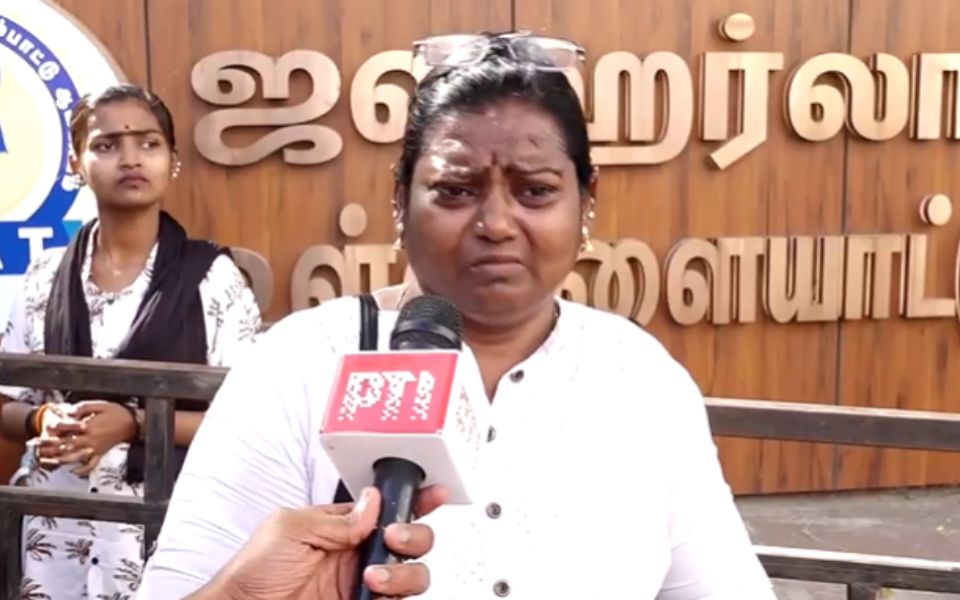
Chennai (PTI): Hundreds of TVK supporters, fuelled by the hope of seeing their leader Vijay as chief minister, gathered at Nehru Indoor Stadium in the city on Thursday, only to be met with locked gates and a lack of information regarding the scheduled proceedings.
Many supporters, travelling from various parts of the state, near and far, like Arumbakkam and Coimbatore, expressed deep disappointment and confusion upon finding the premises closed and without official communication.
Speaking to PTI Videos, fans and party loyalists described a sense of heartbreak after arriving early to secure a place in line.
Charulatha, a supporter, noted the emotional toll of the situation: "We came with so much joy thinking he would become the chief minister today, but there is nothing here. The gates are closed. It is very painful."
Sai Deepika, her daughter and a student set to enter the 12th grade, shared her excitement for the event: "I was very excited to be here. I have been telling everyone he will win and do good things for the people."
A visibly distressed Gunasundari, a long-time political observer from a family of AIADMK supporters, stated she shifted her loyalty to Vijay: "I publicly say I voted for Vijay. I have a belief that he will help those in need. Seeing the gates closed like this is a shock."
Despite the confusion on the ground, the gathered crowd remained steadfast in their political choice. Several supporters highlighted Vijay’s decision to fund party activities independently as a key reason for their trust.
"He didn't take a single rupee from the people for his flag or the stage. He did it all himself," said an emotional Gunasundari. "Even if they try to shame him or create obstacles, he is the one who will eventually win."
Many attendees cited news reports and social media claims as their reason for arriving early on Thursday morning. Some supporters mentioned they had travelled via public transport and waited for hours under the impression that an official declaration or event was imminent.
"My son told me that declarations were made yesterday and everyone was coming today," Gunasundari added. "I didn't even tell him I was leaving; I just started my journey to see him in person for the first time".