Examining states' inputs, no decision yet on IAS cadre rules change: Centre
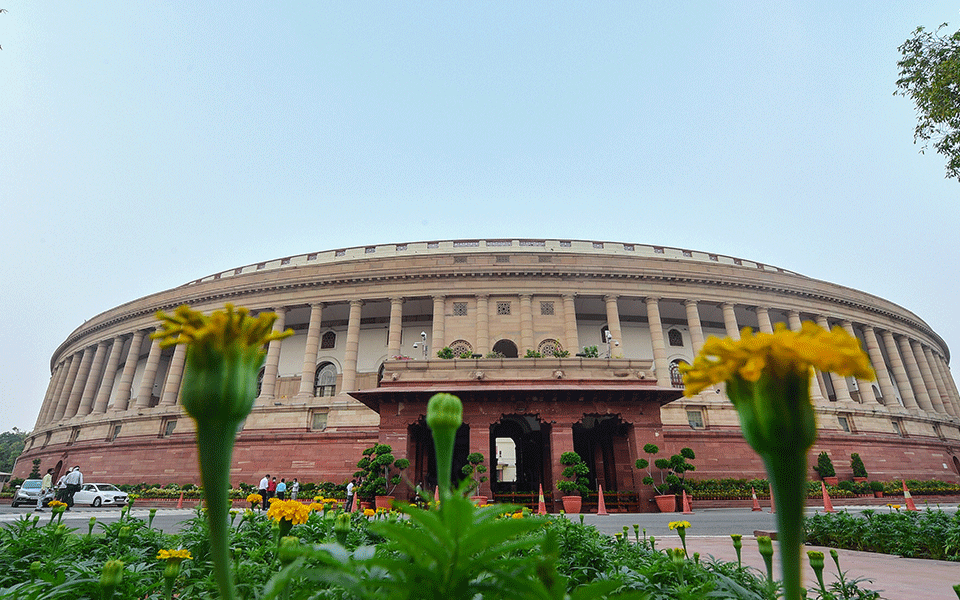
New Delhi (PTI): The Centre has said it is examining inputs received from various stakeholders on the proposed changes to the IAS service rules that seek to empower it to overrule states on matters related to the central deputation of bureaucrats, and that a decision is yet to be taken.
The existing rules allow mutual consultation over the central deputation of Indian Administrative Service (IAS) officers.
In reply to an RTI query filed by this PTI journalist, the Department of Personnel and Training (DoPT) declined to share copies of communication received from states in this regard.
It also refrained from sharing details on action taken on the states' responses, citing a clause of the transparency law that exempts disclosure of such information held by it in a "fiduciary relationship".
The DoPT had in December last year proposed changes to the Indian Administrative Service (Cadre) Rules, 1954, that will take away the power of states to override the Centre's request for seeking the officers on central deputation, and had sought comments from the states and Union territories on it.
"The comments/inputs received from various state cadres/joint cadres and other stakeholders on the proposal are presently under examination, and a final view of the government of India on the matter is yet to be taken," the DoPT said in reply to the RTI application.
"In this view, the information sought is held in a fiduciary relationship and exempted from disclosure in terms of Section 8 (1) (e) of the Right to Information (RTI) Act, 2005," it said in the reply sent on August 29.
The section exempts "information available to a person in his fiduciary relationship unless the competent authority is satisfied that the larger public interest warrants the disclosure of such information".
DoPT officials said a trend of decreasing representation of IAS officers, up to the joint secretary-level at the Centre, has been noticed as most of the states are not meeting their Central Deputation Reserve (CDR) obligations and the number of officers sponsored by them to serve at the Centre is much lesser.
IAS officers are allocated a cadre, which is either a state or a group of states, or states and Union territories.
Every cadre is allowed a CDR to ensure that officers have the opportunity to work on central deputation, which adds to their experience.
Union Minister of State for Personnel Jitendra Singh had in February informed the Parliament that the states were not sponsoring an adequate number of officers for central deputation, and this prompted changes in the service rules.
Singh, in a written reply to the Rajya Sabha, had said that the Indian Administrative Service (Fixation of Cadre Strength) Regulations, 1955, contain a provision for a central deputation reserve not exceeding 40 per cent of the senior duty posts of a cadre or joint cadre.
"However, state governments have not been sponsoring adequate number of officers for central deputation. In order to address the above issue, comments have been sought from states/UTs, in terms of the provisions contained in Section 3 of All India Services Act, 1951 on a proposal to amend Rule 6(1) of IAS (Cadre) Rules, 1954," he had said.
At least nine states Odisha, West Bengal, Maharashtra, Kerala, Tamil Nadu, Telangana, Chhattisgarh, Jharkhand and Rajasthan have objected to the proposed amendments, officials said.
On the other hand, Arunachal Pradesh, Manipur, Tripura, Madhya Pradesh, Uttar Pradesh, Gujarat, Haryana and Himachal Pradesh are understood to have given their consent, they said.
Karnataka and Meghalaya had opposed the proposal initially sent to them but were expected to send revised inputs, the officials said, adding that Bihar had also opposed the move earlier.
The DoPT had written to chief secretaries of all state governments on the proposed changes in the IAS cadre rules on December 20, 2021, after which reminders were sent on December 27, and January 6 and January 12 this year.
The January 12 letter to the states specifically mentioned the Centre's power to override the states' disagreement on the officers' deputation.
Let the Truth be known. If you read VB and like VB, please be a VB Supporter and Help us deliver the Truth to one and all.
Trump says EU has until July 4 to approve last year's trade deal or it will face higher tariffs
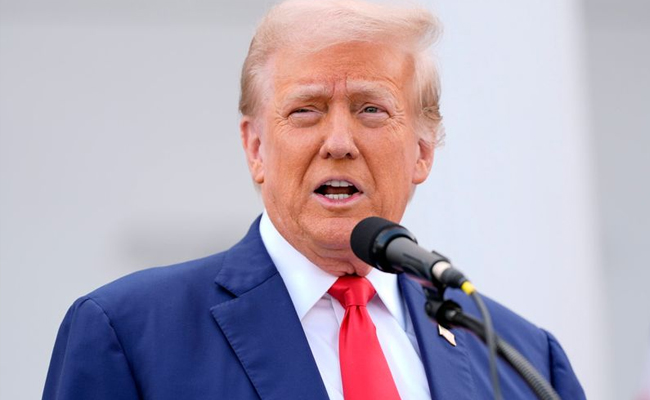
Washington (AP): President Donald Trump has said in a social media post that goods from the European Union would face higher tariff rates if the 27-member bloc fails to approve last year's trade framework by July 4.
The announcement on Thursday appeared to be a deadline extension after the president said last Friday that EU autos would face a higher 25 per cent tariff starting this week. Trump made the updated announcement after what he described as a "great call" with European Commission President Ursula von der Leyen.
Still, the US president was displeased that the European Parliament had yet to finalize the trade arrangement reached last year, which was further complicated in February by the US Supreme Court ruling that Trump lacked the legal authority to declare an economic emergency to impose the initial tariffs used to pressure the EU into talks.
"A promise was made that the EU would deliver their side of the Deal and, as per Agreement, cut their Tariffs to ZERO!" Trump posted. "I agreed to give her until our Country's 250th Birthday or, unfortunately, their Tariffs would immediately jump to much higher levels."
It was unclear from the post whether Trump was implying that the tariff rates would jump on all EU goods or the increase would only apply to autos.
His latest statement indicates he might be backing away from his earlier threat on EU autos by giving the European Parliament several more weeks to approve the agreement.
Under the original terms of the framework, the US would charge a 15 per cent tax on most goods imported from the EU.
But since the Supreme Court ruling, the administration has levied a 10 per cent tariff while investigating trade imbalances and national security issues, aiming to put in new tariffs to make up for lost revenues.