Excavation of 'Mrityu Kup' begins in UP's Sambhal
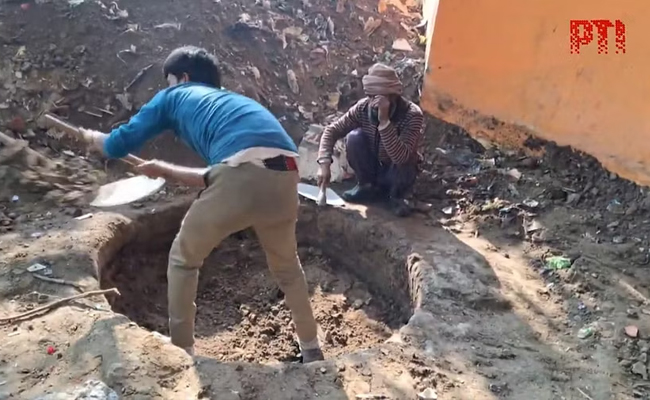
Sambhal (UP) (PTI): The administration in this Uttar Pradesh district on Thursday commenced the renovation and excavation of the ancient "Mrityu Kup" (well of death) at Kot Purvi, located within the Sambhal Kotwali police station area.
The initiative is part of a broader effort to identify and restore wells that are believed to hold great religious and spiritual significance. According to locals, the well was abandoned several years ago and filled with debris, which will be cleared. The well is not only a historic landmark but also a sacred site where devotees believe they can attain salvation by bathing, the locals claim. The well is deeply-embedded in the region's spiritual fabric, with locals holding it in high regard for its mythological importance.
"Thursday marks the beginning of the excavation of the Mrityu Kup, a very ancient and revered site. The excavation is being carried out with the cooperation of the Nagar Palika. The well is immensely popular and its renovation will further strengthen our faith. The district administration has been highly supportive in ensuring the development of this important cultural and religious landmark," local councillor Gagan Varshney said.
Sambhal's Sub-Divisional Magistrate (SDM) Vandana Mishra said accompanied by a team from the Archaeological Survey of India (ASI), she visited the Bhadrika Ashram Tirtha and Chaturmukh Kup in Hauz Bhadde Sarai. "After further study, the team will determine its age and give recommendations for its preservation," the SDM said.
She also highlighted the team's visit to Alam Sarai's Brahma Kup, commonly known as the Chaturmukh Kup, a well constructed with stones. The ASI team has collected samples for analysis and research. "In addition, the excavation of the Mrityu Kup is currently underway. We are evaluating the best methods to ensure its preservation. So far, we have identified around 15 out of 19 wells that are of great historical significance," Mishra said.
The excavation and renovation of the "Mrityu Kup" is expected to bolster Sambhal's religious tourism prospects, local officials claim. The structure is located close to the Shahi Jama Masjid, a court-ordered survey of which led to violence last month, leaving four people dead. The violence broke out after protesters clashed with security personnel during the survey of the Mughal-era mosque.
The protesters torched vehicles and pelted stones at police, who used tear gas and batons to disperse the mob. Around 20 security personnel had sustained injuries in the clash and the deputy collector had fractured his leg, officials had said. Internet services were suspended in the district in the wake of the violence.
Images shared on social media showed protesters pelting stones at the security personnel from atop buildings and in front of the Shahi Jama Masjid. Later, police personnel were purportedly seen cornering and hitting people as they tried to disperse a large crowd from a narrow alleyway.
Visuals also showed a lane strewn with a large number of slippers, bricks and stones. In another clip, some police personnel in riot gear were purportedly seen firing gunshots towards a lane while flames leapt and smoke billowed into the air in the background.
Several people were detained in connection with the violence. Tension was brewing in Sambhal since the mosque was surveyed on the orders of a local court following a petition that claimed that a Harihar temple stood at the site previously.
Let the Truth be known. If you read VB and like VB, please be a VB Supporter and Help us deliver the Truth to one and all.
Dakshina Kannada: Two girls drown while bathing near Kolyadakatta dam in Kadaba
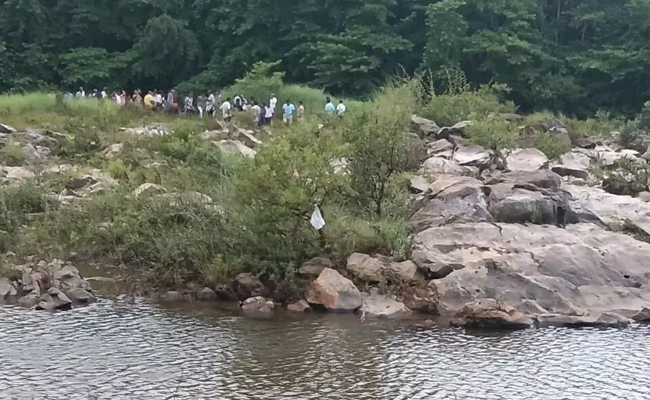
Mangaluru: Two girl students drowned while bathing near the Kolyadakatta dam area of the Gundya river on Friday evening here in the Kadaba Taluk of the district.
The deceased have been identified as Arpita (15) and Sunita (21), both residents of Vimalagiri in Kutrupadi village.
According to reports, five girl students had visited the river along with their friends as it was a holiday. While bathing in the river, the two students reportedly entered a deeper portion of the water without realising the depth and began drowning.
Those accompanying them tried to rescue the duo, but were unsuccessful, leading to the tragedy.
After receiving information about the incident, Kadaba Police Station personnel visited the spot and conducted an inspection. The bodies were later recovered with the help of local residents.