Excise cuts won't change fuel price for consumers, relief only in narrative: Congress
New Delhi (PTI): The Congress on Friday claimed that the government's
excise cuts will not change prices for dealers and consumers, and that the relief exists only in the narrative, not in reality.
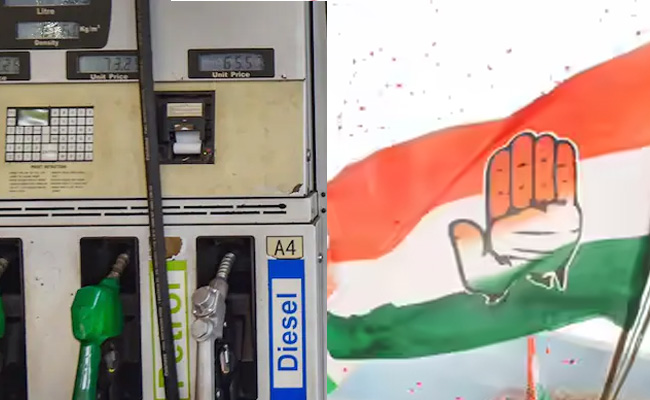
The government has slashed excise duty on petrol to Rs 3 per litre and exempted diesel fully from the duty.
The Congress said the government should focus on delivering actual relief to consumers, instead of "manufacturing headlines and fooling people."
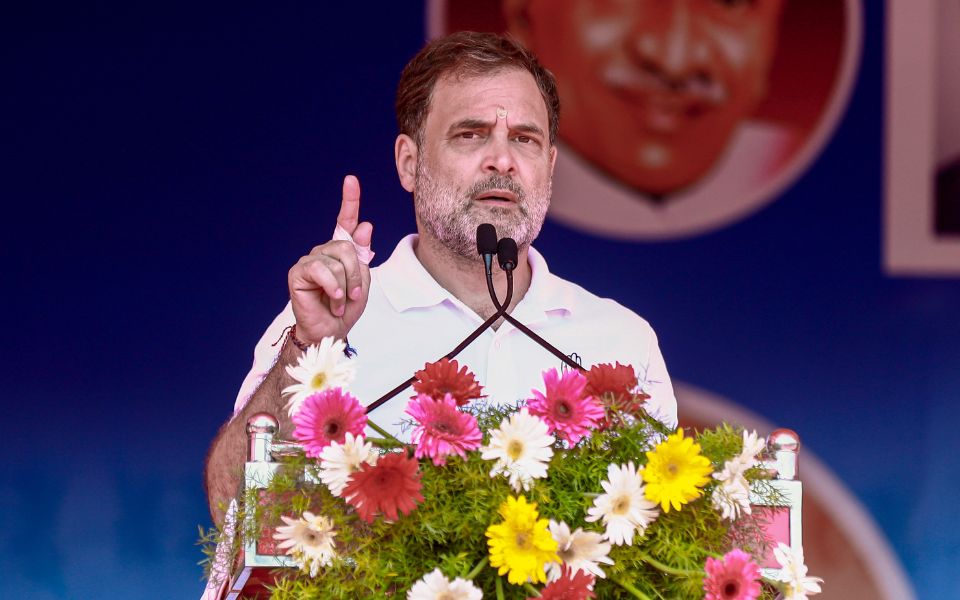
The party's media and publicity department head, Pawan Khera, said, "If you saw the headlines about petrol and diesel prices 'coming down' and thought the government had offered relief to your pocket, you'd be mistaken."
As of now, prices remain the same for dealers and for consumers, he claimed.
"What has actually been reduced is the 'special additional excise duty' — a levy paid by Oil Marketing Companies to the government. The words 'special' and 'additional' reveal how unnecessary this tax is," Khera said on X.
He pointed out that these companies have been absorbing losses since the outbreak of the conflict in West Asia.
"The government has now merely agreed to share a small part of that burden but reducing the 'special additional' levy - that too almost a month later," the Congress leader said.
"Relief exists but only in the narrative -- not in reality. Instead of manufacturing headlines and fooling people, the government should focus on delivering actual relief to consumers," Khera said.
Global crude prices have risen by almost 50 per cent since the United States and Israel launched military strikes against Iran on February 28, triggering sweeping retaliation from Tehran.
In a notification issued late on March 26, the Finance ministry cut excise duty to Rs 3 a litre, from Rs 13 a litre earlier, while the levy on diesel was slashed to nil from Rs 10 earlier. The duty cuts are effective immediately, the ministry said.
Despite the spike in international prices, retail pump rates have not been changed, putting a strain on the finances of oil companies.
The government cuts stand to give some relief to oil companies.
Tracking the excise duty cut notification, shares of fuel retailers IOC, BPCL and HPCL opened higher on BSE.
International oil prices touched USD 119 per barrel earlier this month, before pulling back to around USD 100 per barrel.
India imports 88 per cent of its crude oil and roughly half of its natural gas. These mostly come via the Strait of Hormuz.
Let the Truth be known. If you read VB and like VB, please be a VB Supporter and Help us deliver the Truth to one and all.
Mysuru: Six, including three children, drown in Cauvery during urus gathering

Mysuru: Six people, including three children, drowned in the Cauvery river near Arkeshwara Temple in KR Nagar taluk of Mysuru district on Sunday.
The deceased have been identified as Fatima (42) from Udayagiri in Mysuru; Mohammed Yasin (23), an autorickshaw driver from SBR Layout in Bengaluru; his wife Neha Kausar (19) from the same area; Uzeir (5) from Udayagiri, Mysuru; Emma Aiman (13) from Kadugondanahalli, Bengaluru; and Afif Ahmed (13) from KR Nagar.
According to The New Indian Express, the victims had visited a nearby dargah. While playing in the river, one person slipped into the water, and others entered it in an attempt to rescue them, leading to multiple drownings.
Chief Minister Siddaramaiah expressed grief and announced a compensation of Rs 5 lakh for each of the victims’ families.
Mysuru Superintendent of Police Mallikarjun Baladangi and KR Nagar police visited the spot and have begun an investigation.