Excise policy case: HC gives more time to Kejriwal, Sisodia to respond to ED plea to expunge remarks
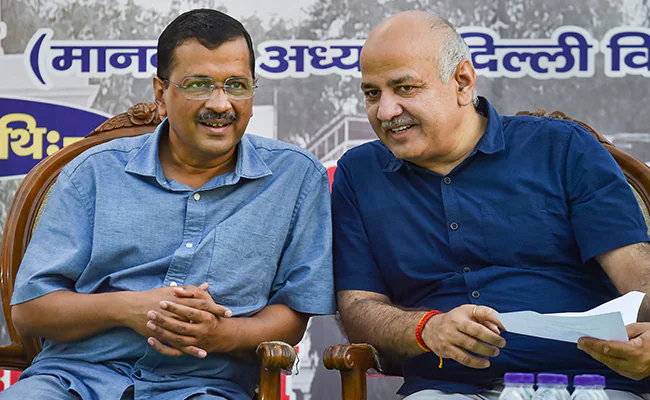
New Delhi (PTI): The Delhi High Court on Wednesday granted time till April 2 to former chief minister Arvind Kejriwal, his deputy Manish Sisodia and 21 others to respond to a plea by the Enforcement Directorate to expunge "unwarranted" remarks made against it by the trial court while discharging them in the liquor policy case.
Justice Swarana Kanta Sharma expressed displeasure over the request for more time by the lawyers appearing for Kejriwal and other accused, and said it would fix a date for final hearing in the matter during the next hearing on April 2.
"I don't know why you are not filing a reply. You should have filed a reply if you think you really needed to file a reply. They are only saying judge should not have written something that he has written."
"By second (of April), you file your reply. Then we will fix a date for final hearing," the judge said.
The Enforcement Directorate's counsel said there was no need to file replies to its petition and that this was an attempt to delay the case.
Additional Solicitor General S V Raju, appearing for ED, contended that the agency's petition has no impact on the accused, as the challenge was limited to the trial court judge's observations against the agency when it discharged Kejriwal, Sisodia and others in the CBI case.
The counsel for one of the accused said a brief reply was necessary and time was needed for it as the discharge order was 600 pages long.
Justice Sharma remarked that the ED's case has nothing to do with all 600 pages.
"Here is a prosecuting agency which has stated that the judge exceeded jurisdiction. I told them even I make such observations. I need to deicide it but you said I need to file a reply. Now you say 600 pages have to be read," the judge observed.
Raju also urged the court to direct that the observations of the trial court would not be relied upon by the accused in related proceedings. "It is a short date. Let them reply," the court responded.
On March 10, the court had asked Kejriwal and others to respond to the ED's plea.
In the petition, ED said the trial court's remarks were wholly extraneous to the CBI's case. It said the ED was neither a party in those proceedings nor afforded any opportunity to be heard.
"If such sweeping, unguided, bald observations are permitted to stand ... grave and irreparable prejudice would be caused to the public at large as well as the petitioner," the ED plea said.
"Therefore, the aforesaid paragraphs which concern the investigation independently conducted by the Enforcement Directorate under the PMLA (Prevention of Money Laundering Act) deserve to be expunged as it amounts to a clear case of judicial overreach...," it added.
On February 27, the trial court discharged Kejriwal, Sisodia and others in the Delhi liquor policy case, pulling up the CBI by saying that its case was wholly unable to survive judicial scrutiny and stood discredited in its entirety.
The trial court ruled that the alleged conspiracy was nothing more than a speculative construct resting on conjecture and surmise, devoid of any admissible evidence.
To compel the accused to face the rigours of a full-fledged criminal trial in the stark absence of any legally admissible material did not serve the ends of justice, it said.
In its order, the trial court highlighted that a procedure permitting prolonged or indefinite incarceration based on a provisional and untested allegation risked "degenerating into a punitive process" and raised a "concern of considerable constitutional significance" where individual liberty was "imperilled" by invoking the Prevention of Money Laundering Act.
It said the issue assumed heightened significance where an accused was arrested for the offence of money laundering and thereafter required to surmount the stringent twin conditions prescribed for the grant of bail, resulting in prolonged incarceration even at the pre-trial stage.
It further said that despite the settled legal position that the offence of money laundering cannot independently subsist and requires the foundational edifice of a legally sustainable predicate offence, the prevailing practice revealed a disturbing inversion.
Underlining that the objective of PMLA was undoubtedly legitimate and compelling, the trial judge mentioned that statutory power, however wide, could not eclipse constitutional safeguards.
Let the Truth be known. If you read VB and like VB, please be a VB Supporter and Help us deliver the Truth to one and all.
Canada court sentences killer of Ghaziabad student Kartik Vasudev to life imprisonment
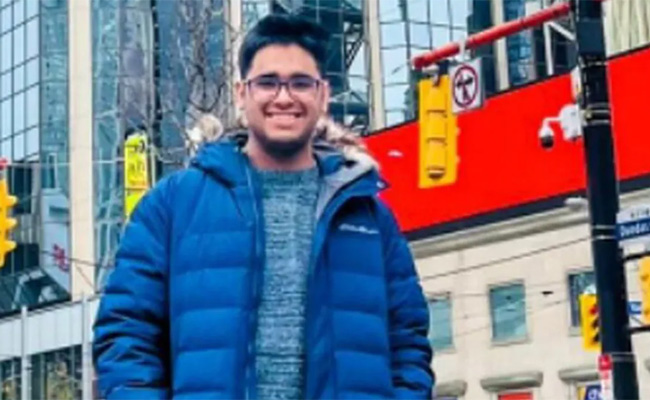
Toronto/Ghaziabad (PTI): A court in Toronto has sentenced a man to life imprisonment after rejecting his plea of not being criminally responsible due to a mental disorder in the killing of Indian student Kartik Vasudev, his family said on Tuesday.
The Superior Court of Toronto, presided over by Justice Jane Kelly, on Monday found Richard Edwin guilty on two counts of first-degree murder for the killings of two strangers on April 7 and April 9, 2022, according to the Global News Toronto.
While Edwin admitted to shooting the 21-year-old Vasudev, a resident of Ghaziabad and a student of Seneca College, his defence argued that he should be declared not criminally responsible (NCR) as he was suffering from a mental disorder and could not distinguish right from wrong.
The court acknowledged that Edwin was suffering from schizophrenia at the time of the incident but rejected the NCR plea and awarded him life imprisonment without the possibility of parole.
The judgment, published in the Global News Toronto and shared with PTI by the victim's father, detailed the sequence of events leading to the killing. It stated that Vasudev was walking past Sherbourne station towards the Bloor Street East staircase when Edwin rushed past him, turned back and fired multiple shots at his back.
Speaking to PTI from Toronto, the victim's father Jitesh Vasudev said he and his wife had remained in Canada to attend the final hearing.
"After a legal battle of four years, we have finally received justice," he said.
Vasudev had moved to Toronto in January 2022 to pursue management studies but was killed within months. His body was later repatriated to Ghaziabad and cremated on the banks of the Hindan river, where his younger brother performed the last rites.
Earlier, speaking to PTI, Jitesh Vasudev had expressed concern over the lack of official assistance during the transportation of the body from the Indira Gandhi International Airport and the absence of district officials at the time of cremation.
The family resides in Rajendra Nagar in the Trans-Hindan area, and Vasudev was an alumnus of DAV School in the locality.