Excise policy cases: SC defers hearing on bail pleas of Sisodia to October 4
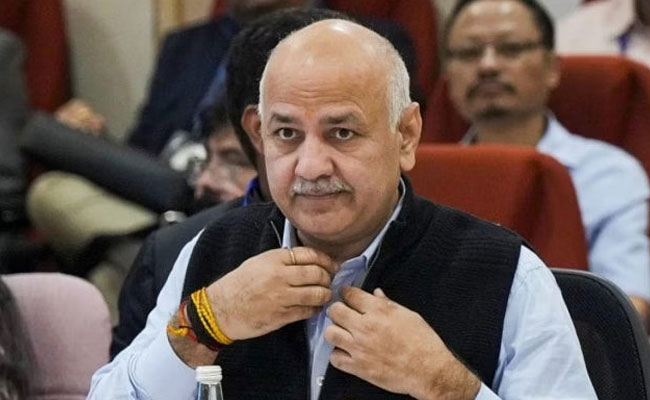
New Delhi (PTI): The Supreme Court on Friday deferred hearing for October 4 on the bail pleas of AAP leader Manish Sisodia in two Delhi excise policy cases being probed by the CBI and ED.
A bench of Justices Sanjiv Khanna and SVN Bhatti adjourned the matter after senior advocate Abhishek Singhvi, appearing for Sisodia, submitted that he needs two to three hours to argue the matter.
"Although I am in jail. We (both sides) have agreed. The hearing will take 2-3 hours at least on my side. This matter requires urgent attention," Singhvi said.
Additional Solicitor General SV Raju agreed to his submission.
Singhvi also alleged that whenever this case or Satyendar Jain's case comes up, there is a newspaper article on the merits of the case.
The bench said it has not read newspapers and added, "We have to get used to that".
On July 14, the top court had sought responses of the CBI and the ED on the interim bail pleas of Sisodia in the cases.
Sisodia, who held the excise portfolio among the many that he handled as the deputy chief minister, was arrested by the Central Bureau of Investigation (CBI) on February 26 for his alleged role in the "scam". He has been in custody since then.
The ED arrested him in a money laundering case stemming from the CBI FIR on March 9 after questioning him in Tihar Jail.
Sisodia resigned from the Delhi cabinet on February 28.
The high court had denied him bail in the CBI case on May 30, saying having been the deputy chief minister and excise minister, he is a "high-profile" person who has the potential to influence the witnesses.
On July 3, the high court had declined him bail in the money laundering case linked to alleged irregularities in the city government's excise policy, holding that the charges against him are "very serious in nature".
In its May 30 order, the high court had said since Sisodia was at the "helm of affairs" when the alleged scam took place, he cannot say he had no role to play.
The high court had said with his party still in power in the national capital, Sisodia, who once held 18 portfolios, continues to wield influence, and since the witnesses are mostly public servants, the possibility of their getting influenced cannot be ruled out.
According to the two federal investigative agencies, irregularities were committed while modifying the excise policy and undue favours were extended to licence holders.
The Delhi government implemented the policy on November 17, 2021, but scrapped it at the end of September 2022 amid allegations of corruption.
Let the Truth be known. If you read VB and like VB, please be a VB Supporter and Help us deliver the Truth to one and all.
AIITA welcomes Karnataka’s ban on obscene songs in school events
Bhatkal: The Karnataka unit of the All India Ideal Teachers Association (AIITA) has welcomed the Karnataka government’s decision to strictly ban school children from dancing to obscene songs during educational and cultural programmes in government, aided, and private schools across the state.
AIITA Karnataka State President M. R. Manvi congratulated the government for taking what he termed an important step to preserve the sanctity of education.
“Such decisions to safeguard the dignity of school children and uphold the values of education are the need of the hour. This rule should not be limited to government schools alone but must be strictly implemented in all private educational institutions as well,” he said.
He further urged the government to address other concerns within school programmes.
“The government should not only prohibit obscene dances in the name of school anniversaries, but also ensure that plays and dialogues that incite religious hatred are avoided. Schools should be centres of harmony, not platforms for spreading hatred,” he added.
According to a recent circular issued by the Department of School Education and Literacy, obscene dances are adversely affecting the mental health and moral values of students.
In this regard, schools have been advised to use songs that promote nationalism, positive thinking, the greatness of Kannada culture, and value-based traditions instead of inappropriate content during programmes.
The circular also emphasises that students should be dressed in decent attire.
AIITA also backed the department’s warning that disciplinary action would be taken against head teachers if such guidelines are violated. The association has further demanded that district Deputy Directors of Public Instruction strictly monitor the implementation of these rules.