Excise 'scam': HC seeks ED's stand on Arvind Kejriwal's plea against summons
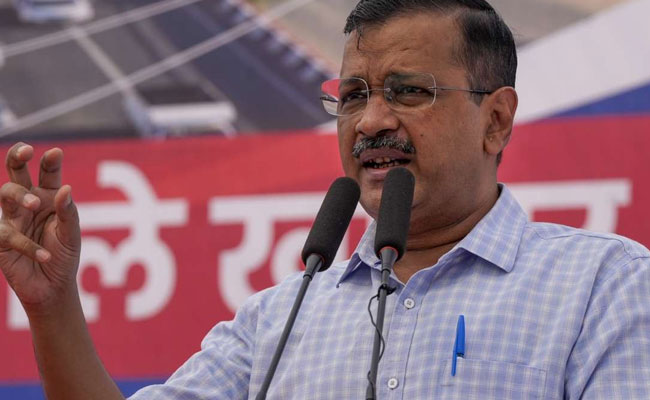
New Delhi (PTI): The Delhi High Court on Wednesday sought the stand of the Enforcement Directorate on a petition by Chief Minister Arvind Kejriwal challenging the summons issued to him in an excise policy-linked money laundering case.
The investigating agency claimed the petition of the AAP national convenor, which also challenges certain provisions of the Prevention of Money Laundering Act, was not maintainable.
A bench headed by Justice Suresh Kumar Kait granted two weeks' time to the ED to file its reply on this aspect.
Kejriwal has moved the court in the wake of the latest summons, the ninth issued by the ED asking him to appear before it on March 21 for questioning under the provisions of PMLA.
Senior advocate AM Singhvi, appearing for Kejriwal, said the petition raises several issues, including whether a political party is covered by the anti-money laundering law.
The court also asked the AAP leader why he was not appearing pursuant to the summons to him.
The senior lawyer for the petitioner said protection from coercive action is required in the matter because of the agency's "clear intent" to apprehend him when elections are around the corner.
Kejriwal has repeatedly refused to appear in response to these summonses, calling them illegal.
The case pertains to alleged corruption in formulating and executing the city government's excise policy for 2021-22, which was later scrapped.
Following a recommendation by Lt Governor V K Saxena, the CBI registered an FIR over alleged corruption which subsequently resulted in the money laundering probe.
The agencies have claimed that irregularities were committed while modifying the excise policy and undue favours were extended to licence holders.
AAP leaders Manish Sisodia and Sanjay Singh are in judicial custody in the case.
Kejriwal's name has been mentioned multiple times in the charge sheets filed by the ED in the excise policy case. The agency has alleged that the accused were in touch with Kejriwal for formulating the excise policy that resulted in undue benefits for them in return for which they paid kickbacks to the Aam Aadmi Party.
A Delhi court had on Saturday granted bail to Kejriwal on two complaints filed by the ED against him for skipping six of the previous eight summonses in the money laundering case.
The matter would be heard next on April 22.
Let the Truth be known. If you read VB and like VB, please be a VB Supporter and Help us deliver the Truth to one and all.
Court can reject anticipatory bail but cannot direct accused to surrender: SC
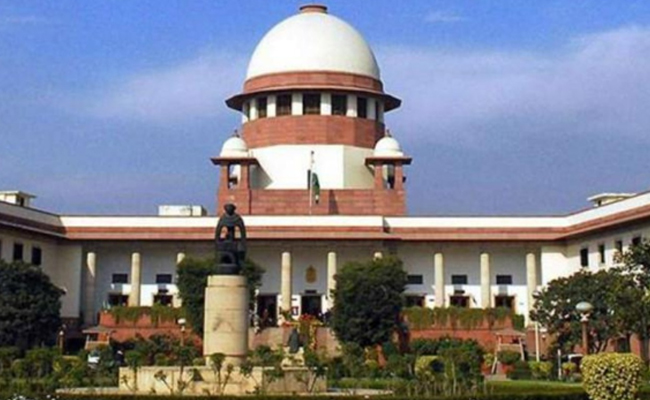
New Delhi (PTI): A court can reject anticipatory bail of an accused but it has no jurisdiction to direct him to surrender before the trial court, the Supreme Court has said.
A bench of Justices J B Pardiwala and Ujjal Bhuyan made the observation while hearing a plea filed by a man accused of cheating and forgery.
"If the court wants to reject the anticipatory bail, it may do so, but the court has no jurisdiction to say that the petitioner should now surrender," the bench said.
The Jharkhand High Court had rejected anticipatory bail plea of the accused and asked him to surrender and seek regular bail.
In this case, a complaint had been filed before a magistrate alleging offences under Sections 323 (voluntarily causing hurt), 420 (cheating), 467 (forgery of valuable security), 468 (forgery for purpose of cheating), 471 (using forged document) and 120B read with 34 of the IPC, in connection with a land dispute.
The high court had dismissed the second anticipatory bail application of the accused on the ground that no new circumstances were shown.
It had relied on its earlier order rejecting his first anticipatory bail plea, in which the court directed the petitioner to surrender before the trial court and seek regular bail in terms of the decision in Satender Kumar Antil v. CBI.
The top court said such a direction was wholly without jurisdiction and said that if a court chooses to reject anticipatory bail, it may do so, but it cannot compel the accused to surrender.