Explain how colour blind man appointed as driver, Delhi HC asks DTC
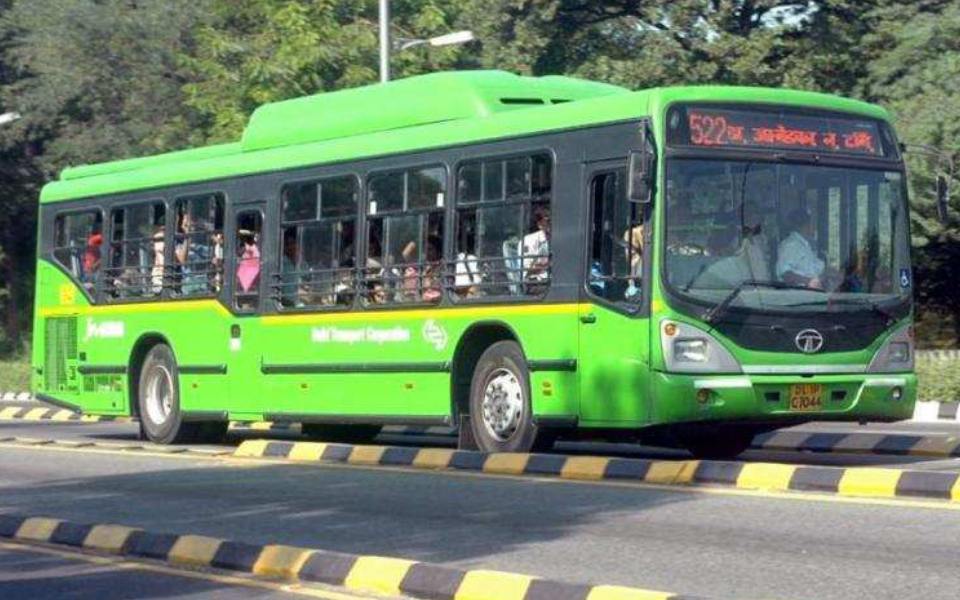
New Delhi, Jan 22: The Delhi High Court has asked the city transport corporation to explain how it appointed a colour-blind person as a driver and allowed him to drive its buses for three years.
Justice Chandra Dhari Singh said the matter was extremely serious since it involved public safety and it was "very disheartening" to witness the "negligence" on the part of the Delhi Transport Corporation (DTC).
Lamenting the "sorry state of affairs", Justice Singh asked the DTC chairperson to file a personal affidavit after due investigation and state the details of the officer responsible for the recruitment made in 2008.
The court passed the order on a petition by the DTC concerning the services of the colour-blind driver who was terminated in January 2011 due to an accident.
Colour-blind people are unable to differentiate between colours, especially green and red.
"The petitioner authority should have acted with due care and caution in ensuring that its driver is fit in all aspects to be appointed to the said position. Hence, this Court wants to now apprise itself of the fact as to why and under what circumstances, the petitioner department had appointed the respondent without considering the public safety since such actions may cause serious implications to the public safety," the court said in a recent order.
"It is a very appalling situation that the respondent was appointed as driver with the petitioner department as well as allowed to drive the buses of the petitioner department since his appointment in the year 2008 till 2011 i.e. for 3 years," the court remarked.
On being asked as to how a person suffering from colour blindness at the time of recruitment was appointed as a driver, the court was informed it was done on the basis of a medical certificate issued by Guru Nanak Hospital.
It was added that more than 100 people suffering from colour blindness were appointed, prompting constitution of an independent medical board in 2013.
The court said the corporation's decision to rely on a medical certificate submitted by the candidate was a "wrongful action" and contrary to the medical test certificate issued by its own medical department.
"The petitioner department has unfortunately not taken into account whether the respondent is medically fit for the position for which he was employed for and did not even take any action against the respondent and other 100 persons who were appointed on the basis of the report of the Guru Nanak Eye Centre," the court said.
"This Court observes that it is a sorry state of affairs that the petitioner woke up only in the year 2013 from its deep slumber and finally constituted an independent medical board on 13th April, 2013 for examination of the medical fitness of the respondent," the court said.
Let the Truth be known. If you read VB and like VB, please be a VB Supporter and Help us deliver the Truth to one and all.
India achieves major milestone in wind energy; capacity now 56 gigawatts: PM Modi
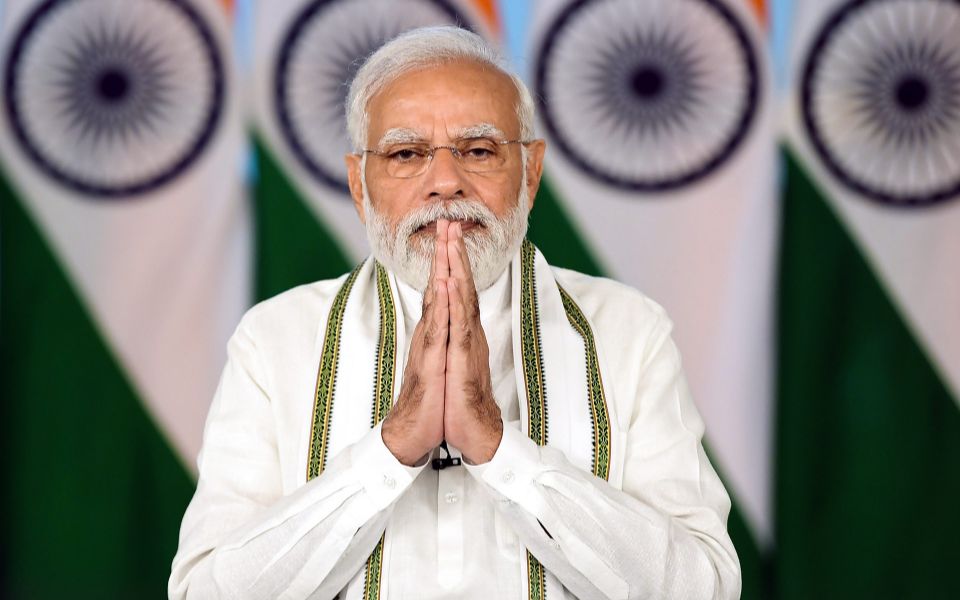
New Delhi (PTI): India has achieved a major milestone in wind energy, with the country's wind energy generation capacity exceeding 56 gigawatts, Prime Minister Narendra Modi said on Sunday.
In his monthly radio address 'Mann Ki Baat', Modi also said the country must save electricity and adopt clean energy.
“India recently achieved a major milestone in wind energy. India's wind energy generation capacity has now exceeded 56 gigawatts. In just the past year, nearly 6 gigawatts of new capacity have been added,” he said.
Underlining that solar and wind energy are essential for India's development, Modi said, “It is not just about the environment; it is about securing our future, and we all have a role to play in it.”
On April 22, Union Minister for New and Renewable Energy, Pralhad Joshi, said that India has recorded its best-ever year in wind energy capacity addition, with a historic 6.1 GW added during 2025-26.
India currently ranks fourth globally in wind energy, with more than 56.1 GW installed capacity and an additional 28 GW under implementation.
Emphasising the vast untapped potential of the sector, Joshi highlighted that India's wind energy potential at 150 metres hub height is estimated at nearly 1,164 GW.
He expressed confidence that with sustained efforts, the country will achieve 100 GW wind capacity by 2030 and 156 GW by 2036, contributing significantly to the net-zero target by 2070.
Joshi also underlined that wind energy plays a critical role in stabilising India's energy system, particularly due to its peak generation during evening and night hours, which aligns with high demand periods.
He noted that nearly 45 per cent of wind power generation occurs during peak demand hours, making it a vital complement to solar energy.