Extensive efforts made to expand medical education infrastructure, Lok Sabha told
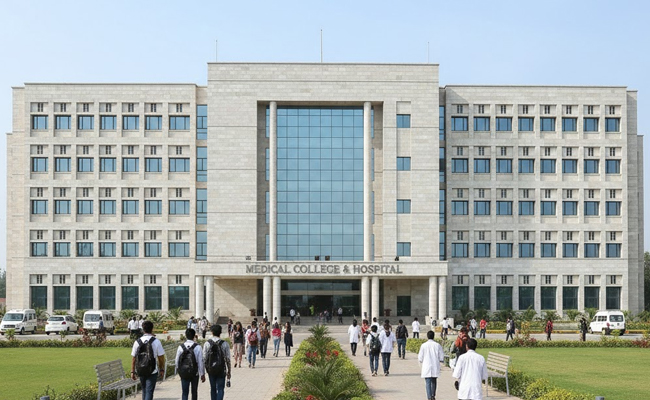
New Delhi (PTI): The Union government has made concerted efforts to expand medical college infrastructure under various centrally-sponsored schemes over the past decade to make medical education more affordable, Minister of State for Health Prataprao Jadhav told the Lok Sabha on Friday.
The Ministry of Health and Family Welfare administers a Centrally Sponsored Scheme (CSS) for establishment of new medical colleges attached with existing district and referral hospitals with preference to underserved areas and aspirational districts, where there is no existing government or private medical college, Jadhav said in a written reply.
A total of 157 medical colleges have been approved across districts. Further, support has also been provided for upgrade of existing state and central government medical colleges to increase the number of MBBS (undergraduate) and postgraduate (PG) seats under another CSS scheme.
ALSO READ: ED questions former TDB officer citing money laundering in Sabarimala gold loss case
Under these schemes, an additional 4,977 MBBS seats and 8,058 PG seats have been approved in medical colleges across the country, Jadhav said.
According to the National Medical Commission (NMC), the number of medical colleges have increased by 111.36 per cent, from 387 in 2013-14 to 818 at present, he stated.
Further, the Lok Sabha was informed that MBBS seats have increased by 151.18 per cent, from 51,348 before 2013-14 to 128,976 at present, while PG seats have increased by 172.63 per cent, from 31,185 before 2014 to 85,020 currently, thereby contributing to improved accessibility to medical education.
The fee structure for MBBS courses differs from state to state in government and private medical colleges as per guidelines issued by state fee regulatory authorities. Further, the government continuously endeavours to make medical education more affordable and prevent commercialisation, Jadhav said.
In order to make medical education affordable and accessible in the country, the fee structure of government medical colleges is subsidised. In accordance with the provision of the Constitution (103rd Amendment Act, 2019), there is a reservation of 10 per cent in UG and PG medical seats for economically weaker sections.
Also, guidelines have been framed under Section 10 of National Medical Commission Act, 2019, for determination of fees and other charges in respect of 50 per cent of seats in private medical institutions and deemed to be universities which were issued by NMC on February 3, 2022.
However, the guidelines have been challenged in various courts and are sub judice, the reply read.
Let the Truth be known. If you read VB and like VB, please be a VB Supporter and Help us deliver the Truth to one and all.
ICSE, ISC results: Girls outperform boys, pass rate over 99%
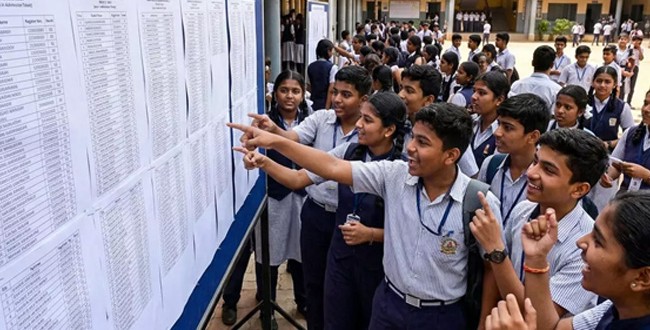
New Delhi (PTI): The Council for the Indian School Certificate Examinations on Thursday announced the Class 10 and Class 12 results for 2026, with overall pass percentages of 99.18 per cent and 99.13 per cent, respectively.
A total of 2,58,721 candidates appeared for the Indian Certificate of Secondary Education (ICSE), or Class 10, examination.
About 1,03,316 students took the Indian School Certificate (ISC), or Class 12, exam.
Girls outperformed boys in both examinations.
In ICSE, girls recorded a pass percentage of 99.46 per cent compared to 98.93 per cent for boys.
In ISC, girls achieved a 99.48 per cent pass percentage, while those of boys stood at 98.81 per cent.
Students can now access their scorecards on the official website cisce.org.