Faced criticism from my own community for advocating creamy layer principle: Ex-CJI Gavai
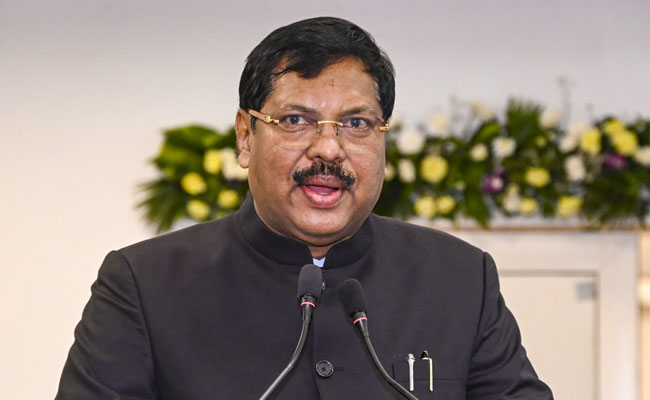
Mumbai (PTI): Former Chief Justice of India B R Gavai on Saturday said he faced criticism from his own community for stating in a judgement that the creamy layer principle should be applied to reservation for the Scheduled Castes.
In Dr B R Ambedkar's view, affirmative action was like providing a bicycle to someone who is lagging behind, he said, asking whether Ambedkar thought that such a person should never give up the bicycle. Ambedkar did not think so, he claimed.
Gavai, who retired as CJI recently, was delivering a lecture on "Role of Affirmative Action in Promoting Equal Opportunity" at Mumbai University.
Paying tributes to Ambedkar on his death anniversary, Gavai said the iconic leader was the architect of not only the Indian Constitution but also of the affirmative action enshrined in it.
"Babasaheb, in so far affirmative action is concerned, was of view that it is like providing a cycle to those who are lagging behind....suppose somebody is at tenth km and somebody at zero, he (the latter) should be provided a cycle, so that he reaches faster till the tenth km. From there, he joins the person who is already there and walks along with him. Did he (Ambedkar) think that the person should not leave the cycle and carry forward and thereby ask the people who are at zero km to continue to be there?" the former CJI asked.
"In my view, that was not the vision of social and economic justice as contemplated by Babasaheb Ambedkar. He wanted to bring social and economic justice in the real sense and not in formal sense," he added.
The Indra Sawhney and Others Vs Union of India case enunciated the creamy layer principle, and in another case, he himself held that creamy layer should also be made applicable to the Scheduled Castes, said Gavai.
The principle demands that those who are sufficiently advanced economically and socially should not get the benefit of affirmative action even though they are members of the backward community for which it is meant.
He was "widely criticized" by the people of his own community for this judgement, Gavai said, adding that he was accused of taking benefit of reservation himself to become a Supreme Court judge and then advocating the exclusion of those who fell in the creamy layer.
But these people did not even know that there is no reservation for the constitutional office of High Court or Supreme Court judge, Gavai said.
Can applying the same yardstick to the son of a chief justice of India or chief secretary and the son of a labourer who has studied in a gram panchayat school satisfy the test of equality as enshrined in the Constitution, he asked.
Gavai, however, emphasized that in the last 75 years "no doubt affirmative action has played a positive role".
"I have traveled across the country, traveled across the world, I have seen many people belonging to the Scheduled Caste becoming chief secretary or director general of police or ambassadors and high commissioners," he said.
Maharashtra is a land of social reformers, and the "region can truly be described as the birthplace of the idea of modern India", Gavai said.
"We are all aware about Jyotirao Phule and Savitribai Phule's pioneering work in eradication of inequalities in the society," he said.
When women were among most oppressed in society, it was the Phule couple who opened the door of education for them, he noted.
Let the Truth be known. If you read VB and like VB, please be a VB Supporter and Help us deliver the Truth to one and all.
CM Siddaramaiah alleges ‘criminal conspiracy’ in Sringeri recount, vows legal action
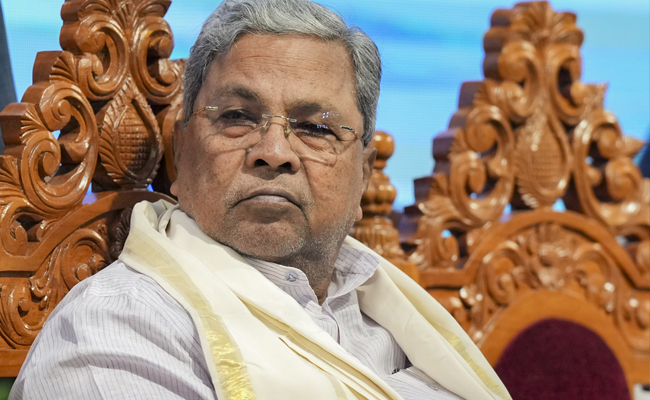
Bengaluru (PTI): Alleging a “criminal conspiracy” by BJP candidate D N Jeevaraj in the Sringeri Assembly poll recounting, Karnataka CM Siddaramaiah on Tuesday said the outcome was manipulated after valid postal ballot votes in favour of Congress leader T D Raje Gowda were tampered with during the recounting process.
Following a Karnataka High Court order on an election petition filed by Jeevaraj, challenging Raje Gowda’s election, the reverification and recounting were conducted on Saturday.
After the reverification and recount of postal ballots for the Sringeri Assembly constituency, votes polled in favour of Raje Gowda were reduced by 255, the returning officer said.
A report on the matter has been submitted to the Election Commission of India for further action, the officer added.
Congress leader Raje Gowda had won the 2023 Assembly polls from Sringeri by 201 votes, defeating his nearest rival Jeevaraj.
Addressing a press conference in Bengaluru, Siddaramaiah said the High Court had directed the recounting of postal ballots and that irregularities were noticed during the exercise conducted on May 2.
“This is a clear case of criminal conspiracy,” Siddaramaiah said, alleging that valid votes cast in favour of Raje Gowda were altered after being accepted by counting agents of all parties, including Congress, BJP, and JD(S).
He claimed that during the recounting of postal ballots, 255 votes were initially accepted as valid by all agents but were later tampered with by subordinate officials.
“There is a second mark on the votes polled in favour of Raje Gowda. They had accepted these as valid votes. Subsequently, another mark was made by officials. This is a clear case of criminal conspiracy,” he said.
When asked who was behind the alleged conspiracy, the CM replied, “It was hatched by Jeevaraj and others. It is planned.”
Siddaramaiah further alleged that the returning officer acted improperly by declaring the result despite the presence of an Election Commission observer during the recounting.
“Immediately after the counting, the returning officer announced the result. He should not have done so; this is against the law,” he said.
He pointed out that Raje Gowda had originally won by 201 votes, but after the recounting, the BJP candidate was declared the winner by 52 votes.
“The BJP has committed a criminal act of conspiracy. This is not vote chori but vote dacoity,” he alleged.
The CM said a police complaint had already been filed by Raje Gowda’s election agent, Sudhir Kumar, and emphasised the need for electoral integrity.
“We want transparency and free and fair elections. That is what our Constitution mandates,” he added.
Stating that the government would pursue legal remedies, Siddaramaiah said, “We are preparing an appeal challenging the returning officer’s announcement in a court of law.”
Responding to a separate query on elections in other states, the CM said there appeared to be an anti-incumbency factor in West Bengal, while results in Tamil Nadu were “surprising,” adding that Vijay’s party was emerging as the largest there.
Following the victory of party candidates in Bagalkote and Davanagere South, Siddaramaiah expressed confidence about future electoral prospects in Karnataka.
“Even in 2028, we will win the Assembly elections. We will come back,” the CM said.
Siddaramaiah added that he would order a forensic examination into the alleged tampering of postal ballots.