Fact Check: Jio Holi promotional offer rewards Rs 700 to customers? No, this is a scam
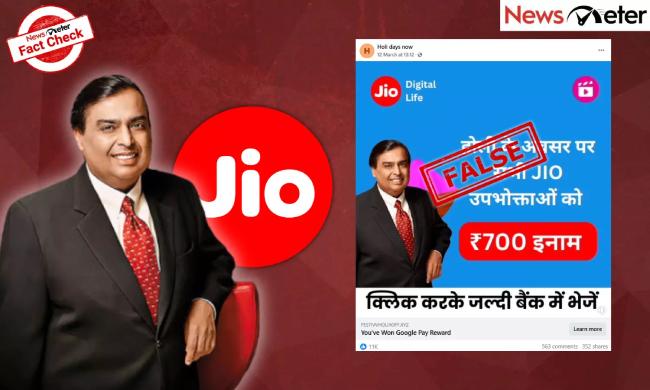
Claim: Jio customers can avail Rs 700 as a reward on the occasion of Holi. The offer also mentions that PMMY beneficiaries can get Rs 1,999 into their accounts.
Fact: The claim is false. Jio has no such promotional offer, and the reward for PMMY beneficiaries does not exist. Both are scams.
Hyderabad: For many people across the country, Holi is an occasion to spend time with their friends and family. The vibrant celebrations of the festival of colours are not just limited to individuals. Companies also make the most of the occasion by offering discounts and rewards. One such alleged promotional offer has taken social media by storm, amassing over 15.3 million views across just four Facebook posts.
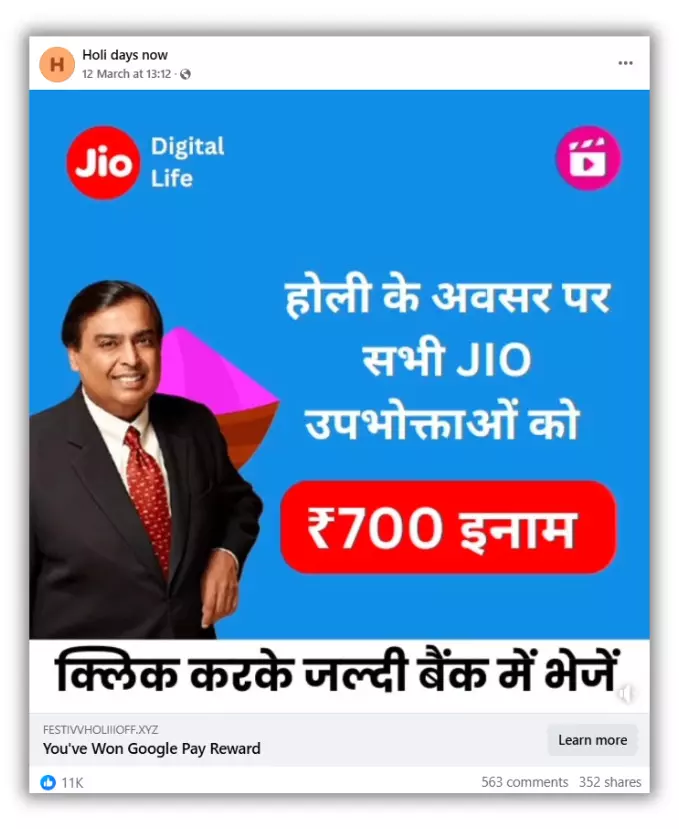
The offer claims that Jio customers can avail of Rs 700 as a reward. This claim is made in four videos of the same promotional offer uploaded to Facebook on March 12.
The video contains an image of Mukesh Ambani, chairman of Reliance Industries which leads Jio, logos of Jio Digital Life and JioCinema, along with a voiceover that says, “On the occasion of Holi, all Jio customers can avail Rupees 700 reward. Please click, to send the money quickly to your bank (account).” (Transcribed from Hindi audio)
The text on the post also reads, “On the occasion of Holi, all Jio customers can avail Rupees 700 reward. Please click, to send the money quickly to your bank.” (Translated from Hindi) (Archive)
Fact Check
NewsMeter has found that the claim is false. The promotional offer is a scam. Jio has not issued any offer for its customers to avail a reward of Rs 700 for Holi.
On the official website of Jio, we did not find any offer or promotion stating that customers can avail a reward of Rs 700 for Holi.
The social media handles of Jio, including Instagram and Facebook, also did not contain any information regarding the Holi promotional offer.
The Meta Ad Library, where all the active advertisements on the Meta platforms can be searched and viewed, does not show any Holi promotional offers by the company’s official social media accounts.
We clicked on the viral promotional offers and were redirected to a website with the URL ‘festivvholiiioff.xyz’. However, the URL of the official website of Jio is ‘jio.com’, which is not the official site. An archive of the website can be found here.
On the website, we do not see any promotional offer related to Jio. However, the website contains an image of prime minister Narendra Modi, the logo of ‘Digital India’, and an image of a digital scratch card which stated, “Through the medium of ‘Pradhan Mantri Mudra Yojana’ everyone can avail free 1999 Rupees in their account. To send this to your account, scratch below.” (Translated from Hindi)
“Every Indian citizen gets a gift of up to Rs 1,999 in their account under Pradhan Mantri Mudra Yojana,” is stated on the website. (Translated from Hindi)
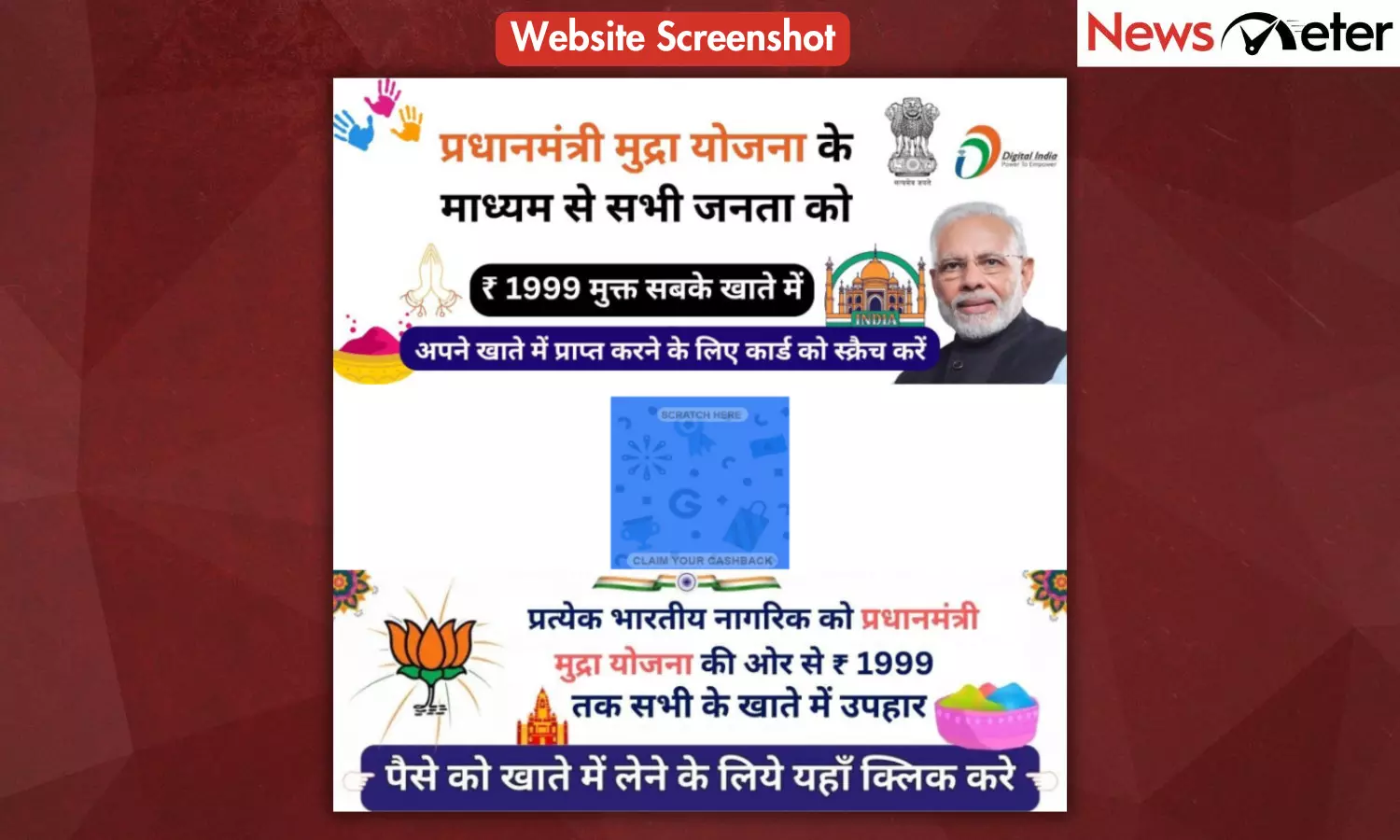
The website of the scheme does not contain information regarding a reward of Rs 1,999 for all citizens. We found that there are no news reports or social media posts regarding the same.
This makes it clear that both the Rs 700 Jio Holi offer claim and the Rs 1,999 Mudra Yojana claim are false. These are scams trying to mislead netizens with promises of getting easy money.
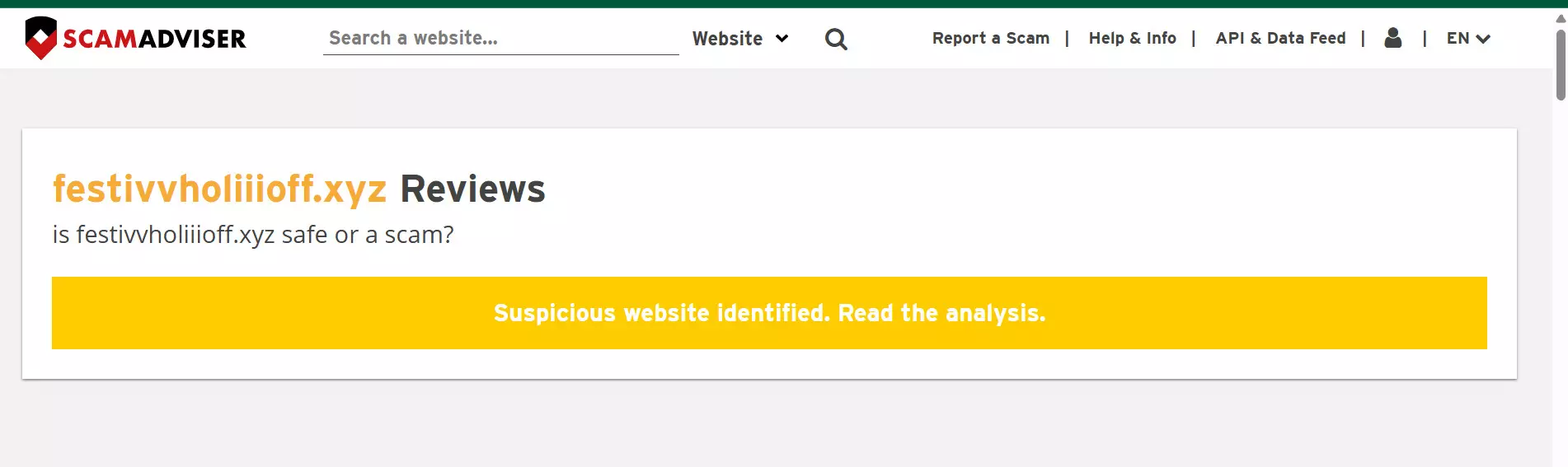
We used Scam Adviser to check the authenticity of the Website URL ‘festivvholiiioff.xyz’. Calling it a suspicious website, Scam Adviser identified that the website could be a scam.
Let the Truth be known. If you read VB and like VB, please be a VB Supporter and Help us deliver the Truth to one and all.
Sujit Nair raises concerns over speculation of DMK-AIADMK understanding to block TVK
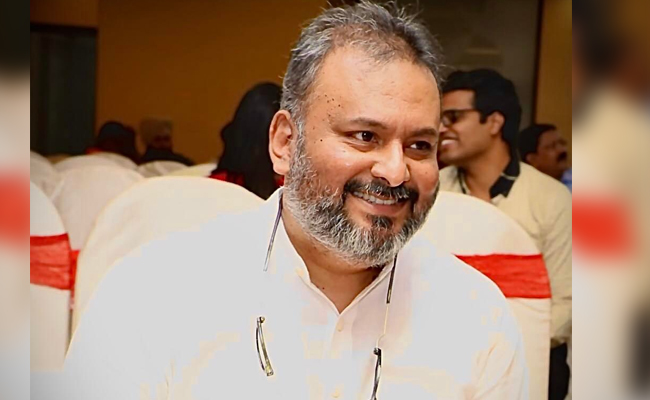
Chennai: Journalist and political commentator Sujit Nair has expressed concern over speculation that the Dravida Munnetra Kazhagam and the All India Anna Dravida Munnetra Kazhagam could explore a post-poll understanding to prevent Vijay-led Tamilaga Vettri Kazhagam from forming the government in Tamil Nadu.
In a social media post, Sujit Nair said the election verdict in Tamil Nadu reflected a clear public demand for political change and argued that the mandate should be respected irrespective of political preferences.
Referring to reports and political discussions surrounding a possible understanding between the DMK and AIADMK, he said he hoped such developments remained only speculative conversations and did not turn into reality.
Nair stated that if such an alliance were to take shape, it would raise serious questions about ideological politics in the country. He said TVK had emerged through a democratic electoral process and that the legitimacy to govern in a parliamentary democracy comes from the people’s verdict.
According to him, attempts to prevent an electoral winner from forming the government through unexpected political arrangements may be constitutionally valid, but many people could view them as politically opportunistic.
He further said that such a move could particularly affect the political image of the DMK, which has historically projected itself around ideology, social justice and opposition politics. Nair said that in ideological terms, the DMK appeared closer to TVK than to the AIADMK, and joining hands with its long-time political rival only to remain in power could weaken its broader political narrative.
He added that the same questions would apply to the AIADMK as well, as the party had spent decades positioning itself against the DMK and such an arrangement could create discomfort among its cadre and supporters.
Drawing a comparison with Maharashtra politics in 2019, Nair said he had expressed similar views when the Shiv Sena formed an alliance with the Indian National Congress and the Nationalist Congress Party after the Assembly elections.
He said post-poll alliances between long-standing political rivals often create a public perception that ideology and electoral mandates become secondary when political power equations come into play.
Nair also said such developments increase public cynicism towards politics and reinforce the belief among voters that ideology is often sidelined after elections.
He maintained that the Tamil Nadu verdict was emphatic and said respecting both the spirit and substance of the mandate was important for the credibility of democratic politics.