Fadnavis denies ‘cold war’ with Shinde, says Raut wants to compete with Salim-Javed
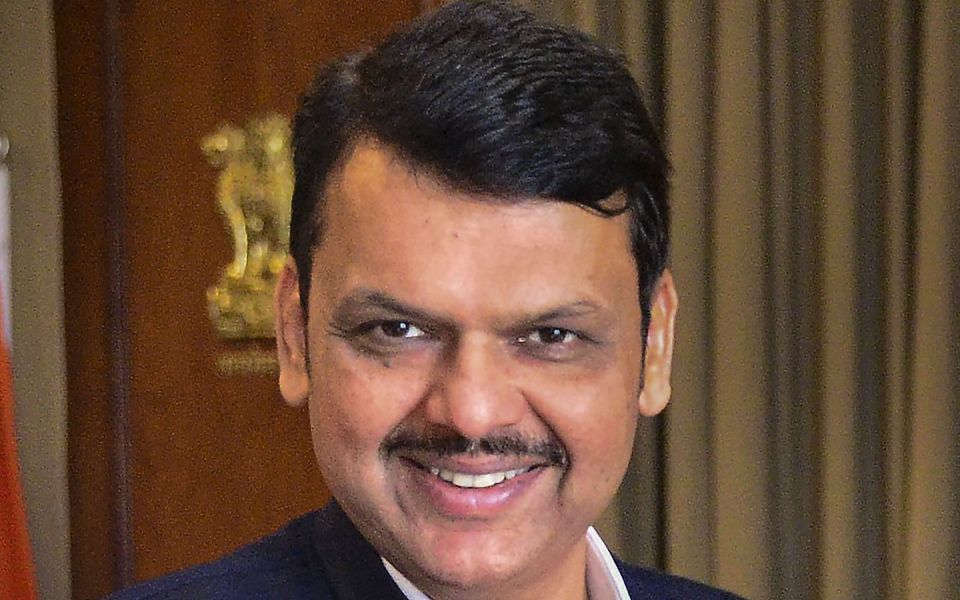
Mumbai, Mar 2 (PTI): Maharashtra Chief Minister Devendra Fadnavis on Sunday scoffed at speculations of a “cold war” between him and his deputy Eknath Shinde, and mocked Shiv Sena (UBT) leader Sanjay Raut, quipping he wants to compete with Salim-Javed, the legendary screenwriting duo.
He was addressing a press conference with deputy CMs Shinde and Ajit Pawar after a cabinet meeting and customary tea party ahead of the four-week budget session of the assembly, which begins on Monday.
“There is no war. Those who know both of us will remember what we do when we are together,” said Fadnavis, pointing to their meetings before Shinde’s rebellion split the undivided Shiv Sena and sunk the Maha Vikas Aghadi government in 2022.
While Fadnavis maintained that all partners of ruling Mahayuti – BJP, Shiv Sena and NCP – are working unitedly, Shinde chipped in, “Everything is thanda thanda, cool cool.”
Shinde, who heads the Shiv Sena, said the budget session will be the first House proceedings of the new government after Mahayuti’s stunning victory in the state polls last year.
“It is just that Fadnavis and I have swapped our chairs. Only Ajit Pawar’s chair is fixed,” said Shinde, who was the CM before the assembly elections with Fadnavis and Pawar as his deputies then.
Pawar came up with the repartee, “What can I do if you couldn’t keep your chair,” sending all three into peals of laughter.
Fadnavis dismissed the reports that claimed that he had stayed decisions taken by his predecessor. “I have not stayed any decision taken by Shinde,” he said.
The CM and his deputies also rubbished Sena (UBT) leader Sanjay Raut’s claim about Shinde meeting Union Minister Amit Shaha at 4 am in Pune to complain against Fadnavis.
Shinde said Shah is a leader of the BJP-led NDA. Pawar asserted that it was a courtesy call at 10 am. Fadnavis said he too was present in the meeting.
Raut in his weekly column Rokhthok in the Sena (UBT) mouthpiece 'Saamana' on Sunday claimed the meeting took place at a hotel in Pune’s Koregaon Park on February 22. Shinde who is a “leader of 57 MLAs” had to stay awake till 4 am to meet Shah, he claimed.
Fadnavis said Raut wants to compete with Salim-Javed, the iconic screenwriting pair of Salim Khan and Javed Akhtar, while Shinde claimed there was “chemical locha (imbalance)” in the head of the Sena (UBT) leader.
Amid disagreement over guardian ministers’ posts to taking separate review meetings to separate medical cells and ‘war rooms’ for monitoring projects, there were reports of unease between Fadnavis and Shinde.
When asked about his “don’t take me lightly” remark, Shinde said he had already clarified that it was directed at those who took him lightly and how he taught them a lesson, in a veiled reference to Uddhav Thackeray.
Fadnavis added, “I don’t take Shinde lightly so the remark was directed at those who underestimated him.” He also lashed out at the opposition for boycotting the customary tea party on the eve of the assembly session.
Referring to a letter by the opposition, Fadnavis said, “It runs into nine pages. It has the names of nine opposition leaders of which seven have signed. All issues mentioned are based on newspaper reports and if they had read the government’s response to these articles, the opposition couldn't have written even a half-page letter.
“They said the government should have a dialogue with the opposition. When we call them for dialogue, they boycott. None of the senior opposition leaders were present at the meeting. Instead of ‘hum saath saath hai’, it’s ‘hum aapke hai kaun’ being played out in the opposition camp.”
The chief minister said five bills would be introduced during the session, which will continue till March 26, and two debates on women's empowerment and the Constitution will be held.
He said soybean and tur procurement has been done in record numbers. “We have to acquire additional godowns,” he added.
The CM said the government will table a balanced budget (on March 10) and ensure fiscal discipline. Flagship schemes will continue and only ineligible beneficiaries will be dropped, he said, referring to the Ladki Bahin’ programme.
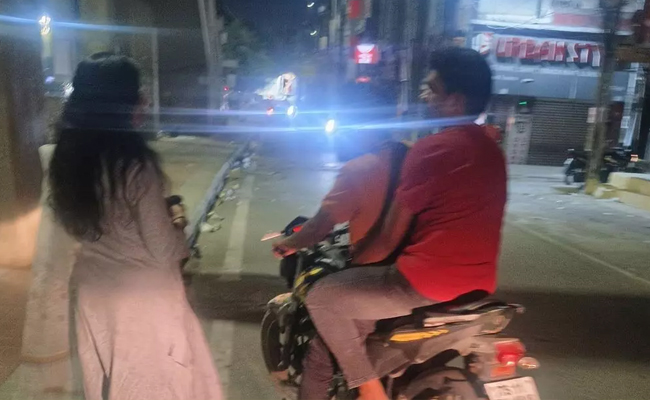
Fadnavis described the harassment of Union minister Raksha Khadse’s daughter as unfortunate, stressing those involved won’t be spared.
Asked about the opposition's demand for the resignation of NCP ministers Manikrao Kokate and Dhananjay Munde, he said a decision on Kokate would be taken after court order. “We have already clarified about the demand for Munde’s resignation,” he said.
Agriculture minister Kokate was recently convicted by a magistrate’s court in a forgery case and sentenced to two years in jail. A sessions court in Nashik that has suspended his sentencing will give its decision on Kokate’s plea seeking a stay on the magistrate's order on March 5.
Munde has been facing opposition heat after the arrest of his close aide Walmik Karad in an extortion case related to the murder of Beed sarpanch Santosh Deshmukh.
When told that Congress leader Sunil Kedar’s legislature membership was being terminated, Fadnavis said the decision was taken after the court refused to stay his conviction. In Kokate’s case, the sentence had been suspended, said the CM.
About French consultant Systra’s allegations against MMRDA, Shinde said it had written on February 27 saying there was no financial irregularity concerning the planning body.
Fadnavis said his government won’t compromise on transparency.
Let the Truth be known. If you read VB and like VB, please be a VB Supporter and Help us deliver the Truth to one and all.
Sujit Nair raises concerns over speculation of DMK-AIADMK understanding to block TVK
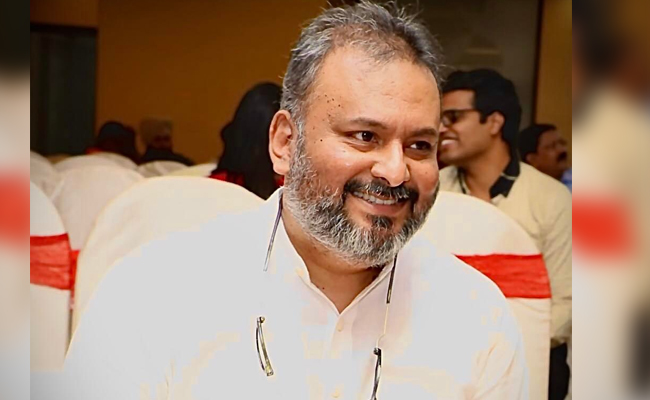
Chennai: Journalist and political commentator Sujit Nair has expressed concern over speculation that the Dravida Munnetra Kazhagam and the All India Anna Dravida Munnetra Kazhagam could explore a post-poll understanding to prevent Vijay-led Tamilaga Vettri Kazhagam from forming the government in Tamil Nadu.
In a social media post, Sujit Nair said the election verdict in Tamil Nadu reflected a clear public demand for political change and argued that the mandate should be respected irrespective of political preferences.
Referring to reports and political discussions surrounding a possible understanding between the DMK and AIADMK, he said he hoped such developments remained only speculative conversations and did not turn into reality.
Nair stated that if such an alliance were to take shape, it would raise serious questions about ideological politics in the country. He said TVK had emerged through a democratic electoral process and that the legitimacy to govern in a parliamentary democracy comes from the people’s verdict.
According to him, attempts to prevent an electoral winner from forming the government through unexpected political arrangements may be constitutionally valid, but many people could view them as politically opportunistic.
He further said that such a move could particularly affect the political image of the DMK, which has historically projected itself around ideology, social justice and opposition politics. Nair said that in ideological terms, the DMK appeared closer to TVK than to the AIADMK, and joining hands with its long-time political rival only to remain in power could weaken its broader political narrative.
He added that the same questions would apply to the AIADMK as well, as the party had spent decades positioning itself against the DMK and such an arrangement could create discomfort among its cadre and supporters.
Drawing a comparison with Maharashtra politics in 2019, Nair said he had expressed similar views when the Shiv Sena formed an alliance with the Indian National Congress and the Nationalist Congress Party after the Assembly elections.
He said post-poll alliances between long-standing political rivals often create a public perception that ideology and electoral mandates become secondary when political power equations come into play.
Nair also said such developments increase public cynicism towards politics and reinforce the belief among voters that ideology is often sidelined after elections.
He maintained that the Tamil Nadu verdict was emphatic and said respecting both the spirit and substance of the mandate was important for the credibility of democratic politics.