Fadnavis slams Rahul Gandhi over allegations about irregularities in Maharashtra assembly polls
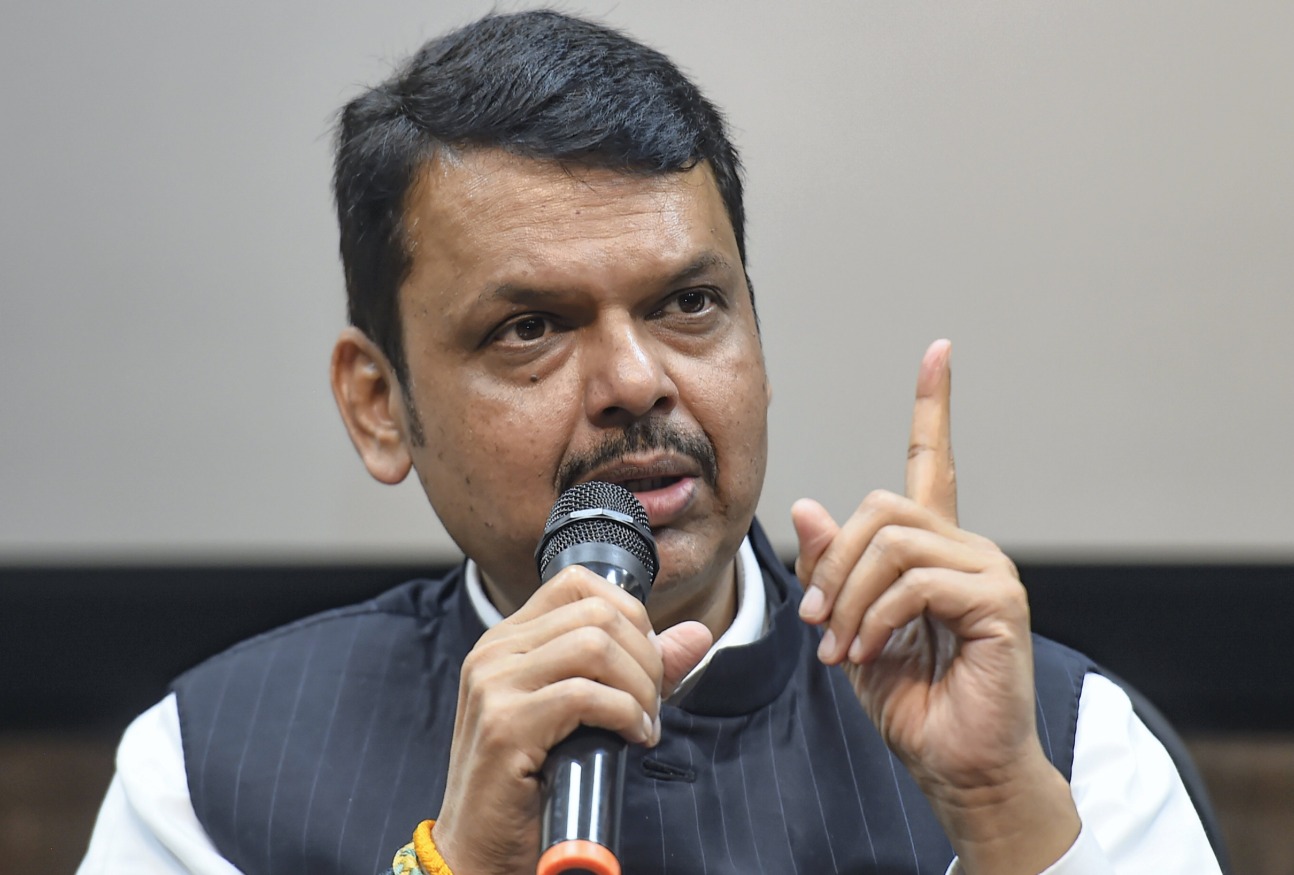
Pune(PTI): Maharashtra Chief Minister Devendra Fadnavis on Saturday rejected Rahul Gandhi's allegations about irregularities in the state assembly elections, saying instead of wiping the dust off his face, the Congress leader was cleaning the mirror.
Gandhi, the Leader of Opposition in the Lok Sabha, on Friday claimed that more voters were added in Maharashtra in five months between the Lok Sabha and state polls than in five years before.
Between the 2024 Lok Sabha elections and the 2024 Vidhan Sabha elections, 39 lakh new voters were added in just five months, he claimed.
Speaking at the Jaipur Dialogues Deccan Summit Pune 2025, the chief minister dismissed reports about discontent in the Mahayuti and Deputy Chief Minister and Shiv Sena chief Eknath Shinde's stand in the ruling alliance.
"Shinde has a serious personality. The media is spreading false claims about him being upset," he said.
Fadnavis questioned Gandhi's allegations about irregularities in the 2024 state assembly elections.
"The number of voters keeps increasing in the assembly polls held after every Lok Sabha election. Many people didn't find their name in the voters' list during the Lok Sabha elections. When we followed up on this issue, the Election Commission of India (ECI) launched a campaign, and a large number of new voters were included. Instead of wiping the dust off his face, Rahul Gandhi is cleaning the mirror," he said.
Fadnavis further accused the Congress leader of strengthening urban Naxalism.
"He (Gandhi) expresses distrust in institutions in our system. Due to this, urban Naxals are trying to destroy the public's trust in our democratic set-up. Rahul Gandhi is strengthening them," he said.
The chief minister said the Mahayuti could win the 2024 assembly elections because Maharashtra accepted the "ek hai toh safe hai" slogan.
In the 2024 assembly elections, the Mahayuti coalition of BJP, NCP and Shiv Sena won 230 of the 288 seats in the state. BJP led the pack with 132 seats. The opposition Maha Vikas Aghadi (MVA) was reduced to 46 seats, with NCP (SP) and Sena (UBT) getting 10 and 20, respectively.
"We witnessed the first example of 'ek hai toh safe hai' during the Maharashtra elections, and now, we have seen it play out in Delhi as well," he said, referring to the BJP's big win in the assembly elections in the capital.
He claimed that the Lok Sabha elections saw the impact of "vote jihad", which led to a division of votes, and this split cost the BJP 12 crucial seats, including Dhule, where the margin of defeat was merely 4,000 votes.
"During the state elections, Prime Minister Narendra Modi pointed out how people were being divided along caste lines, which, in turn, emboldened forces seeking to create instability in the country. People noted this and voted accordingly in the assembly elections," Fadnavis said.
Fadnavis rejected Uddhav Thackeray's claim that the BJP had promise him the chief minister's post after the 2019 assembly polls.
"After the poll results were out, the Shiv Sena suddenly held a press conference separately, announcing that all options were open for them. When I tried to contact him (Thackeray), he didn't even take my call," he said.
He claimed that the BJP later found out about NCP (SP) chief Sharad Pawar's pre-poll understanding with the Shiv Sena.
Let the Truth be known. If you read VB and like VB, please be a VB Supporter and Help us deliver the Truth to one and all.
Bihar: Over 150 children fall ill after consuming 'mid-day meal' in Saharsa
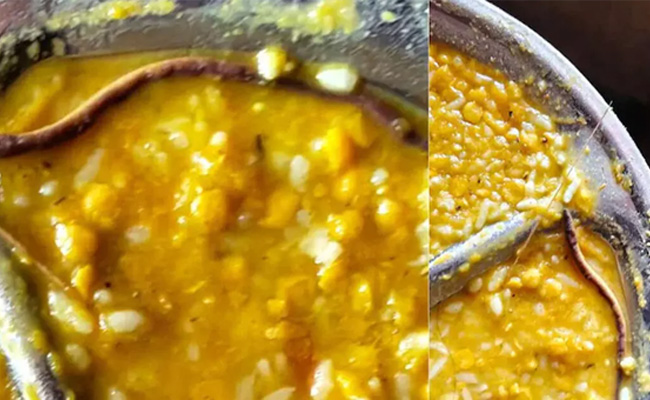
Saharsa (PTI): More than 150 children were taken ill after allegedly consuming food that was part of the mid-day meal in a school in Bihar’s Saharsa district, a senior official said on Thursday.
The incident occurred at a middle school in Baluaha village of the district.
The official said that 115 children were undergoing treatment at the Sadar Hospital, while around 50 students were admitted to Mahishi Public Health Centre.
“We received information that several children fell ill after consuming the mid-day meal in Baluaha. The children were initially treated at the primary health centre, but later, many were referred to the Sadar Hospital,” Saharsa District Magistrate Deepesh Kumar told reporters.
“According to doctors, the health condition of the children has improved, but they will be kept under observation for some time. There is no need to panic. Some kids are having mild fever. They are being treated accordingly,” Kumar said.
Meanwhile, family members of some children claimed that a snake was found in the container in which cooked pulses was stored at the school.
Of the 545 students present in the school, 200 had already eaten their meals by the time the snake was spotted, and later complained of stomach ache and vomiting, they said.
Regarding the claims, the DM said food samples have been collected from the school.
“We will be able to comment on this only after the results of the tested samples arrive,” he said.