Farm Laws Wapas Jao: Bella Ciao goes Punjabi with sounds of farmers protesting
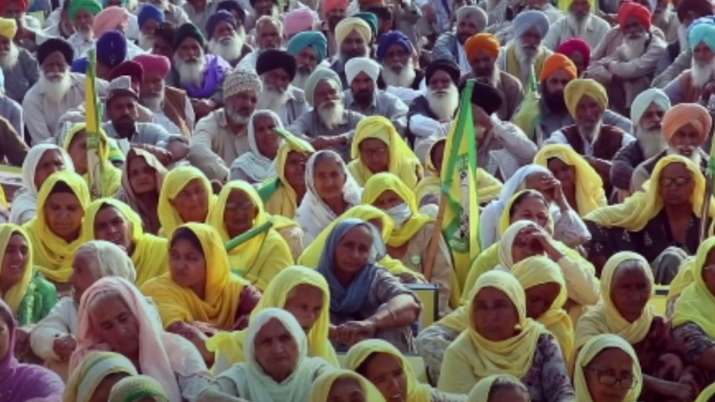
New Delhi, Dec 24: “Bella Ciao”, the anthem of resistance across the world, now has a Punjabi version that echoes with the sounds of farmers protesting and 27-year-old Poojan Sahil who created the song can’t be happier at its acceptance and success.
The video of the song has almost 2.7 lakh views on YouTube in less than a week and is being widely shared across social media platforms.
Sahil, who teaches mathematics in a Delhi school, said "fear, abuses and disappointments" are par for the course for a socially conscious musician but it all seems worth it if his words give strength to the thousands of farmers who have been protesting for the last month to demand a rollback of the three new agri laws.
"I have a parameter for my songs. As soon as I start getting abuses on the YouTube comments I understand it has become slightly popular and has moved out of the usual echo chamber! For this song it happened in less than 24 hours of uploading it," Sahil told PTI.
He had created a Hindi version of “Bella Ciao” during the anti-CAA protests earlier this year and knew the song, which returned to the popularity charts through Netflix''s popular drama "Money Heist", would resonate with the youth.
"I had already created a ''Wapas Jao'' (Hindi version) of ''Bella Ciao'' during various student protests in India and it was received well. It was then also used for the CAA protests a number of times. I realised the youth connects to it and obviously ''Money Heist'' has helped in that. When the farmers'' protest began, I thought it would fit well, given the history of the song," Sahil said.
"Bella Ciao" (Goodbye Beautiful) originated in the late 19th century in north Italy with women peasants singing it in protest to the harsh working conditions.
The Italian resistance song was also used by members of various anti-fascist groups against Benito Mussolini during the Second World War.
Over the decades and years, it has cropped up in protests around the globe, be it Greece, Tunisia or France.
Sahil said the popularity of the Hindi version of the song during the anti-CAA protests inspired him to come up with the Punjabi lyrics.
"I think the melody of the song is truly timeless," he said.
The Punjabi lyrics of the song – the video by ''Karwaan-e-Mohabbat'', a civil society campaign for social harmony, has sweeping shots from the protest grounds near the border areas of Delhi -- talks about how farmers have left everything behind to protest against the new farm bills.
"We have left all inhibitions behind/Singing O merciless/ Go back, go back, go back/ every grain of the soil sings in chorus/ O merciless go back," say the lyrics, which are not the translation of the original but a rendition in Punjabi.
Asked about being a creative, socially conscious voice in contemporary times, Sahil said it is a "taxing experience".
"It is a very taxing experience to be honest with the fear, abuses and disappointments that have to be faced regularly. However, when it feels like the movement and the people struggling are gaining some strength and hope through our words and music, it seems all worth it," he said.
The lyricist-musician-singer has also reprised many classics, including "Woh Subah Kabhi to Ayegi", Faiz Ahmed Faiz''s "Hum Dekhenge" and "Muhabbat Zindabad" from "Mughal-E-Azam".
He said he tries to be hopeful about the future through these songs.
"… These songs of hope are also like the conversations I am having with myself to keep the hope alive!" Sahil said, adding that he is inspired by people around him, family, friends and "everyone who keeps trying in their own way to work towards a better tomorrow".
Enacted in September, the three farm laws have been projected by the central government as major reforms in the agriculture sector that will remove the middlemen and allow farmers to sell anywhere in the country.
However, the protesting farmers have expressed apprehension that the new laws would pave the way for eliminating the safety cushion of Minimum Support Price and do away with the mandi system, leaving them at the mercy of big corporates.
The government has repeatedly asserted that the MSP and Mandi systems will stay and has accused the opposition of misleading the farmer.
Let the Truth be known. If you read VB and like VB, please be a VB Supporter and Help us deliver the Truth to one and all.
Two injuries, one DNF, a DQ as India end messy World Relays campaign

Gaborone (Botswana) (PTI): Amoj Jacob and Ragul Kumar got injured during the men's 4x400m and 4x100 races respectively as India ended their World Athletics Relays campaign in disappointment on the second day of competitions here on Sunday.
The Indian camp had high hopes of making the 2027 World Championships in the men's 4x400m relay but the team did not finish (DNF) the race as Jacob suffered cramps and pulled out of the race after taking the baton from the first leg runner Dharamveer Choudhary. Rajesh Ramesh and Vishal TK were to run in the third and fourth legs.
Those teams which could not qualify for the 2027 Beijing World Championships by reaching the final round of each of the six relay events on Saturday were given another chance in the second qualification round on Sunday.
The top two teams in each of the two heats (in all six relay events) booked the Beijing ticket on Sunday.
India will now have to try and qualify for the World Championships through the Top Lists of the World Athletics, which is a long and tedious process.
In the men's 4x100m race, third leg runner Ragul Kumar fell down the track after failing to hand over the baton inside the exchange zone to fourth leg runner Gurindervir Singh, which clearly showed the lack of coordination among the runners.
Harsh Santosh Raut and Animesh Kujur ran the first two legs.
The Indian quartet was disqualified and Kumar was seen being taken away from the Field of Play with the help of the volunteers.
It was a comedy of errors in the case of the women's 4x100m race, which saw the baton being dropped during an exchange between first leg runner Tamanna and second runner Nithya Gandhe, though the Indians finished the race in 53.09 seconds.
Gandhe started running quite a distance, but after realising that the baton was not in her hand, she turned and ran back to pick it up.
The only silver-lining for the Indian contingent was the national record time in the mixed 4x100m relay race, though the quartet of Ragul Kumar, Nithya Gandhe, Animesh Kujur and Sneha SS finished sixth in heat number two with a time of 41.35 seconds, bettering the previous national mark of 42.30 seconds set in March in Chandigarh.
The mixed 4x400m relay quartet of Theerthesh P Shetty, Kumari Saloni, Nihal William and Rashdeep Kaur ended at fifth in heat number one with a time of 3 minutes and 19.40 seconds.
On Saturday, all the five Indian relay teams had failed to make it to the respective final rounds and thus missed out on the 2027 World Championships berths.