Farmers cannot be treated as criminals : MS Swaminathan’s daughter
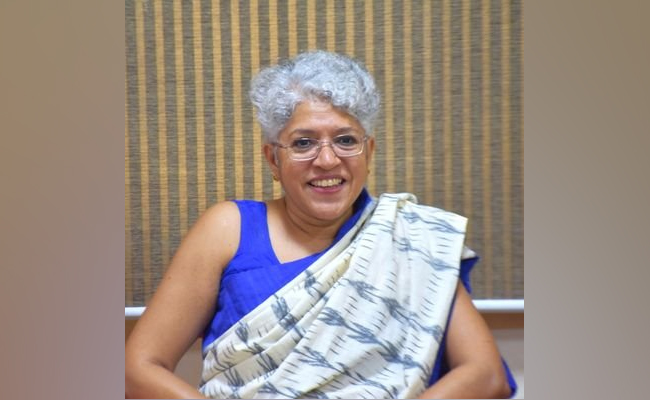
New Delhi: Developmental economist Madhura Swaminathan on Tuesday said that India’s farmers cannot be treated as criminals, referring to the Haryana government’s handling of the farmers’ protest.
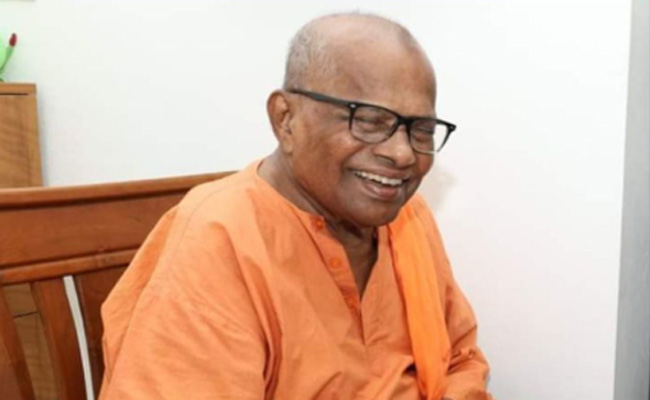
Madhura Swaminathan, the daughter of late agricultural scientist MS Swaminathan, made the comments at an event organised by the Indian Agricultural Research Institute, Pusa to celebrate the posthumous conferment of India’s highest civilian honour, the Bharat Ratna, to her father.
“The farmers of Punjab today are marching to Delhi,” Madhura Swaminathan said while addressing the event virtually. “I believe, according to the newspaper reports, there are jails being prepared for them in Haryana, there are barricades, there are all kinds of things being done to prevent them. These are farmers. They are not criminals.”
Madhura Swaminathan added: “I request all of you, the leading scientists of India, [we] have to talk to our annadatas [food providers] – we cannot treat them as criminals. We have to find solutions. This is my request, I think if we have to continue and honour MS Swaminathan, we have to take the farmers with us in whatever strategy that we are planning for the future.”
In a social media post late on Tuesday, Madhura Swaminathan shared a statement issued by MS Swaminathan in November 2021 expressing happiness about the Union government having repealed its three controversial farm laws. MS Swaminathan, considered the architect of India’s Green Revolution, died in September at the age of 98.
On Tuesday, farmers’ groups, led by the Samyukta Kisan Morcha (Non-Political) and the Kisan Mazdoor Morcha, began their march to Delhi on Tuesday after a meeting with the Union ministers about their demands was inconclusive.
The farmers are pressing for a law guaranteeing a minimum support price for agricultural commodities and the implementation of the MS Swaminathan Commission Report’s wider recommendations on farming in India. A minimum support price is the rate at which the government buys farm produce.
In 2004, the Centre had constituted a commission led by MS Swaminathan to help address problems faced by farmers. The commission had recommended that the minimum support price on crops should be raised to at least 50% above the weighted average cost of production incurred by farmers.
Some of their other demands include a pension scheme for farmers and farm labourers, farm debt waivers, reinstatement of the 2013 Land Acquisition Act, India’s withdrawal from the World Trade Organization and compensation for families of farmers who died during the previous farmers’ protests in 2020-’21.
To stop the farmers from moving into the national capital, the authorities in Delhi on Monday fortified the city’s borders at Singhu, Tikri and Ghazipur with multilayered barricades using concertina wires, nails, concrete blocks and shipping containers. The volume of police and paramilitary personnel was also increased.
On Tuesday, the Haryana Police fired tear gas using drones at the farmers at the Shambhu border – Haryana’s inter-state border with Punjab – as agitators attempted to break barricades. At least four people sustained injuries due to the firing of tear gas, according to reports.
The Haryana government has set up seven detention centres in Jhajjar.
Let the Truth be known. If you read VB and like VB, please be a VB Supporter and Help us deliver the Truth to one and all.
SC asks states, UTs to prepare action plan to implement guidelines for intensive care services
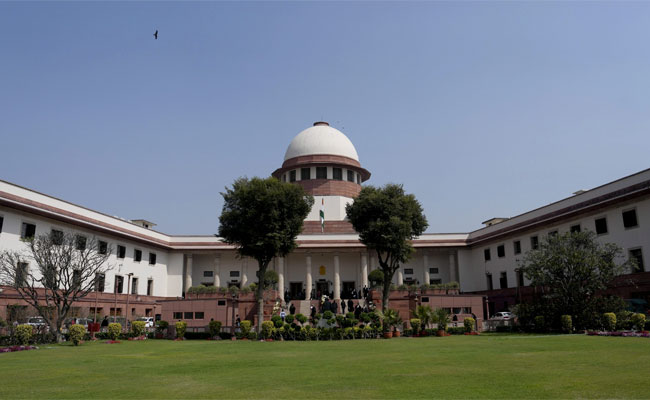
New Delhi (PTI): The Supreme Court has asked all the states and Union Territories to prepare a "realistic and practical" action plan to implement the guidelines necessary as a minimum standard for intensive care units.
The apex court was informed that "Guidelines for Organisation and Delivery of Intensive Care Services", on which there is consensus and which is practical, implementable and necessary as a minimum standard for an ICU, has been prepared.
A bench of Justices Ahsanuddin Amanullah and R Mahadevan said copies of the guidelines should be shared with all the states and UTs.
"Moving further, as an immediate measure, let all the additional chief secretaries/secretaries ... heading the department of health and medical education in the states and the UTs, convene a meeting of all experts involved in this exercise to prepare an action plan for implementation of the guidelines. Such a plan shall be realistic and practical," the bench said in its April 20 order.
The top court was hearing a matter relating to healthcare services, including guidelines for the treatment of patients in the ICU or critical care unit.
The bench said five basic issues shall be identified and prioritised in the first instance.
"The challenge ... lies in determining what ought to be treated as absolutely essential and mandatory; accordingly, an initial list of five basic requirements, in terms of priority, relating to both manpower and equipment/logistics, shall be prepared," it said.
It said a methodology should also be formulated for implementation on the ground, and more importantly, a mechanism to ensure compliance and monitoring of the implementation.
"We expect the exercise to commence immediately and the first meeting to be held within one week from today. We direct that the meeting shall be attended personally by the concerned additional chief secretary/secretary ... heading the department of health and medical education in the states and the UTs," the bench said.
It said the report prepared pursuant to the deliberations should be forwarded by the respective states and UTs to the Secretary of the Department of Health, Government of India, who in turn would circulate it to all the states and UTs.
The bench said thereafter, a meeting of all concerned should be convened where a final common agreed draft shall be prepared and circulated.
"A final report/blueprint/recommendation shall be prepared, which shall be placed before this court on the next date," it said, adding that the entire exercise should be completed within three weeks.
"Let the Ministry of Health, Government of India, formally issue the guidelines placed before us today, to the states and UTs concerned by way of an advisory. A copy of it shall also be uploaded on the website of the Ministry of Health, Government of India," the bench said, while posting the matter for further hearing on May 18.
During the hearing, it was suggested that for future requirements, the nursing staff should be trained to handle such situations since they remain with the patient round the clock, unlike doctors who may visit periodically.
"We fully endorse the suggestion, which is not only pragmatic but also imperative. Accordingly, the Indian Nursing Council and the Para Medical Council of India are impleaded as party respondents," the bench said.
It said on the next date, the newly added respondents shall come up with a plan indicating how they propose to augment the courses or curriculum and training imparted by them so that persons emerging from institutions recognised by them are capable of managing and handling situations in the ICUs.