Farmers' protest: Centre, states have to find solution for removal of road blockades, says SC
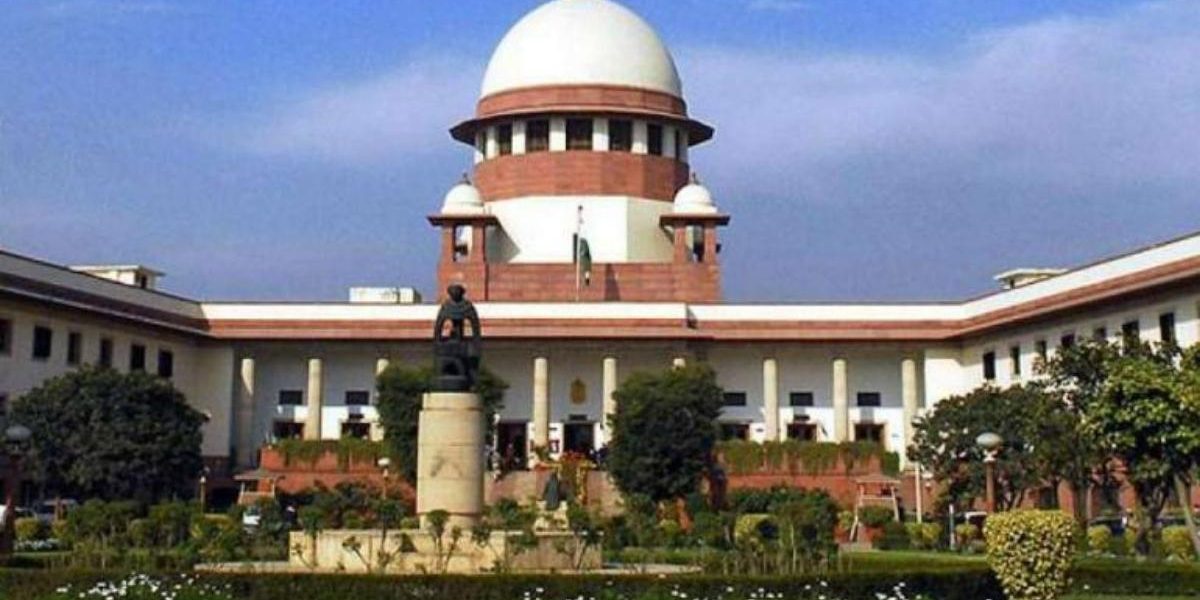
New Delhi, Aug 23: The Supreme Court Monday said the Centre and Delhi's neighbouring states should find a solution to road blockades on the national capital's borders due to farmers' protest against the three farm laws passed last year.
At the outset of the hearing, a bench of Justices Sanjay Kishan Kaul and Hrishikesh Mukherjee told Solicitor General Tushar Mehta, appearing for the Centre, What is happening Mr Mehta. Why can't you find a solution? You have to find a solution to this problem. They have the right to protest but at the designated places. Due to the protests, inflow and outflow of traffic cannot be disrupted .
The bench said this will have an impact on toll collection as well because vehicles will not be able to pass through due to the blockades.
Mehta informed the bench that petitioner Monica Agrawal, a Noida resident, who has sought removal of blockade, is not available due to connectivity problems as she is in some rural area.
The bench then ordered, Solution lies in the hands of the Union of India and the concerned state governments. They have to coordinate to find a solution that when a protest takes place, roads are not blocked and traffic is not disrupted to cause inconvenience to the common people .
Mehta said that if the court is willing to pass some orders then two farmers unions can be made parties and he can give their names.
The bench said that tomorrow another two unions will come forward and say they represent the farmers and this will go on.
The top court asked Mehta during the brief hearing, Please workout something and posted the matter for further hearing on September 20.
On March 26, the top court had issued notice to Uttar Pradesh and Haryana on the plea.
The Uttar Pradesh government has said in its affidavit that continuous efforts are being made to remove the blockade at the Delhi-UP border and there at present about 141 tents and 31 langars' around the area, and the protestors have installed a platform on the flyover from where the leaders give speeches, a media house has also been made below the flyover.
At present there are about 800-1000 protestors in the area, however, a crowd of up to 15,000 protestors collect on their calls within hours from adjoining towns and villages, the affidavit said.
It said protestors had organised a tractor march on January 7 up to Palwal in Haryana and then again on January 26 they went up to the Red Fort on tractors without permission and indulged in large scale violence with the police authorities in Delhi for which several criminal cases have been registered against them.
Thereafter, the Delhi police closed the road by putting barricades on the way from Delhi to Ghaziabad on NH-24/9, the state government said, adding that after persistent efforts of the authorities, one lane from Delhi to Ghaziabad was cleared for movement on March 15.
For incoming traffic, from Ghaziabad to Delhi, diversions have been made by Ghaziabad police and Delhi Police through alternate routes like Maharajpur Border and Hindon canal road, it said.
That pursuant to the orders dated March 26, passed by this court, the police and the state administration have approached the protestors/farmers with the orders passed by this court and have made tireless efforts to make them understand their grossly illegal act of blocking roads causing grave inconvenience to the travel, it said.
The state government further said that large numbers of the protesters are very old and aged farmers from various districts of the state who are required to take precautions during the COVID-19 wave and that the efforts of intervention are still in progress.
Similarly, the Haryana government also told the top court that protesters staging dharna at Singhu border have been camping on about 6 kilometres stretch of lanes of NH-44 since November 27, last year.
All lanes were initially blocked by using tractors/ trolleys and other vehicles. At present at least one lane on both sides has been opened after efforts made by the district police for movement of public vehicles'', it said, adding that suitable diversions of traffic are being made to divert traffic and it has been able to maintain public order at both the sites that is at Singhu border and Tikri border.
A large number of women including children along with the farmers are protesting and persuasive methods have been deemed more appropriate instead of use of force at both the sites, the state government said, adding that appeals are being made to the farmers organisations to vacate both the sites from time to time.
The farmers are protesting against passage of three laws-Farmers Produce Trade and Commerce (Promotion and Facilitation) Act, 2020, Essential Commodities (Amendment) Act, 2020 and Farmers (Empowerment and Protection) Agreement on Price Assurance and Farm Services Act, 2020.
Initially, the protests started from Punjab in November last year and later spread to Delhi, Haryana and Uttar Pradesh and some other parts of the country.
Agrawal has claimed in her plea that it had become a nightmare to travel to Delhi from Noida, as it takes two hours' time instead of the usual 20 minutes. She has sought removal of blockades so that passenger traffic is not affected.
Let the Truth be known. If you read VB and like VB, please be a VB Supporter and Help us deliver the Truth to one and all.
Karnataka: GBA city corporation polls likely between June 14 and 24
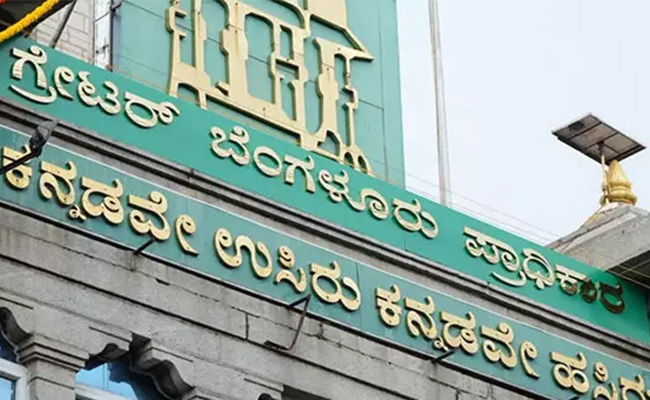
Bengaluru (PTI): Karnataka State Election Commissioner G S Sangreshi on Friday said elections to the five city corporations under the GBA will be held anytime between June 14 and June 24.
He said the exact date for the polls will be announced after a week, asserting that the power to postpone the elections, as requested by GBA authorities, lies with the Supreme Court.
The Supreme Court had directed the Karnataka government and the State Election Commission to conduct Bengaluru local body elections by June 30.
On Friday, the SEC held a consultation meeting with the GBA Chief Commissioner and commissioners of the five city corporations regarding the election schedule, as per the provisions of the GBA Act.
“During the meeting, I informed GBA officials that only the election date has to be fixed, as all other measures and formalities for conducting the polls have already been completed,” Sangreshi said.
“They requested the Commission to consider factors such as rains, exams, census work, SIR, and manpower shortages while fixing the date and sought additional time,” he added.
Speaking to reporters after the meeting, he said, “I told them this meeting was not for seeking time. Elections to the five corporations under the GBA must be held before June 30, as directed by the Supreme Court, and a compliance report must be submitted to the court. I do not have the power to postpone the elections as requested.”
The Supreme Court has already given a “final opportunity,” and both the SEC and the government must comply with its directions, the State Election Commissioner said.
He asked GBA officials to suggest suitable dates between June 14 and June 24.
“While stating that they are ready for elections, the officials highlighted operational challenges, including manpower shortages. However, I have informed them that the elections will have to be held between June 14 and June 24. After a week, I will announce the final date,” he said.
Reiterating that he does not have the power to postpone the elections, Sangreshi said the authority rests with the Supreme Court, and elections must be conducted as scheduled.
“We have consulted the GBA as per the rules. It is up to them to suggest a date within the given window. If they need more time, they must approach the court. Our responsibility is to fix the date and complete the polls before June 30,” he said.
The matter regarding manpower and other concerns raised by GBA officials is already before the Supreme Court, and the State Election Commission has also filed a petition in this regard. The case is yet to be heard.
“Since the matter has not come up for hearing, the earlier order remains binding. Therefore, preparations are underway,” he added.
The tenure of the previous elected body under the erstwhile Bruhat Bengaluru Mahanagara Palike (BBMP) ended on September 10, 2020, and since then, a government-appointed administrator has been managing its day-to-day affairs.
Bengaluru was divided into five municipal corporations—Central, East, West, North, and South—under the Greater Bengaluru Authority in September 2025, replacing the BBMP.
Sangreshi had earlier said that elections to the five corporations would be conducted using ballot papers instead of Electronic Voting Machines.
This follows the Congress government’s decision last September to recommend the use of ballot papers in all future panchayat and urban local body elections, citing concerns over declining public confidence in EVMs.
The state government subsequently enacted the Karnataka Gram Swaraj and Panchayat Raj (Amendment) Act, 2026, paving the way for the use of ballot papers in local body elections.