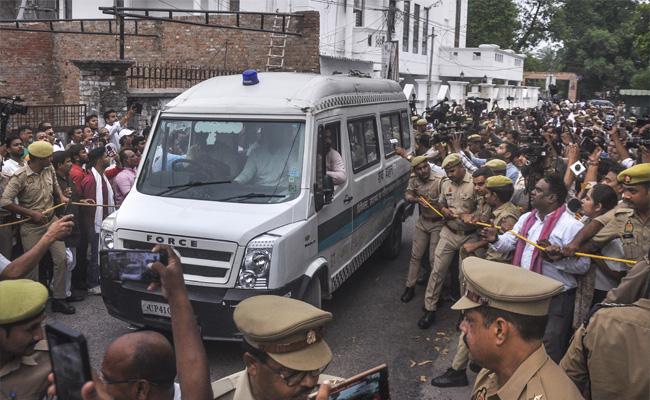
Farooq Abdullah prevented from leaving residence in Srinagar
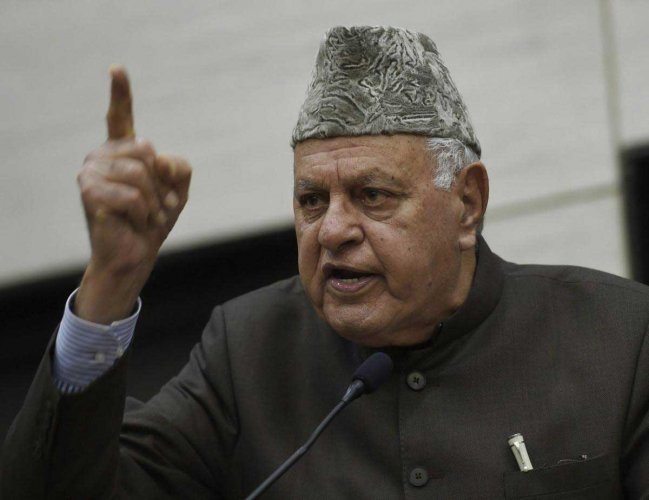
Srinagar, Feb 14: The National Conference on Monday condemned the undue restrictions on the movement of party president and Member of Parliament Farooq Abdullah and said such measures are at odds with basic individual fundamental rights.
Abdullah, who is also a former Jammu and Kashmir chief minister, was on Monday prevented from leaving his residence here in view of security concerns on the anniversary of the Pulwama terror attack, prompting him to lodge a strong protest.
NC rank and file has strongly condemned the undue restrictions on the movement of party president Qaid-e-Sani Jenab Dr Farooq Abdullah, the party said in a statement issued here.
In a joint condemnation, National Conference general secretary Ali Muhammad Sagar, provincial presidents Nasir Aslam Wani and Rattan Lal Gupta, and other party leaders said the measure has undermined the dignity of democracy.
The party leaders said Abdullah is a national-level leader whose commitment towards democracy and secularism remains unchallenged.
The government is hell-bent on brutally and blatantly silencing every contrarian voice by hook or by crook , the statement quoted them as saying.
Let the Truth be known. If you read VB and like VB, please be a VB Supporter and Help us deliver the Truth to one and all.
Congress using hijab issue to pacify minority anger, alleges Karnataka LoP R Ashoka
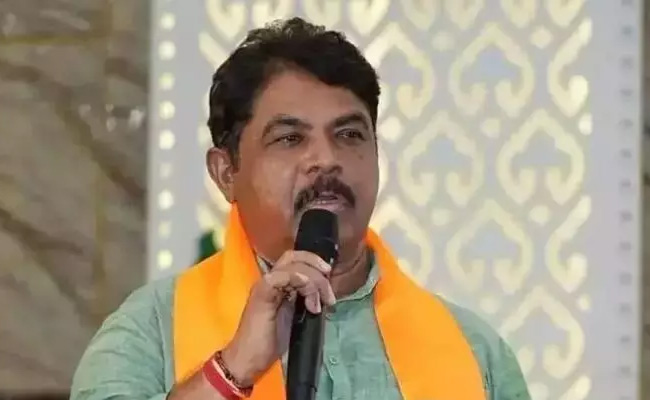
Bengaluru: Leader of Opposition in the Assembly R. Ashoka has accused the Congress government of using the hijab issue to placate what he described as discontent among minority voters after the Davanagere by-election.
In a post on X on Wednesday, Ashoka alleged that the state government, instead of addressing issues such as price rise, corruption, farmers’ distress and law and order, was attempting to retain its minority vote base by reviving the hijab issue.
Referring to the 2022 dress code introduced by the BJP government, which prohibited hijab in schools and colleges, Ashoka said the Karnataka High Court had upheld the policy and emphasised the importance of discipline in educational institutions.
He questioned the Congress government’s move to revisit the issue and asked whether setting aside the court-backed policy to benefit one community could be described as secularism.
Ashoka further alleged that while the government was willing to permit hijab, it continued to prohibit saffron shawls.
He accused the government of dividing students on religious lines rather than treating schools and colleges as spaces of equality.
Drawing a comparison with Mamata Banerjee’s government in West Bengal, Ashoka claimed that excessive appeasement politics had harmed the state and warned that the Congress in Karnataka could face a similar political response.
He said voters in Karnataka would teach the Congress a lesson for what he termed “vote-bank politics” and for compromising constitutional and judicial principles.