Federal court blocks Trump's tariffs. Here's what to know
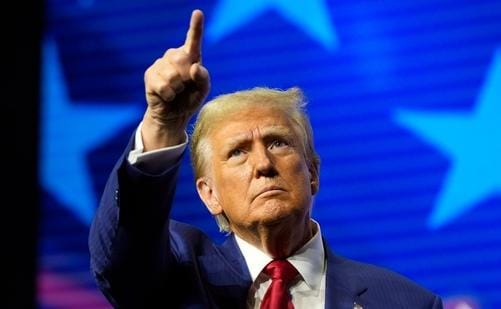
Washington (AP): A federal court in New York handed President Donald Trump a big setback Wednesday, blocking his audacious plan to impose massive taxes on imports from almost every country in the world.
A three-judge panel of the US Court of International Trade ruled that Trump overstepped his authority when he invoked the 1977 International Emergency Economic Powers Act to declare a national emergency and justify the sweeping tariffs.
The tariffs overturned decades of US trade policy, disrupted global commerce, rattled financial markets and raised the risk of higher prices and recession in the United States and around the world.
The US Court of International Trade has jurisdiction over civil cases involving trade. Its decisions can be appealed to the US Court of Appeals for the Federal Circuit in Washington and ultimately to the Supreme Court, where the legal challenges to Trump' tariffs are widely expected to end up.
Which tariffs did the court block?
The court's decision blocks the tariffs Trump slapped last month on almost all US trading partners and levies he imposed before that on China, Mexico and Canada.
On April 2, Trump imposed so-called reciprocal tariffs of up to 50 per cent on countries with which the United States runs a trade deficit and 10 per cent baseline tariffs on almost everybody else.
He later suspended the reciprocal tariffs for 90 days to give countries time to agree to reduce barriers to US exports. But he kept the baseline tariffs in place. Claiming extraordinary power to act without congressional approval, he justified the taxes under IEEPA by declaring the United States' longstanding trade deficits “a national emergency.”
In February, he'd invoked the law to impose tariffs on Canada, Mexico and China, saying that the illegal flow of immigrants and drugs across the US border amounted to a national emergency and that the three countries needed to do more to stop it.
The US Constitution gives Congress the power to set taxes, including tariffs. But lawmakers have gradually let presidents assume more power over tariffs — and Trump has made the most of it.
The tariffs are being challenged in at least seven lawsuits. In the ruling Wednesday, the trade court combined two of the cases — one brought by five small businesses and another by 12 US states.
The ruling does leave in place other Trump tariffs, including those on foreign steel, aluminum and autos. But those levies were invoked under a different law that required a Commerce Department investigation and could not be imposed at the president's own discretion.
Why did the court rule against the president?
The administration had argued that courts had approved then-President Richard Nixon's emergency use of tariffs in a 1971 economic and financial crisis that arose when the United States suddenly devalued the dollar by ending a policy that linked the US currency to the price of gold.
The Nixon administration successfully cited its authority under the 1917 Trading With Enemy Act, which preceded and supplied some of the legal language later used in IEPPA.
The court disagreed, deciding that Trump's sweeping tariffs exceeded his authority to regulate imports under IEEPA. It also said the tariffs did nothing to deal with problems they were supposed to address. In their case, the states noted that America's trade deficits hardly amount of a sudden emergency. The United States has racked them up for 49 straight years in good times and bad.
So where does this leave Trump's trade agenda?
Wendy Cutler, a former US trade official who is now vice president at the Asia Society Policy Institute, says the court's decision "throws the president's trade policy into turmoil.”
“Partners negotiating hard during the 90-day day tariff pause period may be tempted to hold off making further concessions to the US until there is more legal clarity," she said.
Likewise, companies will have to reassess the way they run their supply chains, perhaps speeding up shipments to the United States to offset the risk that the tariffs will be reinstated on appeal.
The trade court noted that Trump retains more limited power to impose tariffs to address trade deficits under another statute, the Trade Act of 1974. But that law restricts tariffs to 15 per cent and only for 150 days with countries with which the United States runs big trade deficits.
For now, the trade court's ruling “destroys the Trump administration's rationale for using federal emergency powers to impose tariffs, which oversteps congressional authority and contravenes any notion of due process,” said Eswar Prasad, professor of trade policy at Cornell University. "The ruling makes it clear that the broad tariffs imposed unilaterally by Trump represent an overreach of executive power."
Let the Truth be known. If you read VB and like VB, please be a VB Supporter and Help us deliver the Truth to one and all.
Two injuries, one DNF, a DQ as India end messy World Relays campaign
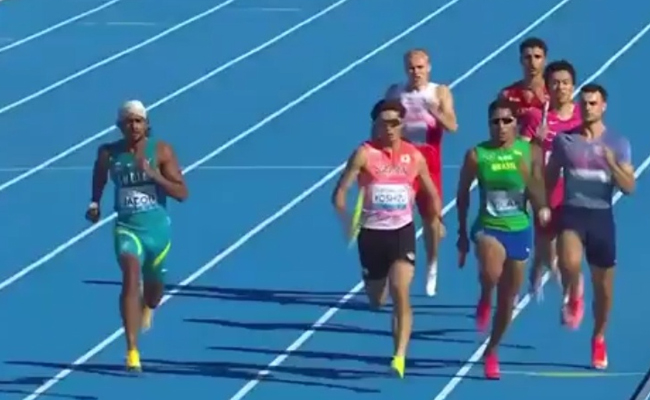
Gaborone (Botswana) (PTI): Amoj Jacob and Ragul Kumar got injured during the men's 4x400m and 4x100 races respectively as India ended their World Athletics Relays campaign in disappointment on the second day of competitions here on Sunday.
The Indian camp had high hopes of making the 2027 World Championships in the men's 4x400m relay but the team did not finish (DNF) the race as Jacob suffered cramps and pulled out of the race after taking the baton from the first leg runner Dharamveer Choudhary. Rajesh Ramesh and Vishal TK were to run in the third and fourth legs.
Those teams which could not qualify for the 2027 Beijing World Championships by reaching the final round of each of the six relay events on Saturday were given another chance in the second qualification round on Sunday.
The top two teams in each of the two heats (in all six relay events) booked the Beijing ticket on Sunday.
India will now have to try and qualify for the World Championships through the Top Lists of the World Athletics, which is a long and tedious process.
In the men's 4x100m race, third leg runner Ragul Kumar fell down the track after failing to hand over the baton inside the exchange zone to fourth leg runner Gurindervir Singh, which clearly showed the lack of coordination among the runners.
Harsh Santosh Raut and Animesh Kujur ran the first two legs.
The Indian quartet was disqualified and Kumar was seen being taken away from the Field of Play with the help of the volunteers.
It was a comedy of errors in the case of the women's 4x100m race, which saw the baton being dropped during an exchange between first leg runner Tamanna and second runner Nithya Gandhe, though the Indians finished the race in 53.09 seconds.
Gandhe started running quite a distance, but after realising that the baton was not in her hand, she turned and ran back to pick it up.
The only silver-lining for the Indian contingent was the national record time in the mixed 4x100m relay race, though the quartet of Ragul Kumar, Nithya Gandhe, Animesh Kujur and Sneha SS finished sixth in heat number two with a time of 41.35 seconds, bettering the previous national mark of 42.30 seconds set in March in Chandigarh.
The mixed 4x400m relay quartet of Theerthesh P Shetty, Kumari Saloni, Nihal William and Rashdeep Kaur ended at fifth in heat number one with a time of 3 minutes and 19.40 seconds.
On Saturday, all the five Indian relay teams had failed to make it to the respective final rounds and thus missed out on the 2027 World Championships berths.