Fill up faculty posts fast for quality education: Kovind
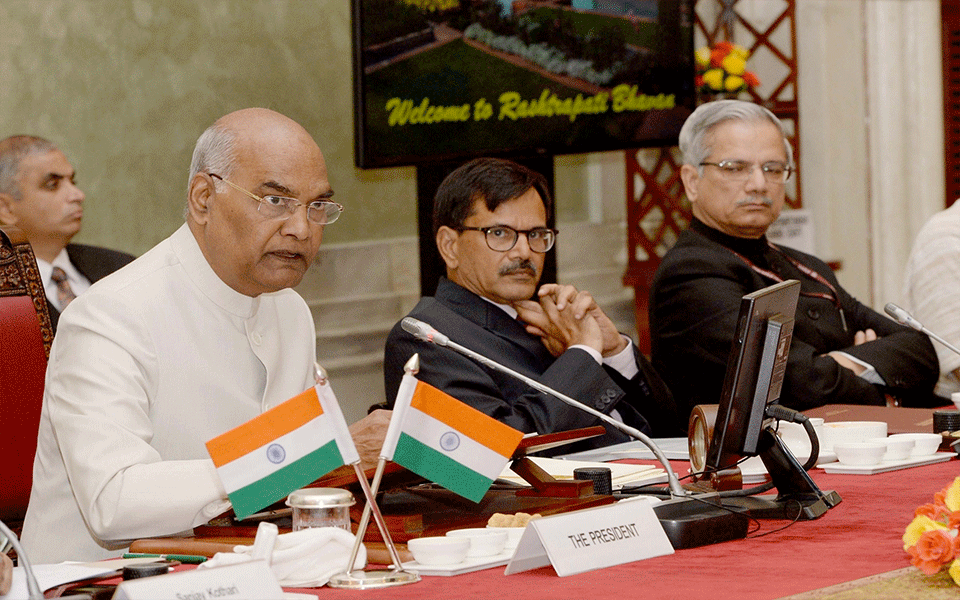
New Delhi, July 13 : President Ram Nath Kovind on Friday advised higher learning institutes to fill vacant faculty positions fast to ensure quality education and research.
Kovind said this while addressing the heads, directors and vice chancellors of 19 central-level institutions in an yearly meeting.
"Wherever posts are yet to be created, it has to be done at the earliest. Filling up of vacant faculty positions is critical for ensuring quality education and research. I am sure you will take all the possible steps to ensure all these positions are filled up before next meet," Kovind said.
The 19 higher learning institutes included the National Institute of Pharmaceutical Education and Research (Hajipur and Hyderabad), Rajiv Gandhi National Aviation University, National Institute of Design and the Nalanda University.
This was the fourth such meeting held at Rashtrapati Bhavan by the President who is Visitor to 146 Central Universities and institutions of higher learning. For ease of management and type, the universities were divided in cohorts.
The fifth meeting -- to be held next week -- with another cohort will complete Kovind's engagement with all the 146 institutions within a year.
Addressing the heads, the President urged them to plan the future of their centres keeping India's large youth population in mind and also the prospect of five trillion dollar GDP target by 2025.
"This requires us to think big and to take risks - and each of your institutes must be equal to the challenge," he said.
He told the pharma institutes that this was the time to take a "quantum leap" in the field through drug discoveries and eradicating long-standing diseases like tuberculosis. He also called for a thrust on "management of emerging lifestyle diseases."
To the agriculture institutes, Kovind suggested adopting of new technologies that "we have so far shunned to maximise on the scarce resources".
"We need to be mindful that the pressure on land and on water is immense. New technologies, including technologies we have so far shied away from, will need to be studied and adopted, as feasible," he said.
Kovind gave corresponding advice to the aviation, maritime and design institutes.
"In conclusion, I would nudge you towards partnering with universities in our country and outside; in your respective fields and beyond. Knowledge cannot grow in silos and it is essential that each of you participate in the growth of the other," he said.
Let the Truth be known. If you read VB and like VB, please be a VB Supporter and Help us deliver the Truth to one and all.
CPI(M) rebel Kunhikrishnan hopes for 5,000-vote win in Payyanur
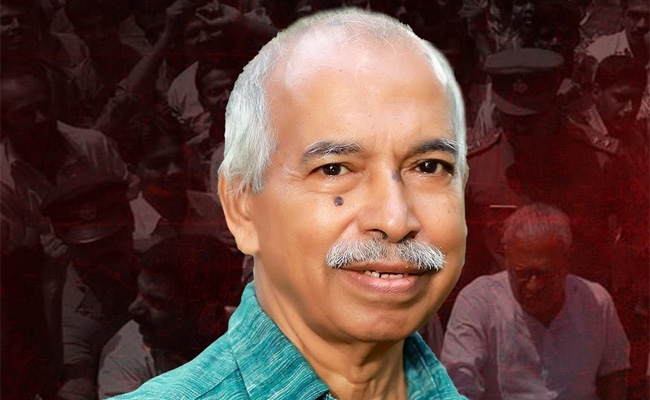
Kannur (Kerala) (PTI): CPI(M) rebel candidate V Kunhikrishnan, who contested as a UDF-backed Independent from Payyanur here, on Saturday said he was hoping to win the Assembly election by a margin of 5,000 votes.
Kunhikrishnan was expelled from the CPI(M) earlier this year after raising allegations of corruption in the party’s martyrs’ fund against sitting MLA T I Madhusoodanan.
Speaking to a TV channel, Kunhikrishnan said he had announced his candidature as a mark of protest and not with expectations of victory.
However, he said the situation had changed drastically, with a strong undercurrent within CPI(M) votes favouring him.
"The undercurrent in CPI(M) votes cannot be measured. Now people are giving a response indicating victory with a margin of at least 5,000 votes," he said.
Payyanur is considered a CPI(M) stronghold, and a defeat for Madhusoodanan there would be a major setback for the party.
On political violence in Payyanur, Kunhikrishnan said he had been facing it since filing his nomination.
"The people leading this violence should think about how long they can continue it. It is the police which has to take the initiative to stop this violence as part of maintaining law and order. But the police are not intervening at the required level," he said.
Regarding his political future, Kunhikrishnan said efforts were underway to strengthen Left groups, and discussions were being held across Kerala in that regard.
"After discussing with others, a decision will be taken," he said.
Kunhikrishnan is among six former CPI(M) leaders who either exited the party or were suspended before contesting for the UDF in the April 9 Assembly elections.
Elections to the 140-seat Kerala Assembly were held on April 9, and the counting of votes will be held on May 4.