Financial aid to be provided for endsulfan victims left out of list
_vb_05.jpeg)
Thiruvananthapuram (PTI): Kerala Cabinet on Wednesday decided to provide financial assistance to 1,031 eligible people who were included in the preliminary list and later excluded from the final list to be identified as endsulfan victims.
These individuals were excluded from the list based on the first phase of medical examination and field inspection conducted in 2017 to identify endosulfan victims in Kasaragod district, a release from the Chief Minister’s office said.
Hundreds of people in Kasaragod were affected by Endosulfan, a toxic pesticide used in cashew plantations, leading to severe health issues and disabilities. The victims and their families have been fighting for justice and compensation.
The Cabinet decision to grant approval for their case been forwarded to the district collector, the release said.
The Cabinet also decided to allot flats to 50 extremely poor families in Alappuzha district who are included in the landless and homeless list under the Extreme Poverty Alleviation Scheme.
As part of the ‘Punargeham’ scheme, the 50 flats will be provided in the Fisheries Department's flat complex, which is being completed at Purakkad Mannumpurat in Alappuzha district, it said.
The 11th pay revision for the employees of the Kerala State Scheduled Castes and Scheduled Tribes Development Corporation will be implemented with effect from August 1, 2019, the release said.
The anomaly arising out of the 10th pay revision order will be resolved and ratio promotion will be granted.
The 11th salary revision will also be implemented with conditions for employees of the LBS Centre for Science and Technology and its affiliated institutions, the release said.
The Cabinet decided to favourably consider the proposal of Rs 26.58 crore funding for the K R Narayanan National Institute of Visual Science and Arts, Kottayam, from the Kerala Infrastructure Investment Fund Board (KIIFB) for development of its facilities.
The Cabinet also decided to hand over to the Defence Research and Development Organisation (DRDO) 2.7 acres of land comprising Poovar village and coastal outcrop in the capital district for its Naval Physical and Oceanographic Laboratory conducting exploration, at a fair price of Rs 2.50 crore, the release said.
Let the Truth be known. If you read VB and like VB, please be a VB Supporter and Help us deliver the Truth to one and all.
Trump says he ‘hasn’t even thought about’ continuing Iran ceasefire
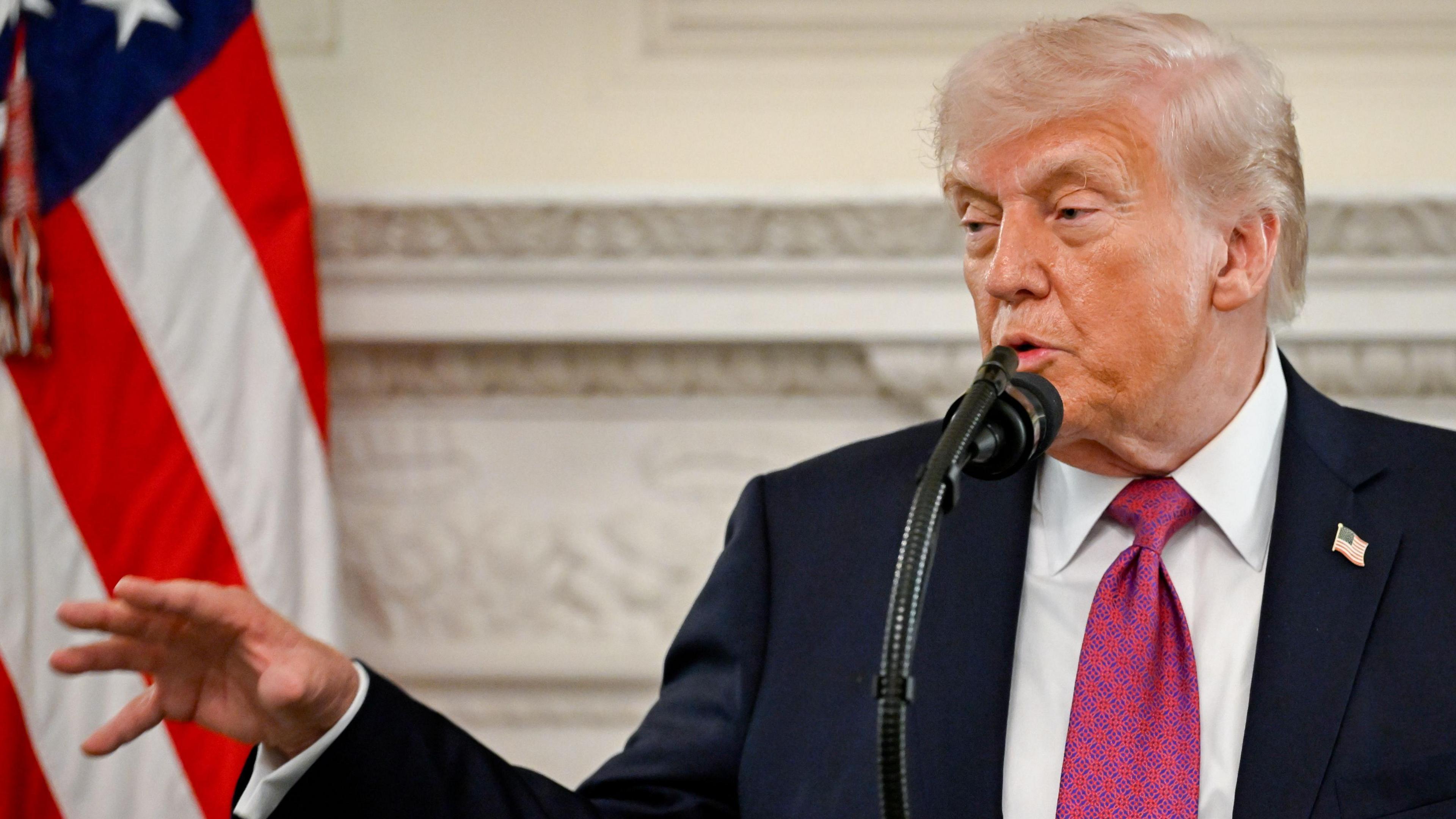
Washington: US President Donald Trump has said he has not yet considered whether he would continue the ceasefire involving Iran, while also claiming the United States holds the advantage in negotiations.
Speaking to reporters, Trump said he was prepared to make a deal with “whoever is running the show” in Iran.
“They are fighting with each other, there’s tremendous infighting. They’re probably fighting for leadership in many cases. I think they’re fighting not to be leader because we knocked out two levels of leaders,” he said.
Trump added, “When they want they can call me. We have all the cards, we’ve won everything.”
Referring to ongoing negotiations, he said, “They gave us a paper that should’ve been better. And, interestingly, immediately when I cancelled it [envoy trip to Pakistan], within 10 minutes we got a new paper that was much better.”
“We talked about they will not have a nuclear weapon, very simple … They offered a lot, but not enough,” he added.
When asked whether he would continue the ceasefire, Trump replied, “I haven’t even thought about it.”
The remarks come as uncertainty remains over the future of the temporary truce and broader negotiations between Washington and Tehran.