FIR against Sidhu over communal remarks
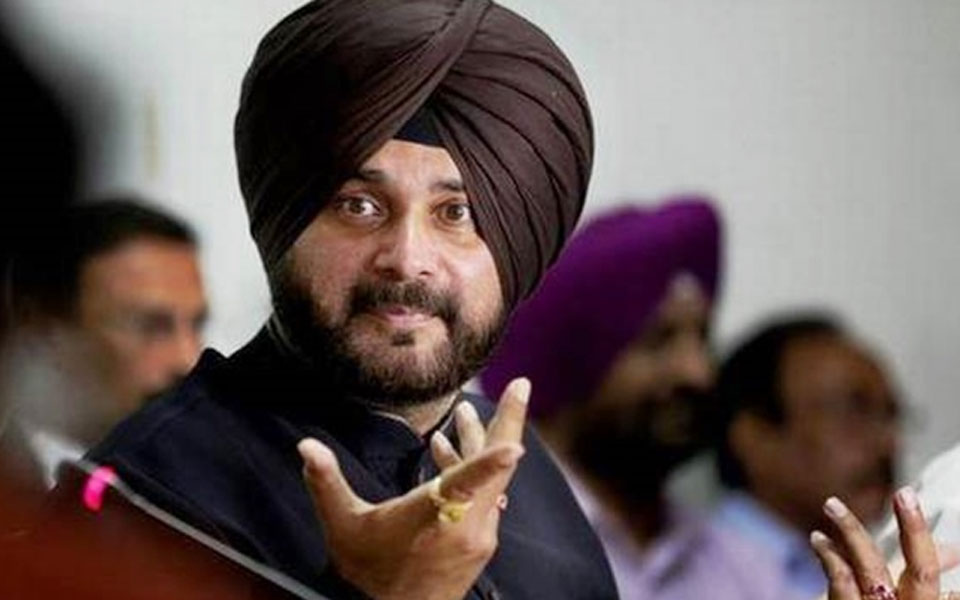
Patna: An FIR was lodged against Congress leader and Punjab minister Navjot Singh Sidhu for violating the model code of conduct by exhorting Muslim voters in a Lok Sabha constituency in Bihar to vote en bloc to defeat Prime Minister Narendra Modi.
According to the office of the Chief Electoral Officer here, the FIR was lodged at Barasoi police station of Katihar district on the basis of a complaint lodged by the Election Commission's flying squad.
SHO Barasoi Chandra Prakash confirmed this.
"We have registered an FIR against Sidhu under Section 188 of the Indian Penal Code and Sections 123 (III) and 125 of the Indian Penal Code. Sub-inspector Javed Ahmed has been made the investigating officer," SHO Barasoi Chandra Prakash told PTI over phone.
The CEO's office said in a statement, "A report has also been sent to the ECI for necessary action."
Sidhu made the controversial remarks at a public meeting on Monday in Kathihar. He was canvassing for Congress candidate and former Union minister Tariq Anwar.
Excerpts of the speech telecast by news channels showed the cricketer-turned-politician urging Muslims to realise that they have a sizeable population in the area and to be wary of Asaduddin Owaisi's AIMIM, that he dubbed as a party "propped up by the BJP".
Sidhu asked the Muslim electorate to "vote en bloc" for the Congress candidate.
"Modi will be done for. He will go for a six," the Congress leader was seen telling the audience.
His remarks came on the day when the ECI issued notices to Uttar Pradesh Chief Minister Yogi Adityanath, BSP supremo Mayawati and Samajwadi Party heavyweight Azam Khan, barring them from campaigning for different periods of time.
Earlier, a nine-member delegation of the BJP, led by its state unit vice president Devesh Kumar, had visited the CEO's office here and submitted a memorandum with the request to take "suo motu cognizance and lodge an FIR" against Sidhu.
Sidhu, who has also featured in a number of television comedy shows, was with the BJP till 2016. He joined the Congress ahead of the 2017 Assembly polls in Punjab and was inducted into the state cabinet headed by Chief Minister Amarinder Singh.
Let the Truth be known. If you read VB and like VB, please be a VB Supporter and Help us deliver the Truth to one and all.
Post poll TN alliances divided in supporting TVK
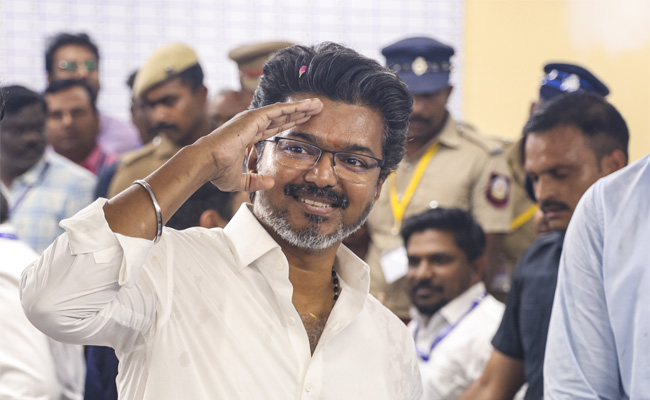
Chennai (PTI): In a changed political atmosphere in Tamil Nadu with no single political party having a simple majority to form the government post the Assembly election, opinion is divided among the allies led by the Dravidian majors in extending external support to Vijay-led TVK in government formation.
Both the DMK and AIADMK are at unease as the Congress and also a section in the AIADMK express willingness to extend external support to Vijay-led Tamilaga Vettri Kazhagtam in forming the government.
Post poll, the TVK's political prospects appear to impact alliances led by both the Dravidian majors in a different manner, triggering a speculation of a split.
Leema Rose Martin, who won from Lalgudi on an AIADMK ticket, has stated that talks were underway on extending support to the TVK. Her son-in-law Aadhav Arjuna, who won from Villivakkam is TVK's general secretary.
On May 5, former AIADMK minister O S Manian, emerging from his meeting with party general secretary Edappadi K Palaniswami, stated that AIADMK would not support TVK in forming the government.
The AIADMK, which finished third in the elections with 47 seats has cancelled its meeting of MLAs designate on Wednesday amidst a difference in extending external support to the TVK, which won 108 seats, including two seats by its founder Vijay.
As Vijay is gearing up for his swearing-in on May 7, the police have tightened security at his residence here. The party has lodged its MLA-elect at a resort in Mamallapuram and has simultaneously engaged in talks with the Congress and AIADMK, a source said.
The DMK that won 59 seats on its own, has convened a meeting of its newly elected legislators on May 7 evening and the party is likely to elect the youth wing secretary Udhayanidhi Stalin, who won from Chepauk-Thiruvallikeni as its legislature party leader.
Congress general secretary K C Venugopal admitted that TVK chief Vijay requested the Congress for support to form the government.
"The INC is clear that the mandate in Tamil Nadu is for a secular government, committed to protecting the Constitution in letter and spirit. The INC is determined not to allow the BJP and its proxies to run the government of Tamil Nadu in any manner. Thiru Vijay has also spoken about drawing inspiration from Perunthalaivar Kamaraj," he said.
Accordingly, the Congress leadership has directed the TNCC to take a final decision on Vijay’s request, keeping in view the sentiments of the state as reflected in the electoral verdict, Venugopal said in a statement.
DMK spokesperson Saravanan Annadurai slammed the Congress decision and said the move to ally with TVK, pledging the support of its five MLAs to the party, was tantamount to "backstabbing the DMK and the people of Tamil Nadu."
"They have betrayed the mandate given by the people. Even before the ink on the returning officer’s signature on the victory certificate has dried, they have chosen to go ahead with this alliance," he told PTI.
The most important question was who took this "foolhardy decision, and how is it going to backfire on the Congress?" he asked.
"I don’t think they had any serious deliberation on this. The larger issue is their opposition to the BJP, which is their ideological enemy. We have supported the Congress throughout. It was our leader M K Stalin, who named Rahul Gandhi as the prime ministerial candidate when the BJP and RSS were criticising him. And now, within a day, they say they are supporting TVK. This is not the mandate of the people of Tamil Nadu,” Saravanan said.
The Congress' exit from its long-standing alliance with the DMK will be a significant moment in the political scenario of the state, commentator and political analyst Sumanth Raman said.
The Congress may be betting on the TVK as a long-term partner option, but that comes with risks, as the TVK is as yet an unknown quantity, he said.
"For the DMK, if the TVK+Congress becomes the choice of the minorities as it well could, it is an existential threat. It was the minority vote that gave the DMK alliance a 12%-15% cushion in the polls. If that goes, their chances of winning drops dramatically," Raman said on 'X.'
The Congress won 5 seats. However, DMK's other allies, the IUML, VCK, CPI and CPI (M) and DMDK have categorically stated that they would not support TVK.
As of now, the TVK requires the support of 11 MLAs to attain a simple majority of 118 to form the government.
The PMK, which won 4 seats and AMMK one - both allies of AIADMK - have not announced their decision yet.
"AIADMK’s real post-result drama may not be outside the party, but inside it. Whispers from the west and north suggest that a Coimbatore hand and a Villupuram voice may soon ask the question everyone is avoiding: Is it time to save the party from the leadership, before the cadre are forced to do it themselves? In politics, coups don’t begin with slogans. They begin with silence, phone calls and “review meetings,” Aspire Swaminathan, who is credited with founding the AIADMK IT wing in 2014, said on 'X.'
He has resigned from the AIADMK in 2021 and now acts an as independent political analyst.