Five candidates crush record for highest Lok Sabha polls victory margin, Indore's Lalwani tops list
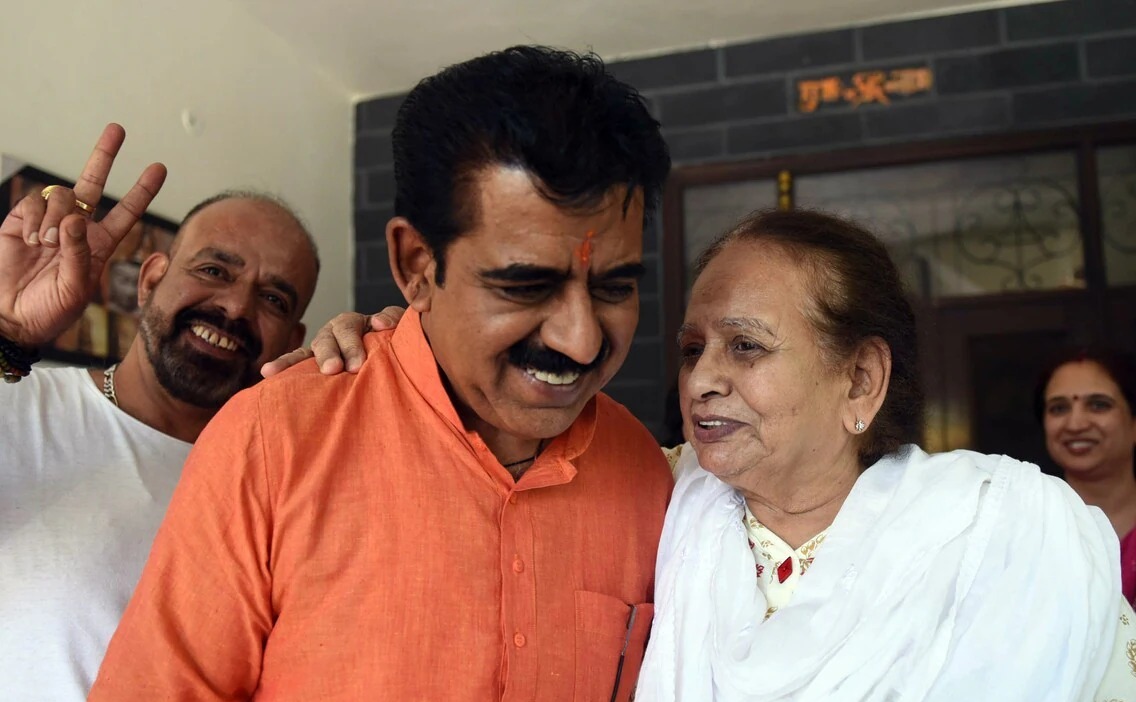
New Delhi (PTI): At least five candidates, including four from the BJP, crushed the previous record for the highest victory margin in the Lok Sabha elections, with Indore's incumbent MP Shankar Lalwani of the BJP topping the list with a winning margin of 11.72 lakh votes.
The Congress' Rakibul Hussain scored the second-highest victory margin with 10.12 lakh from Dhubri in Assam.
Former Madhya Pradesh chief minister Shivraj Singh Chouhan won from Vidisha by 8.21 lakh votes -- the third highest margin -- followed by the BJP's CR Patil, who recorded a margin of 7.73 lakh from Navsari in Gujarat.
Union Home Minister Amit Shah won from Gandhinagar by a margin of over 7.44 lakh votes.
The previous record for the highest winning margin was held by Pritam Munde, also from the BJP, who had won a bypoll in October 2014 from Beed in Maharashtra by more than 6.96 lakh votes.
Patil, a three-term MP from Navsari, held the record for the second-highest margin after he won by 6.89 lakh votes in 2019.
He has now broken his own record.
Union Aviation Minister Jyotiraditya Scindia won from Guna in Madhya Pradesh by more than 5.40 lakh votes.
Among other candidates who won by a margin of over 5 lakh votes are the BJP's Gujarat candidates Rajpalsingh Jadav from Panchmahal (5.09 lakh) and Hemang Joshi from Vadodara (5.82 lakh), its Bhopal nominee Alok Sharma (5.01 lakh) and Sudheer Gupta from Mandsour (over 5 lakh).
The BJP's Mahesh Sharma won from Uttar Pradesh's Gautam Buddha Nagar by 5.59 lakh votes while the saffron party's candidate from Raipur in Chattisgarh Brijmohan Agarwal secured a margin of 5.75 lakh.
Prime Minister Narendra Modi won by more than 1.52 lakh votes from Varanasi in Uttar Pradesh.
Congress leader Rahul Gandhi bettered Sonia Gandhi's 2019 victory margin from Rae Bareli in Uttar Pradesh, winning by more than 3.90 lakh votes.
Gandhi also won from Wayanad in Kerala by a margin of more than 3.64 lakh votes.
Former Tripura chief minister Biplab Kumar Deb of the BJP won from Tripura West by a margin of more than 6 lakh votes while Kriti Dev Debbarman of the saffron party won the Tripura East constituency by more than 4.86 lakh votes.
Let the Truth be known. If you read VB and like VB, please be a VB Supporter and Help us deliver the Truth to one and all.
Bank account in Ramgarh tracked for fraudulent fund transactions across 24 states, 4 arrested

Ramgarh (Jharkhand) (PTI): Jharkhand police on Thursday said it has unearthed a network of interstate cyber frauds and arrested four miscreants for fraudulent transactions through a bank account in Ramgarh district after complaints of 274 suspected transactions in 24 states.
The states where complaints for fraudulent transactions were registered included Maharashtra, Karnataka, West Bengal, Uttar Pradesh, Telangana, Tamil Nadu, Kerala and Andhra Pradesh.
The action followed inputs received through 'Samanvaya portal', a centralised, web-based platform launched by the Union Home Ministry to curb cybercrime.
"We arrested four cyber miscreants after a current account with Kuju (Ramgarh) branch of the State Bank of India was found to have registered suspected financial transactions in 24 states with the help of the Pratibimba portal of the Home Ministry through the Samanvaya portal," Ramgarh Superintendent of Police Mukesh Kumar Lunayat said.
During the probe, police found that the account was opened under the MSME Udyam Registration scheme in the name of Shree Ganesh Enterprises, he said.
The account had been linked to as many as 274 complaints from different states related to cyber fraud and illegal fund transfers.
The registered proprietors of the enterprise were identified as Rahul Gupta (37), Ravi Kumar Verma (34), and Ajay Sharma (33), all residents of Ramgarh district, a statement from the Ramgarh police said.
During interrogation, Rahul Gupta and Ravi Kumar Verma revealed that they had opened multiple current accounts at the behest of Ritesh Agrawal alias Munna (40) and Sonu Kumar Jha (34).
They admitted receiving Rs 1.2 lakh in exchange for facilitating the opening of these accounts.
"The accused further confessed to sharing OTPs, activating mobile banking services, and handing over control of the accounts to the main operators through WhatsApp and Telegram groups. These accounts were then allegedly used to route fraudulent transactions.
Police said mobile data analysis of the accused led to the recovery of crucial digital evidence, including details of SIM cards, bank accounts, passbooks, ATM cards, QR code scanners, Aadhaar cards, and PAN cards shared through messaging platforms.
A total of four accused have been arrested so far and sent to judicial custody.
A case has been registered at the Cyber Crime Police Station under relevant sections of the Bharatiya Nyaya Sanhita (BNS) 2023 and Sections 66C and 66D of the Information Technology Act, 2000.
Further investigation is underway, the police said.