Five injured as roof of house collapses in Delhi's Jwala Nagar
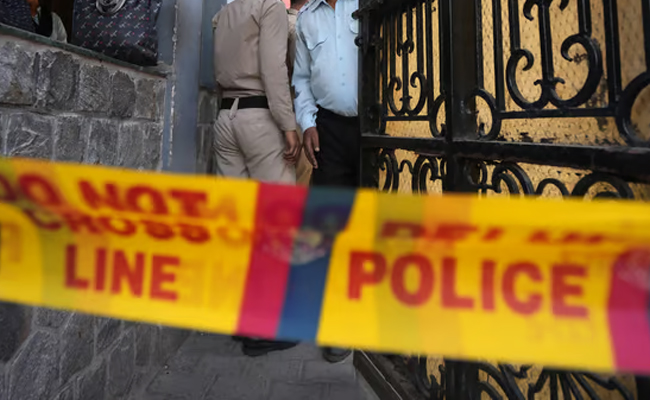
New Delhi (PTI): At least five people, including a woman, were injured after the roof of a newly constructed structure on the four-storey house collapsed in northeast Delhi's Jwala Nagar on Tuesday morning, officials said.
The Delhi Fire Services (DFS) said it received a call about the incident around 9.50 am, following which five fire tenders were rushed to the spot.
A rescue operation was launched to check if any person was trapped under the debris.
According to Delhi Police, Avinish, one of the family members, told police that construction work was underway on the third floor of the building to create a hall, and the newly constructed roof collapsed suddenly.
Five persons, including two family members, a tenant and two labourers working at the site, were injured, the police said.
The tenant, Rajesh, later reached the hospital on his own with minor injuries.
DFS officials said the injured were being treated, and rescue efforts continued to ensure no one remained trapped underneath the collapsed structure.
Let the Truth be known. If you read VB and like VB, please be a VB Supporter and Help us deliver the Truth to one and all.
Power tariffs under BESCOM to rise from May 1
Bengaluru (PTI): Power bills for consumers under the Bangalore Electricity Supply Company Limited (BESCOM) will go up from May 1, following an order issued by the Karnataka Electricity Regulatory Commission (KERC) on Friday.
The hike comes after KERC allowed the BESCOM to recover a revenue deficit of Rs 2,068 crore incurred in 2024-25, from the consumers.
As a result, for every unit of electricity consumed in 2024-25, the customers will be charged an additional 56 paise, it said.
"BESCOM shall calculate, for each of the active consumers of FY2024-25 the amount to be recovered based on their actual energy consumption during FY2024-25. Such amount shall be recovered during FY 2026-27 in equal monthly instalments, to be called as 'FY25 True up Charges', commencing from the first meter reading date falling on or after 1 May 2026 and concluding with the reading date ending on 30 April 2027," the order said.
"It is further ordered that BESCOM shall maintain a separate head of account, allocated for the purpose, to record the adjustment of the said amount to ensure full recovery of the deficit," it added.
Similarly Chamundeshwari Electricity Supply Corporation Limited (CESC) has also recorded a revenue deficit of Rs 121.71 crore and can collect an additional 15 paisa per unit for consumption in 2024-25, official sources said.