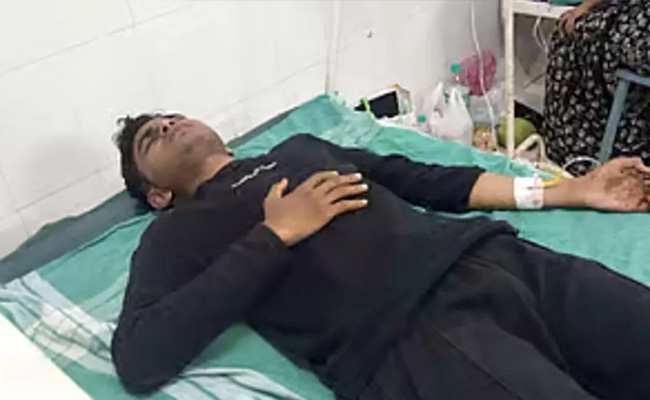
Follow preventive measures to prevent spread of tomato flu, Centre to states
New Delhi, Aug 23: With more than 82 cases of 'tomato flu' reported in children in the country, the Centre on Tuesday asked the states to follow preventive measures, stressing that there is no specific medication to treat the viral disease.
The disease, which seems to be a variant of Hand, Foot and Mouth Disease (HFMD), occurs mainly in children under 10 years of age, but it can occur in adults too, an advisory issued by the Centre said, adding that the children must be educated about the signs and symptoms and side-effects of the illness.
Although the tomato flu virus shows symptoms similar to other viral infections (fever, fatigue, body aches and rashes on the skin), the virus is not at all related to SARS-CoV-2, monkeypox, dengue and/or chikungunya, it said.
"In fact, recent reports have suggested it to be Coxsackie A 17 that belongs to the group of enteroviruses," the advisory added.
The first case of tomato flu was reported in Kollam district of Kerala on May 6 this year and as of July 26, more than 82 children aged below five years have been reported to have contracted the infection by the local government hospitals.
The other affected areas of Kerala are Anchal, Aryankavu, and Neduvathur. This endemic viral illness triggered an alert to the neighbouring states of Tamil Nadu and Karnataka. Additionally, 26 children (aged one to nine years) have been reported as having the disease in Odisha by the Regional Medical Research Centre in Bhubaneswar. Apart from Kerala, Tamil Nadu, Haryana and Odisha, no other region in India has reported the disease.
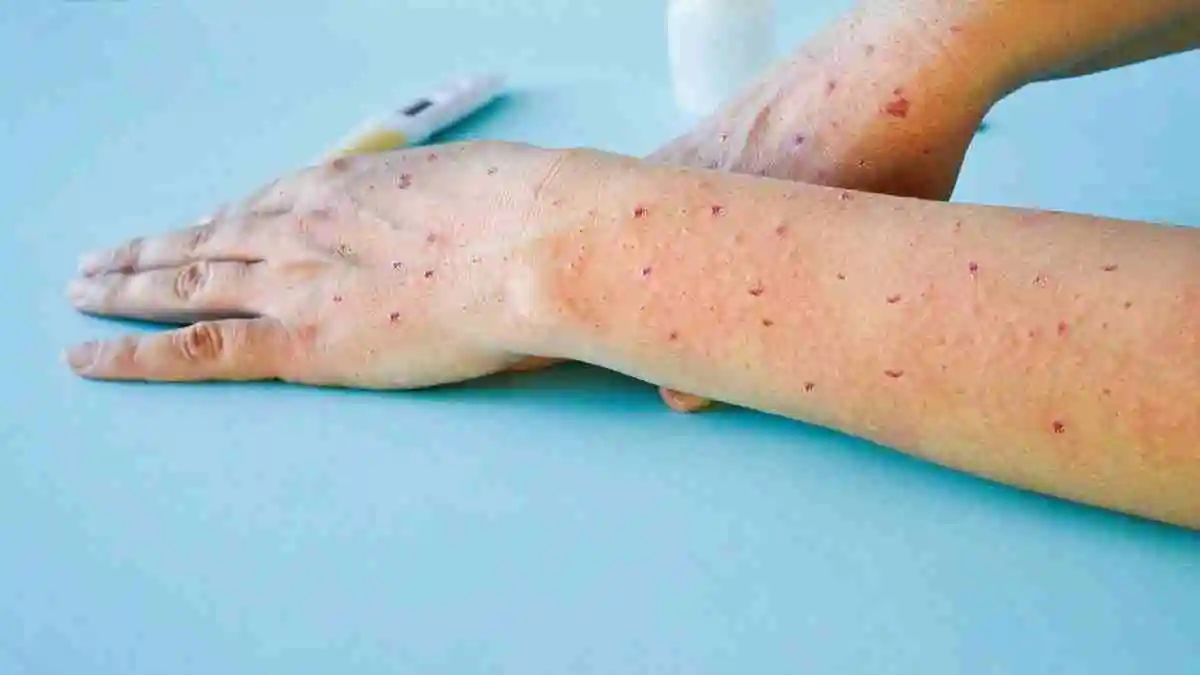
Tomato flu or tomato fever is a viral disease, which derives its name from its main symptom -- the tomato-shaped blisters on several body parts, said the advisory. It is a self-limiting disease, as the signs and symptoms resolve after a few days.
The blisters start as red-colored small blisters and resemble tomatoes when they enlarge.
Primary symptoms observed in children with tomato flu are similar to those of other viral infections, which include fever, rashes and pain in joints. The symptoms also include fatigue, nausea, vomiting, diarrhoea, fever, dehydration, swelling of joints, body aches, and common influenza-like symptoms.
It begins with mild fever, poor appetite, malaise, and often a sore throat. One or two days after the fever begins, small red spots appear which changes to blister and then to ulcers. The sores are usually located on tongue, gums, inside of the cheeks, palms and soles.
In children with these symptoms, molecular and serological tests are done for diagnosis of dengue, chikungunya, zika virus, varicella-zoster virus, and herpes. Once these viral infections are ruled out, a diagnosis of tomato flu is considered, read the advisory.
According to the advisory: "It seems, the disease is a clinical variant of the so-called hand-foot-mouth disease (HFMD) that is common in school going children. Infants and young children are also prone to this infection through use of nappies, touching unclean surfaces as well as putting things directly into the mouth."
HFMD occurs mainly in children under 10 years of age, but it can occur in adults too.
There are no disease-specific medications available, the advisory said, adding that treatment is similar to other viral infections -- isolation, rest, plenty of fluids and hot water sponge for relief of irritation and rashes.
Supportive therapy of paracetamol for fever and body ache and other symptomatic treatments are required.
The advisory also said that isolation should be followed for five to seven days from onset of any symptom to prevent the spread of infection to other children or adults.
The advisory highlighted that the best solution for prevention is maintenance of proper hygiene and sanitization of the surrounding necessities as well as preventing the infected child from sharing toys, clothes, food, with other non-infected children.
Listing out the preventive measures, the advisory said one should avoid immediate contact with the infected person.
"Tell your child not to hug or touch children having fever or rash symptoms. You should encourage your children to stop thumb or finger sucking habits. Encourage the child to use a handkerchief in case of running nose or coughing," it read.
The advisory also stated that one should not scratch or rub the blister. It also said that children should be kept hydrated.
"Always use warm water to clean skin or for bathing the child. Take a nutrition-rich, balanced diet to boost immunity. It is essential to get enough rest and sleep to promote healing," it said.
Till now, no antiviral drugs or vaccines are available for the treatment or prevention of tomato flu.
Samples from throat or stool may be sent to a laboratory to test for isolating the virus involved in causing the illness, which may take two to four weeks to obtain the laboratory results.
The testing should be done for investigation of an outbreak, so that preventive measures can be initiated, the advisory said.
Let the Truth be known. If you read VB and like VB, please be a VB Supporter and Help us deliver the Truth to one and all.
Karnataka: GBA city corporation polls likely between June 14 and 24
Bengaluru (PTI): Karnataka State Election Commissioner G S Sangreshi on Friday said elections to the five city corporations under the GBA will be held anytime between June 14 and June 24.
He said the exact date for the polls will be announced after a week, asserting that the power to postpone the elections, as requested by GBA authorities, lies with the Supreme Court.
The Supreme Court had directed the Karnataka government and the State Election Commission to conduct Bengaluru local body elections by June 30.
On Friday, the SEC held a consultation meeting with the GBA Chief Commissioner and commissioners of the five city corporations regarding the election schedule, as per the provisions of the GBA Act.
“During the meeting, I informed GBA officials that only the election date has to be fixed, as all other measures and formalities for conducting the polls have already been completed,” Sangreshi said.
“They requested the Commission to consider factors such as rains, exams, census work, SIR, and manpower shortages while fixing the date and sought additional time,” he added.
Speaking to reporters after the meeting, he said, “I told them this meeting was not for seeking time. Elections to the five corporations under the GBA must be held before June 30, as directed by the Supreme Court, and a compliance report must be submitted to the court. I do not have the power to postpone the elections as requested.”
The Supreme Court has already given a “final opportunity,” and both the SEC and the government must comply with its directions, the State Election Commissioner said.
He asked GBA officials to suggest suitable dates between June 14 and June 24.
“While stating that they are ready for elections, the officials highlighted operational challenges, including manpower shortages. However, I have informed them that the elections will have to be held between June 14 and June 24. After a week, I will announce the final date,” he said.
Reiterating that he does not have the power to postpone the elections, Sangreshi said the authority rests with the Supreme Court, and elections must be conducted as scheduled.
“We have consulted the GBA as per the rules. It is up to them to suggest a date within the given window. If they need more time, they must approach the court. Our responsibility is to fix the date and complete the polls before June 30,” he said.
The matter regarding manpower and other concerns raised by GBA officials is already before the Supreme Court, and the State Election Commission has also filed a petition in this regard. The case is yet to be heard.
“Since the matter has not come up for hearing, the earlier order remains binding. Therefore, preparations are underway,” he added.
The tenure of the previous elected body under the erstwhile Bruhat Bengaluru Mahanagara Palike (BBMP) ended on September 10, 2020, and since then, a government-appointed administrator has been managing its day-to-day affairs.
Bengaluru was divided into five municipal corporations—Central, East, West, North, and South—under the Greater Bengaluru Authority in September 2025, replacing the BBMP.
Sangreshi had earlier said that elections to the five corporations would be conducted using ballot papers instead of Electronic Voting Machines.
This follows the Congress government’s decision last September to recommend the use of ballot papers in all future panchayat and urban local body elections, citing concerns over declining public confidence in EVMs.
The state government subsequently enacted the Karnataka Gram Swaraj and Panchayat Raj (Amendment) Act, 2026, paving the way for the use of ballot papers in local body elections.