For how many generations reservations will continue, says Supreme Court
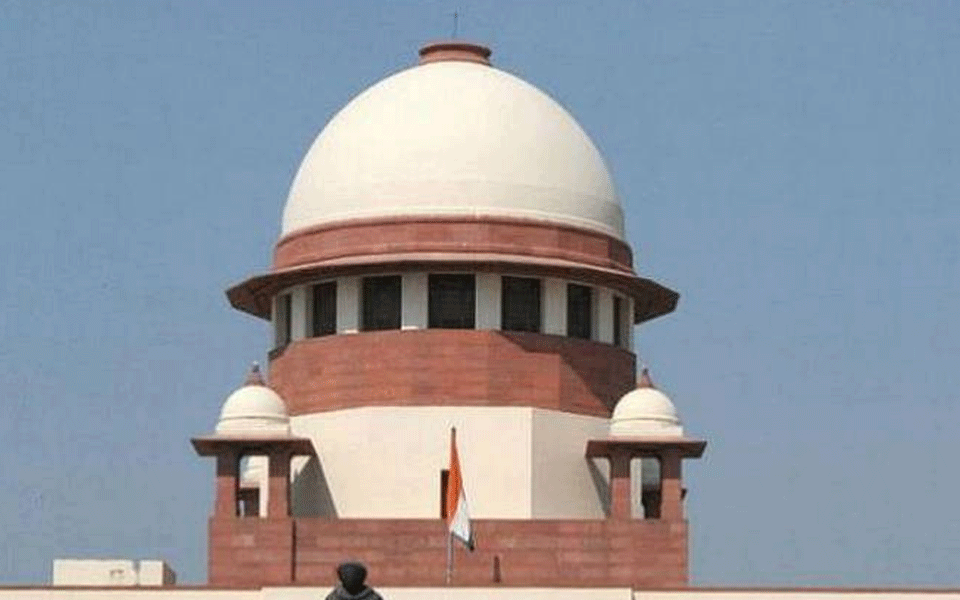
New Delhi: For how many generations would reservations in jobs and education continue, the Supreme Court sought to know during the Maratha quota case hearing on Friday and raised concerns over resultant inequality in case the overall 50 per cent limit was to be removed.
A five-judge Constitution bench headed by Justice Ashok Bhushan was vehemently told by senior advocate Mukul Rohatgi, appearing for Maharashtra, that the Mandal judgement on capping the quota needed a re-look in changed circumstances.
He said the courts should leave it to states to fix reservation quotas in view of the changed circumstances and the Mandal judgement was premised on census of 1931.
Arguing in favour of the Maharashtra law granting quota to Marathas, Rohatgi referred to various aspects of the Mandal judgement, also known as Indra Sawhney case, and said the Centre's decision to grant 10 per cent quota to people from economically weaker section also breached the 50 per cent cap.
If there is no 50 per cent or no limit, as you are suggesting, what is the concept of equality then. We will ultimately have to deal with it. What is your reflection on that... What about the resultant inequality. How many generations will you continue, observed the bench, which also comprised Justices L Nageswara Rao, S Abdul Nazeer, Hemant Gupta and S Ravindra Bhat.
Rohatgi said there were many reasons for the re-look of the Mandal judgment which was premised on the census of 1931 and moreover, the population has increased many fold and reached to 135 crore.
The bench said 70 years have passed since independence and the states have been carrying on so many beneficial schemes and can we accept that no development has taken place, that no backward caste has moved forward .
It also observed that the purpose of reviewing the Mandal judgement was that those who have come out from backwardness must be eliminated.
Yes, we have moved forward. But it is not that backward classes have gone down from 50 to 20 per cent. We still have starvation deaths in this country... I am not trying to say that Indra Sawhney is completely wrong, throw it in the dustbin. I am raising issues that 30 years have gone by, the law has changed, the population has grown, backward persons may also have increased, Rohatgi said.
He referred to amendments made in the Constitution and said they are the indicators that the country has not reached anywhere near the emancipation it required for its backwards classes.
The fact of the matter is Parliament should know what is going on in the country. If Parliament knows it is more than 50 per cent and has given 10 per cent to a class of economically backward section, no warrant from court should say it cannot go over 50 per cent, he argued.
When a number of states have reservations exceeding 50 per cent and in this situation, it cannot be said that this is not a burning issue and does not require a relook after 30 years, he said.
The arguments in the case remained inconclusive and would resume on Monday.
On Thursday, Attorney General K K Venugopal had told the apex court that the 102nd amendment to the Constitution does not deprive state legislatures to enact law determining the Socially and Educationally Backward Classes (SEBC) and conferring benefits on them.
The 102nd Constitution amendment Act of 2018 inserted Articles 338B, which deals with the structure, duties and powers of the National Commission for Backward Class (NCBC), and 342A dealing with power of the President to notify a particular caste as SEBC as also of Parliament to change the list.
On Wednesday, the top court was told that Marathas have been dominant socially and politically as almost 40 per cent of MPs and MLAs of Maharashtra are from this community and the entire hypothesis that they have been left behind, faced historical injustice is completely flawed.
The top court has been hearing a clutch of cases challenging the Bombay High Court verdict which upheld the grant of quota to Marathas in admissions and government jobs in the state.
Let the Truth be known. If you read VB and like VB, please be a VB Supporter and Help us deliver the Truth to one and all.
CM Siddaramaiah alleges ‘criminal conspiracy’ in Sringeri recount, vows legal action
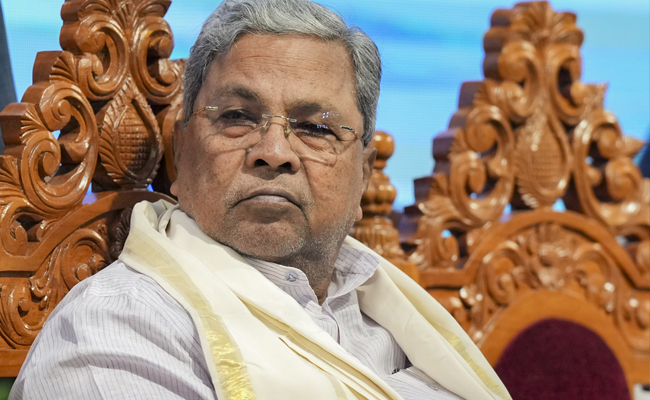
Bengaluru (PTI): Alleging a “criminal conspiracy” by BJP candidate D N Jeevaraj in the Sringeri Assembly poll recounting, Karnataka CM Siddaramaiah on Tuesday said the outcome was manipulated after valid postal ballot votes in favour of Congress leader T D Raje Gowda were tampered with during the recounting process.
Following a Karnataka High Court order on an election petition filed by Jeevaraj, challenging Raje Gowda’s election, the reverification and recounting were conducted on Saturday.
After the reverification and recount of postal ballots for the Sringeri Assembly constituency, votes polled in favour of Raje Gowda were reduced by 255, the returning officer said.
A report on the matter has been submitted to the Election Commission of India for further action, the officer added.
Congress leader Raje Gowda had won the 2023 Assembly polls from Sringeri by 201 votes, defeating his nearest rival Jeevaraj.
Addressing a press conference in Bengaluru, Siddaramaiah said the High Court had directed the recounting of postal ballots and that irregularities were noticed during the exercise conducted on May 2.
“This is a clear case of criminal conspiracy,” Siddaramaiah said, alleging that valid votes cast in favour of Raje Gowda were altered after being accepted by counting agents of all parties, including Congress, BJP, and JD(S).
He claimed that during the recounting of postal ballots, 255 votes were initially accepted as valid by all agents but were later tampered with by subordinate officials.
“There is a second mark on the votes polled in favour of Raje Gowda. They had accepted these as valid votes. Subsequently, another mark was made by officials. This is a clear case of criminal conspiracy,” he said.
When asked who was behind the alleged conspiracy, the CM replied, “It was hatched by Jeevaraj and others. It is planned.”
Siddaramaiah further alleged that the returning officer acted improperly by declaring the result despite the presence of an Election Commission observer during the recounting.
“Immediately after the counting, the returning officer announced the result. He should not have done so; this is against the law,” he said.
He pointed out that Raje Gowda had originally won by 201 votes, but after the recounting, the BJP candidate was declared the winner by 52 votes.
“The BJP has committed a criminal act of conspiracy. This is not vote chori but vote dacoity,” he alleged.
The CM said a police complaint had already been filed by Raje Gowda’s election agent, Sudhir Kumar, and emphasised the need for electoral integrity.
“We want transparency and free and fair elections. That is what our Constitution mandates,” he added.
Stating that the government would pursue legal remedies, Siddaramaiah said, “We are preparing an appeal challenging the returning officer’s announcement in a court of law.”
Responding to a separate query on elections in other states, the CM said there appeared to be an anti-incumbency factor in West Bengal, while results in Tamil Nadu were “surprising,” adding that Vijay’s party was emerging as the largest there.
Following the victory of party candidates in Bagalkote and Davanagere South, Siddaramaiah expressed confidence about future electoral prospects in Karnataka.
“Even in 2028, we will win the Assembly elections. We will come back,” the CM said.
Siddaramaiah added that he would order a forensic examination into the alleged tampering of postal ballots.