Forced religious conversion against Constitution: Supreme Court
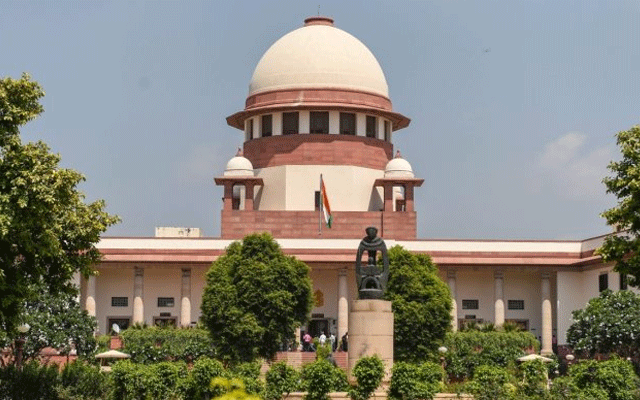
New Delhi (PTI): Reaffirming that forced religious conversion is a "serious issue", the Supreme Court said on Monday it is against the Constitution.
The court was hearing a plea filed by advocate Ashwini Kumar Upadhyay seeking direction to the Centre and states to take stringent steps to control fraudulent religious conversion by "intimidation, threatening, deceivingly luring through gifts and monetary benefits".
The Centre told the court it is collecting information from states on religious conversion through such means.
Appearing before a bench of Justices M R Shah and C T Ravikumar, Solicitor General Tushar Mehta sought time to furnish detailed information on the issue.
"We are gathering information from the states. Give us a week's time," Mehta said.
He said statutory the regime will determine whether a person is converting due to some change in belief.
The top court acknowledged forced religious conversion is a very serious matter.
When a lawyer questioned the maintainability of the plea, the bench said,"Do not be so technical. We are here to find a solution. We are here for a cause. We are here to set things right. If the purpose of the charity is good then it is welcome but what is required to be considered is the intention.
"Do not take it as adversarial. It is a very serious issue. Ultimately it is against our Constitution. When everyone stays in India, they have to act per the culture of India," the bench observed.
The apex court will now take up the matter on December 12.
Forced religious conversion may pose a danger to national security and impinge on religious freedom of citizens, the top court had said recently, and asked the Centre to step in and make sincere efforts to tackle the "very serious" issue.
Let the Truth be known. If you read VB and like VB, please be a VB Supporter and Help us deliver the Truth to one and all.
Congress using hijab issue to pacify minority anger, alleges Karnataka LoP R Ashoka
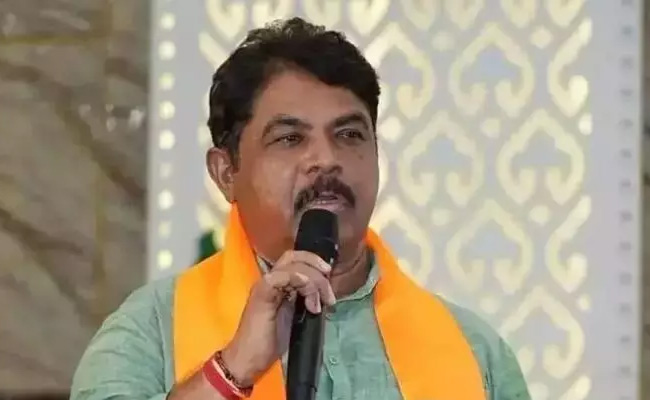
Bengaluru: Leader of Opposition in the Assembly R. Ashoka has accused the Congress government of using the hijab issue to placate what he described as discontent among minority voters after the Davanagere by-election.
In a post on X on Wednesday, Ashoka alleged that the state government, instead of addressing issues such as price rise, corruption, farmers’ distress and law and order, was attempting to retain its minority vote base by reviving the hijab issue.
Referring to the 2022 dress code introduced by the BJP government, which prohibited hijab in schools and colleges, Ashoka said the Karnataka High Court had upheld the policy and emphasised the importance of discipline in educational institutions.
He questioned the Congress government’s move to revisit the issue and asked whether setting aside the court-backed policy to benefit one community could be described as secularism.
Ashoka further alleged that while the government was willing to permit hijab, it continued to prohibit saffron shawls.
He accused the government of dividing students on religious lines rather than treating schools and colleges as spaces of equality.
Drawing a comparison with Mamata Banerjee’s government in West Bengal, Ashoka claimed that excessive appeasement politics had harmed the state and warned that the Congress in Karnataka could face a similar political response.
He said voters in Karnataka would teach the Congress a lesson for what he termed “vote-bank politics” and for compromising constitutional and judicial principles.