Forest areas encroached in 25 states, UTs; MP, Assam worst affected: Government report
_vb_88.jpeg)
New Delhi (PTI): Over 13,000 sq km of forest area, more than the total geographical area of Delhi, Sikkim and Goa combined, is under encroachment in 25 states and Union Territories, according to data submitted by the Union Environment Ministry to the National Green Tribunal.
Last year, the NGT took suo motu cognisance of a PTI report that cited government data showing that 7,50,648 hectares (or 7,506.48 sq km) of forest area -- more than five times the size of Delhi -- was under encroachment in India.
In April last year, the NGT had directed the ministry to compile the details of encroachment of forest areas in all states and Union Territories in a prescribed format.
In a report submitted to the NGT last week, the ministry said that as of March 2024, a total of 13,05,668.1 hectares (or 13,056 sq km) of forest area was under encroachment in 25 states and UTs that have provided data so far.
These states and UTs are Andaman & Nicobar Islands, Assam, Arunachal Pradesh, Andhra Pradesh, Chandigarh, Chhattisgarh, Dadar & Nagar and Daman & Diu, Kerala, Lakshadweep, Maharashtra, Odisha, Puducherry, Punjab, Tamil Nadu, Tripura, Uttarakhand, Uttar Pradesh, Jharkhand, Sikkim Madhya Pradesh, Mizoram and Manipur.
States and UTs, which are still to submit the data and details on forest encroachment, are Bihar, Haryana, Himachal Pradesh and Rajasthan, Telangana, West Bengal, Nagaland, Delhi, Jammu and Kashmir and Ladakh.
Forest area or The Recorded Forest Area (RFA) includes land officially designated as forest by the government, even if it does not have tree cover.
RFA is further divided into three categories: reserved forests, which have full protection, with activities like hunting and grazing generally banned; protected forests, where some activities are allowed unless specifically restricted; and unclassed forests, which are not classified as reserved or protected.
According to the ministry's report, Madhya Pradesh had the highest forest encroachment among all states and UTs, with 5,460.9 sq km affected as of March 2024.
Assam has 3,620.9 sq km of forest area under encroachment.
A total of 863.08 sq km of forest land in Karnataka is under encroachment, followed by 575.54 sq km in Maharashtra, 534.9 sq km in Arunachal Pradesh, 405.07 sq km in Odisha, 264.97 sq km in Uttar Pradesh, 247.72 sq km in Mizoram, 200.40 sq km in Jharkhand and 168.91 sq km in Chhattisgarh.
Tamil Nadu has 157.68 sq km of encroached forest land, Andhra Pradesh 133.18 sq km, Gujarat 130.08 sq km, Punjab 75.67 sq km, Uttarakhand 49.92 sq km and Kerala 49.75 sq km, 42.42 sq km in Tripura, 37.42 sq km in the Andaman and Nicobar Islands and 32.7 sq km in Manipur.
The ministry's report said that encroachment has been removed from 409.77 sq km of forest land so far. However, it is unclear whether this area was excluded from the total forest land under encroachment as of March 2024.
The ministry informed the NGT that it had asked states to submit data through letters sent on May 1, May 17 and May 28 last year. States and UTs were also reminded multiple times over the phone and a meeting was held with them on November 11.
The ministry sent further reminder letters on February 22 and March 26 this year, asking the remaining states and UTs to provide the information in a tabulated format.
Let the Truth be known. If you read VB and like VB, please be a VB Supporter and Help us deliver the Truth to one and all.
Speaker Khader dismisses BJP's charges of 'delay' in swearing-in of Jeevaraj as MLA
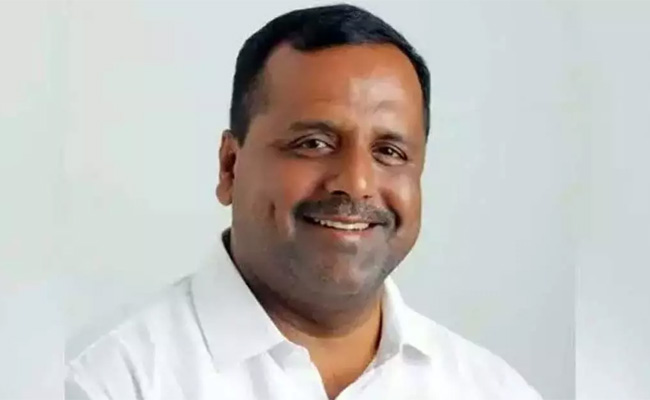
Bengaluru (PTI): Karnataka Assembly Speaker U T Khader on Wednesday rejected opposition BJP's allegations of delaying the swearing-in of D N Jeevaraj as MLA, asserting that the process was being handled strictly in accordance with constitutional provisions and rules.
BJP candidate Jeevaraj, who had lost the 2023 Sringeri Assembly election to Congress leader T D Raje Gowda, was declared elected late Sunday night after reverification and recounting of postal ballots in compliance with a High Court order.
The recount reduced 255 votes from Gowda's tally, overturning his earlier victory margin of 201 votes and reversing the result.
The recount followed an election petition filed by Jeevaraj.
Addressing reporters, Khader maintained that there was no delay in administering the oath to Jeevaraj, who was declared elected from the Sringeri Assembly constituency after a High Court-ordered recount of postal ballots.
“Where have we delayed? The application was submitted at 11 am. If an application is given in the morning and by evening someone says it’s delayed — how is that a delay?” he said, dismissing the allegations.
The Speaker said the matter involved 'technical issues' that required examination before fixing a date for oath-taking.
“When such a matter comes, we also need to examine it and take a decision as per rules. If an application is given in the morning, at least 24 hours must be given,” he said.
Khader stressed that his role was bound by the Constitution and not influenced by political considerations.
“When an elected MLA asks for time, we must give it under the Constitution and law. Can we refuse? No, we have to give it,” he said, rejecting suggestions that he was acting under party pressure.
He also underlined the need for trust in democratic institutions amid the controversy.
“A democracy and parliamentary system must function on trust. Without that, how can democracy be strengthened? Trust is essential,” he said, cautioning against creating suspicion around constitutional positions.
On claims that the delay was linked to the ongoing political and legal dispute over the recount, Khader said the issue did not fall within his purview.
“My responsibility is to act as per the Constitution and rules. I will ensure that whatever is due to them is done as soon as possible,” the Speaker explained.
He said he had already communicated his position when contacted and would formally inform the concerned parties. “There is no delay, nor any intention to delay. I will discharge my duties as per the Constitution,” he said.
Khader also pointed to possible legal complications in hastily administering the oath.
“If I give the oath to one person and tomorrow the court declares someone else the winner, what happens then? Will it automatically cancel? Will confusion arise?” he asked, indicating the need for due diligence.
On concerns that Jeevaraj had lost over two years of tenure, the Speaker said representation was linked to that constituency rather than an individual.
“Whoever becomes the MLA represents the constituency. Benefits are not given to an individual,” he said, adding that issues of alleged irregularities should be examined by the Election Commission.
The remarks come after the Leader of Opposition BJP in the Karnataka Assembly, R Ashoka on Wednesday accused the Speaker of 'deliberately' delaying the oath and approached Governor Thaawarchand Gehlot seeking intervention, even suggesting that the Governor administer the oath if required.
Chief Minister Siddaramaiah termed the process 'Vote Dacoity' by Jeevaraj and said an FIR has been registered against the newly elected Sringeri MLA.
Defending the recount process, Jeevaraj denied allegations of tampering, while the High Court has stayed an FIR filed against him in connection with the postal ballot issue.