Former CJI Chandrachud addresses concerns over Umar Khalid’s detention
_vb_17.jpeg)
New Delhi: Former Chief Justice of India DY Chandrachud, speaking at the Jaipur Literature Festival, addressed concerns over Umar Khalid’s prolonged detention. He said that the right to a speedy trial is part of Article 21 and argued that unless strict exceptions apply, bail must remain the constitutional norm, reported India Today.
A former JNU student, Umar Khalid has been in detention for almost five years as an undertrial prisoner, even though the trial has not yet started. Earlier this month, the Supreme Court of India granted bail to five students in connection with the 2020 Delhi riots conspiracy case, but denied bail to Umar Khalid and Sharjeel Imam in the same case.
In a conversation with journalist Vir Sanghvi, Chandrachud addressed one of the most contentious bail debates in recent years by invoking the case of Umar Khalid, who has spent nearly five years in jail.
In conversation with journalist Vir Sanghvi at the festival, Chandrachud acknowledged the discomfort many feel about such long periods of detention.
“Each one of these principles which I have mentioned does point to the fact that you can impose conditions to ensure that bail is not abused,” he said, adding that courts must consider this alongside the accused’s right to a timely trial.
When Sanghvi mentioned about Khalid’s continued detention, Chandrachud said, “I’m not criticising my court,” explaining that he remained cautious about commenting on cases after having recently headed the judiciary.
He emphasised that judges must decide bail applications based on the evidence and material before them, not on public sentiment or retrospective judgement.
Furthermore he argued that the broader constitutional principle is clear. If trials are not concluded within a reasonable period, incarceration itself becomes punitive.
“The right to life under Article 21 includes the right to a speedy trial,” he said.
He added that even laws which place restrictions on bail cannot override this fundamental right. “If an expeditious trial is not possible under present conditions,” Chandrachud said, “then bail should be the rule and not the exception.”
The former Chief Justice also put aside the idea that the bail should be denied simply by invoking national security, saying courts have a responsibility to examine whether such claims are genuine and whether keeping an accused in prolonged custody is proportionate.
Without this scrutiny, individuals can remain in prison for years without conviction, which he described as a serious distortion of justice.
Responding to criticism of the judiciary, Chandrachud pointed out that during his tenure, the Supreme Court disposed of nearly 21,000 bail applications, many of which did not receive public attention. The court’s duty, he said, is not to respond to public anger but to preserve constitutional balance.
Chandrachud reiterated that bail can be denied only in specific circumstances: if there is a risk that the accused may repeat the offence, flee the country, or tamper with evidence.”If these exceptions are not made out, the accused is entitled to bail,” he added.
He also warned that turning bail into punishment undermines personal liberty and weakens trust in the justice system.
Let the Truth be known. If you read VB and like VB, please be a VB Supporter and Help us deliver the Truth to one and all.
Over 81,000 police posts to be filled in UP in 2026-27: CM
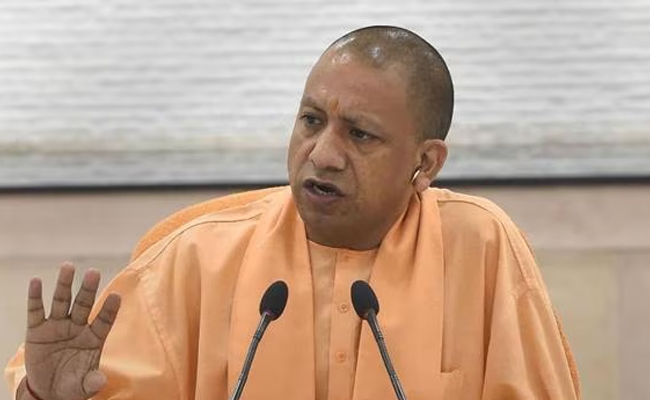
Lucknow (PTI): The Uttar Pradesh government will recruit more than 81,000 personnel in the state police department during 2026-27, Chief Minister Yogi Adityanath said.
According to an official statement issued late Thursday, Adityanath said the financial year 2026-27 will be crucial for youths aspiring to join the Uttar Pradesh Police, as preparations are underway to fill over 81,000 vacancies within the year.
The chief minister made the remarks while conducting a comprehensive review of ongoing activities and future action plans of various units of the police department on Thursday night.
He said the large-scale recruitment drive would not only generate employment opportunities for youths but also help build a capable, energetic and modern police force in the state.
The statement said that more than 81,000 posts across various categories -- including sub-inspectors, civil police constables, radio assistant operators, computer operator grade-A, and confidential sub-inspectors -- are proposed to be filled. The recruitment process for some of these posts has already commenced.
Adityanath also directed the Uttar Pradesh Police Recruitment and Promotion Board to ensure that all direct recruitments are conducted in a time-bound manner with complete transparency, fairness and in accordance with prescribed reservation norms.
He stressed the need to make the recruitment process technology-driven and to complete it within the stipulated timeline to further strengthen the confidence of the youth.